Grand Tour of Switzerland: attractions & sights guide
A stop-by-stop guide to the best things to see along the Grand Tour of Switzerland route — 7 destinations, their must-see sights and how to drive between them.
Plan this route with EuroDrive Scout — tolls, vignettes, ZTL alerts, fuel & parking →
Zurich
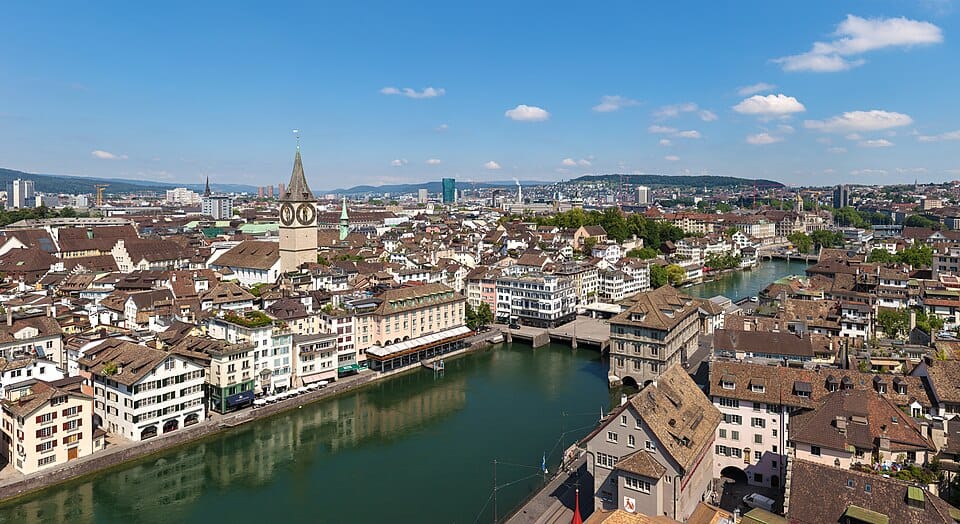
Zurich is Switzerland's largest city, sitting at the northern tip of Lake Zurich where the Limmat River begins. It combines a well-preserved medieval old town with a global reputation as a financial center, home to major banks and the Swiss stock exchange, alongside museums, guild houses, and a lakefront promenade.
Top attractions in Zurich
Bahnhofstrasse
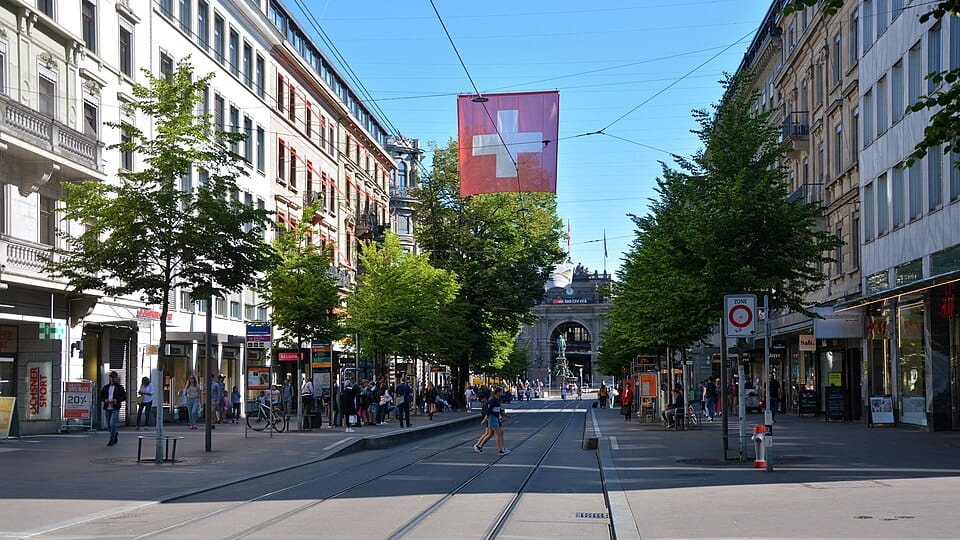
Zurich's main boulevard, running from the main train station to Lake Zurich, lined with department stores, luxury boutiques, and the underground vaults of the city's major banks.
Grossmünster
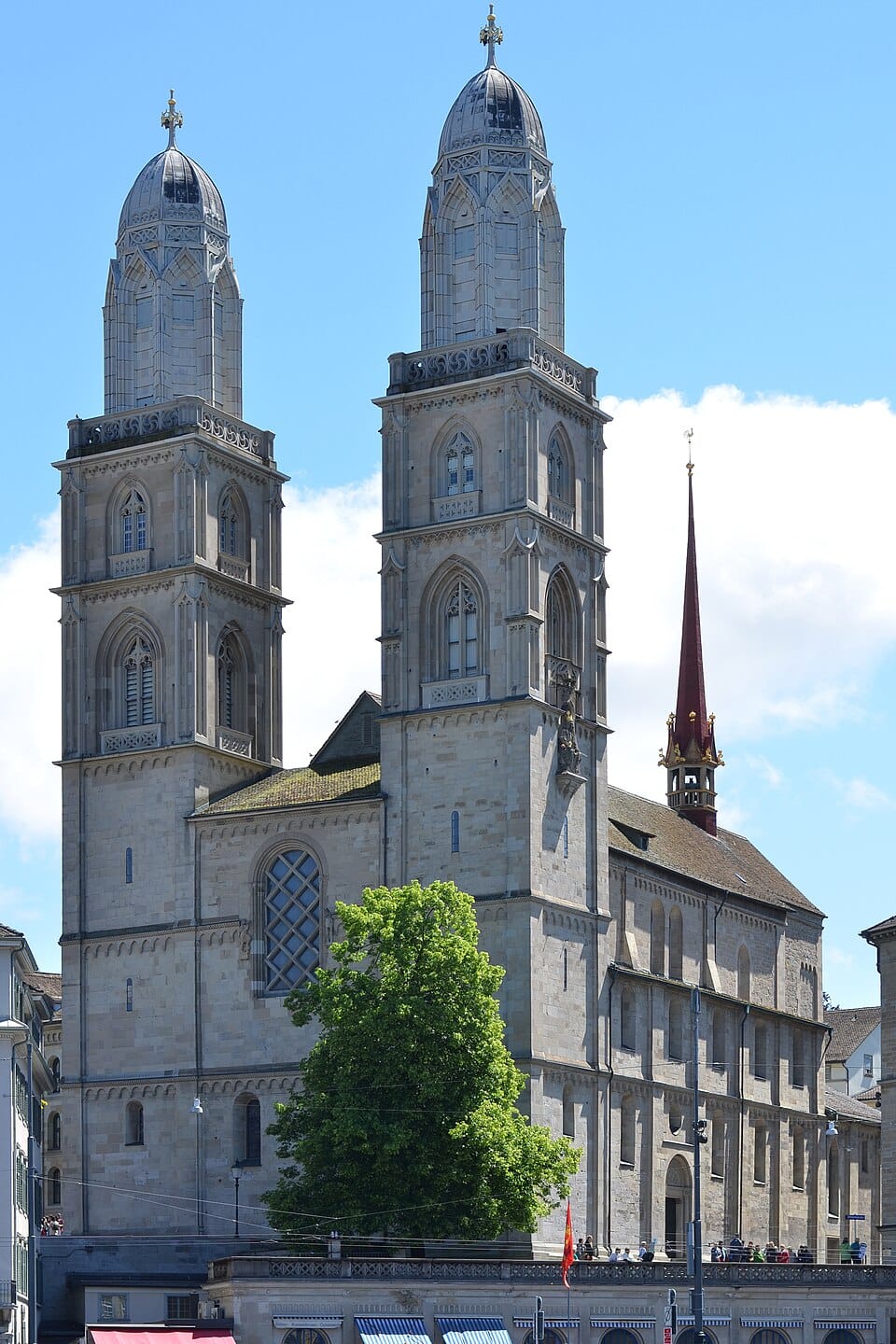
A twin-towered Romanesque church on the east bank of the Limmat where the reformer Huldrych Zwingli preached in the 16th century, with a viewing platform in one tower reached by a spiral staircase.
Fraumünster
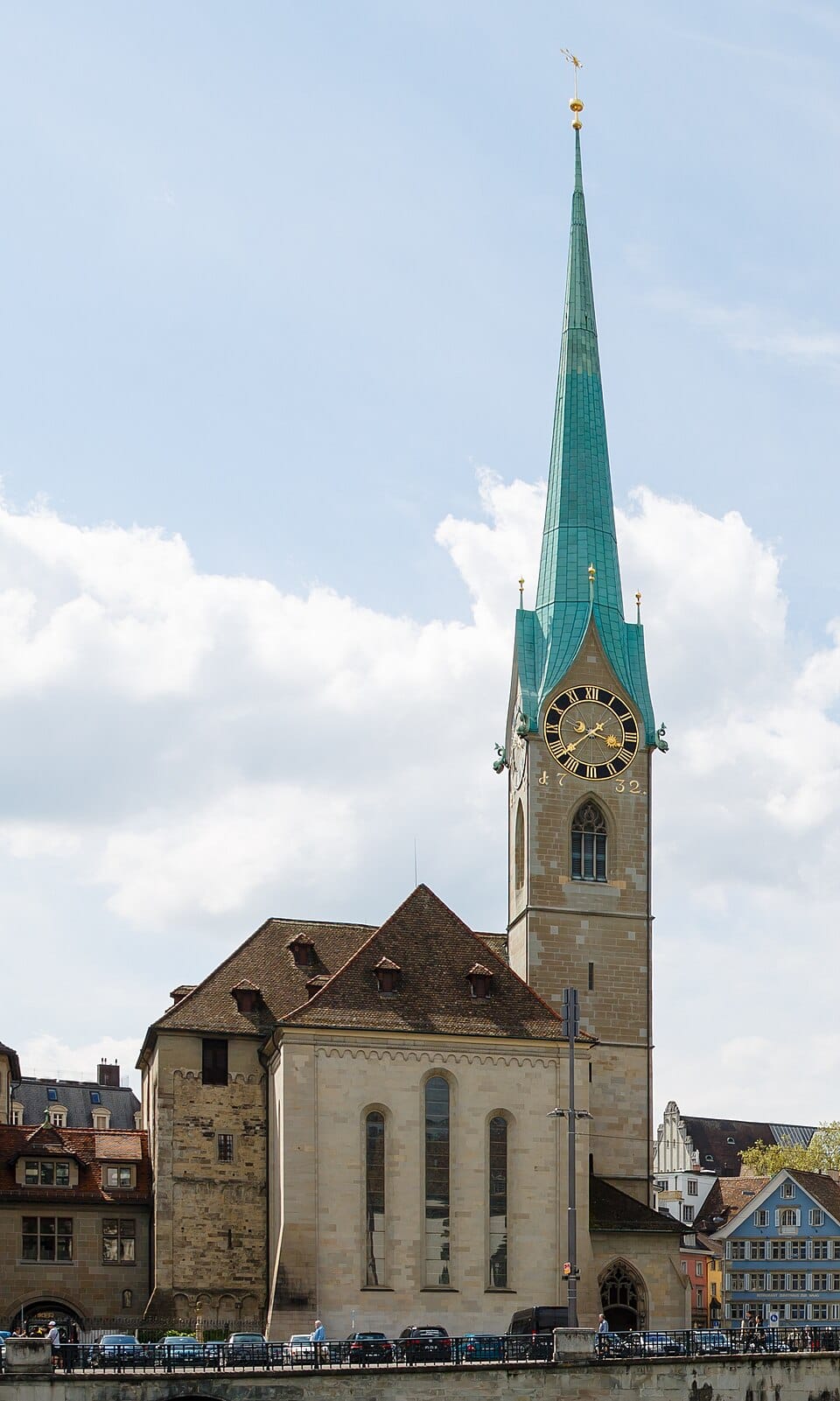
A former abbey church on the west bank of the Limmat known for its five stained-glass windows designed by Marc Chagall in the 1970s, installed in the choir.
Old Town (Niederdorf)
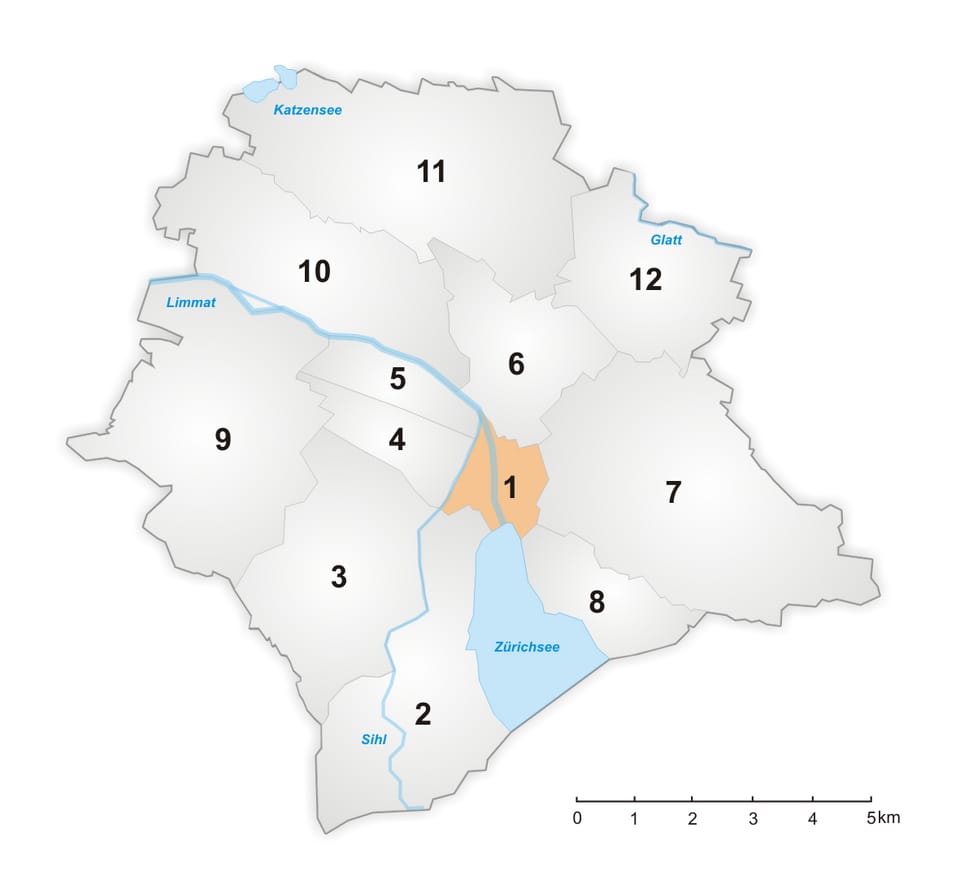
The medieval quarter east of the Limmat, a maze of narrow lanes, guild houses, and small squares that today holds bars, restaurants, and independent shops.
Uetliberg
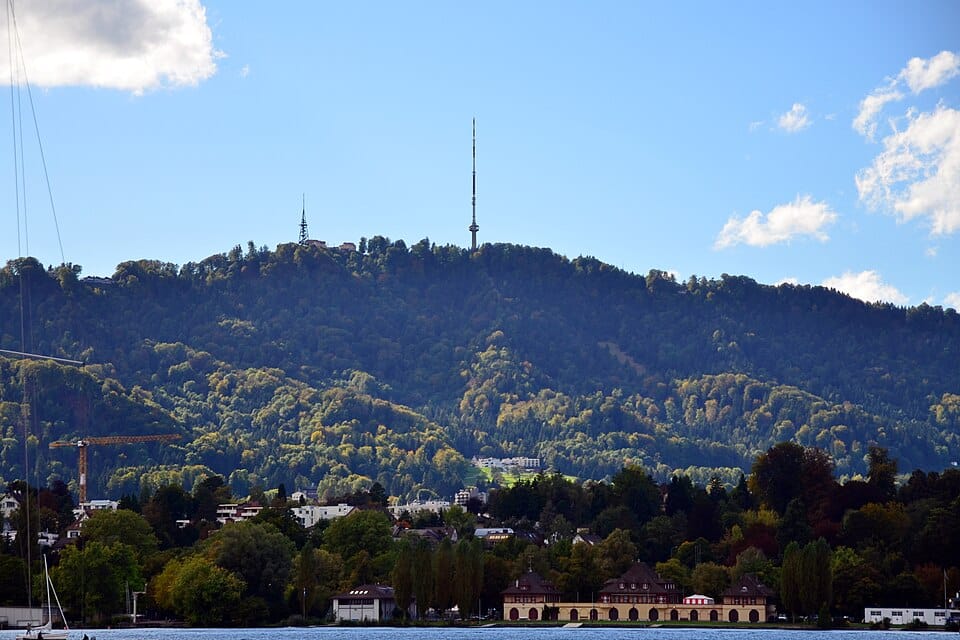
Zurich's local mountain, reached by a short train ride from the city center, with a summit ridge trail and an observation tower offering views over the city, the lake, and the Alps on clear days.
Lucerne
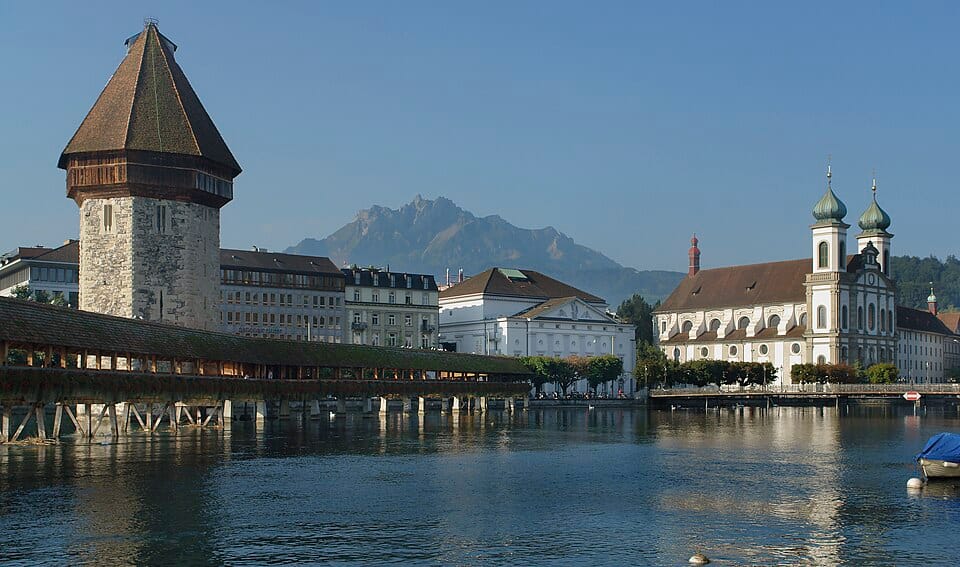
Lucerne is a city on the shore of Lake Lucerne in central Switzerland, known for its well-preserved medieval old town and the wooden Chapel Bridge spanning the Reuss River. Its skyline is framed by Mount Pilatus and Mount Rigi, and painted building facades and lakefront promenades have long made it a popular tourist destination.
Top attractions in Lucerne
Chapel Bridge (Kapellbrücke)
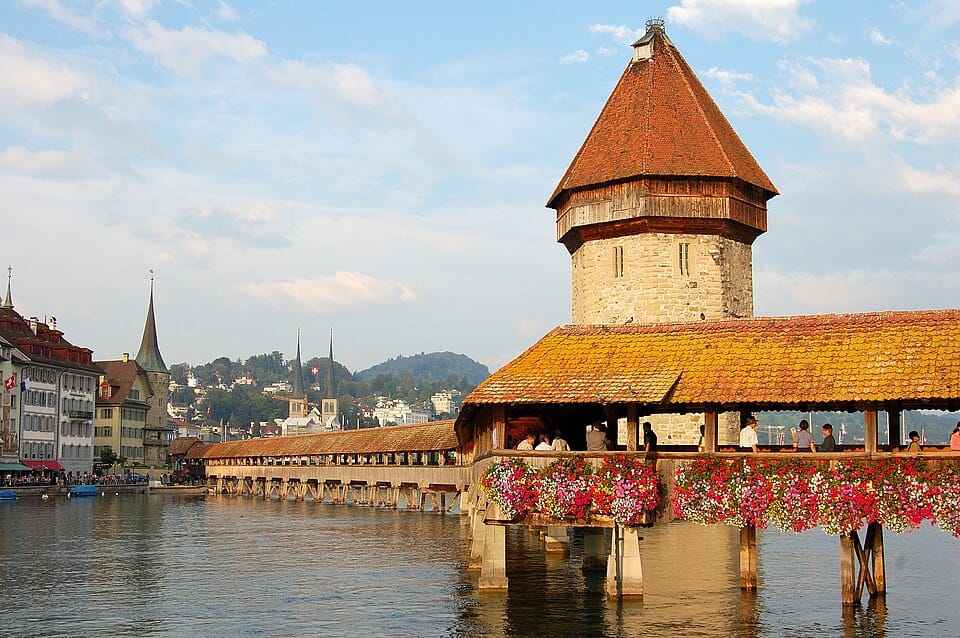
A covered wooden footbridge built in 1333 across the Reuss River, the oldest surviving truss bridge in Europe, with a stone Water Tower and a series of painted panels beneath its roof depicting scenes from Lucerne's history.
Lion Monument (Löwendenkmal)
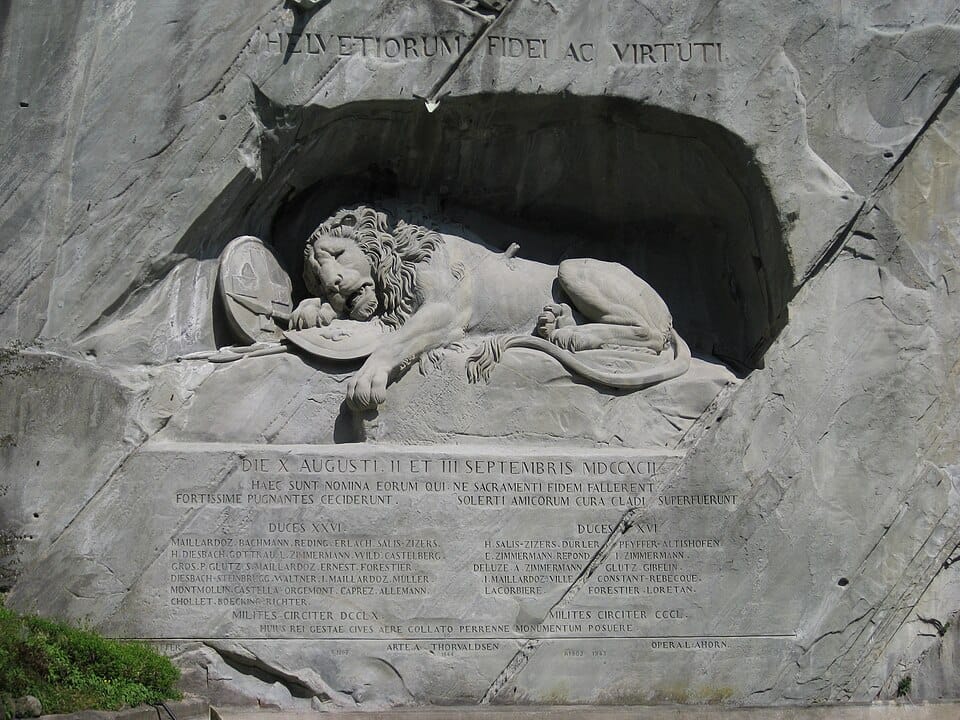
A rock relief carved into a sandstone cliff in 1821, depicting a dying lion, commemorating the Swiss Guards killed defending the Tuileries Palace in Paris during the French Revolution in 1792.
Lucerne Old Town
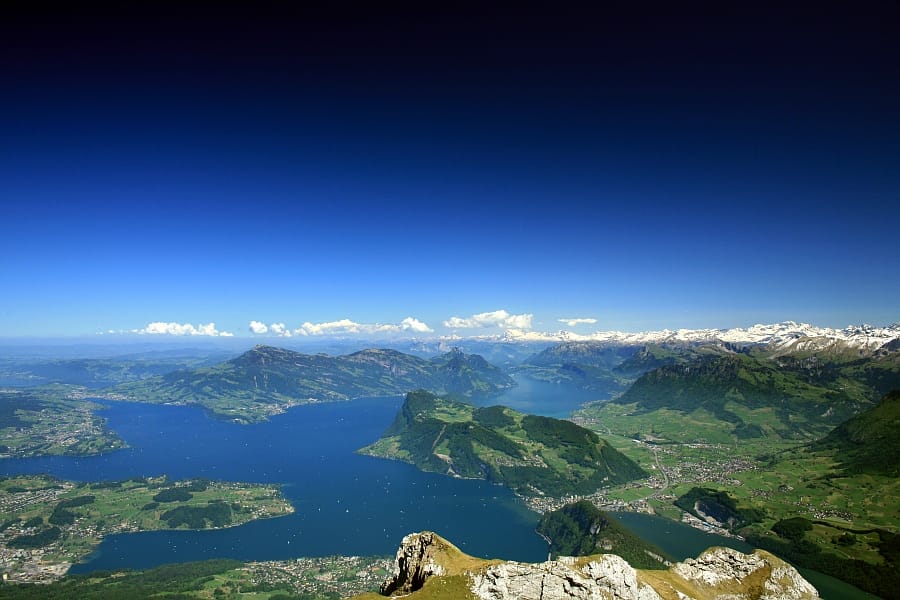
The historic center on the north bank of the Reuss, with squares and streets lined by buildings whose facades are painted with murals, and remnants of the medieval Musegg city wall with its nine towers above the rooftops.
Mount Pilatus
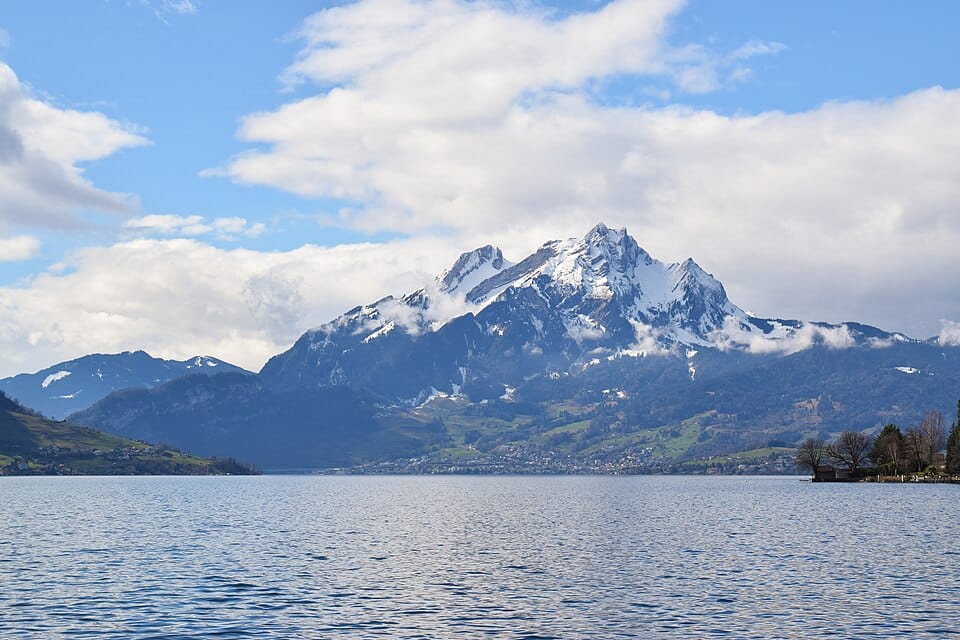
A 2,128-meter mountain southwest of Lucerne, reached by the world's steepest cogwheel railway, with hiking trails, a summit hotel, and views that on clear days extend across the Alps.
Mount Rigi
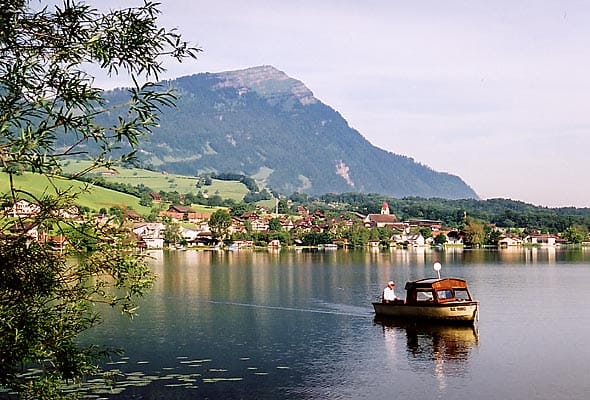
A mountain between Lake Lucerne and Lake Zug, nicknamed the 'Queen of the Mountains,' reached by Europe's oldest mountain cogwheel railway, opened in 1871 from the lakeside village of Vitznau.
Interlaken
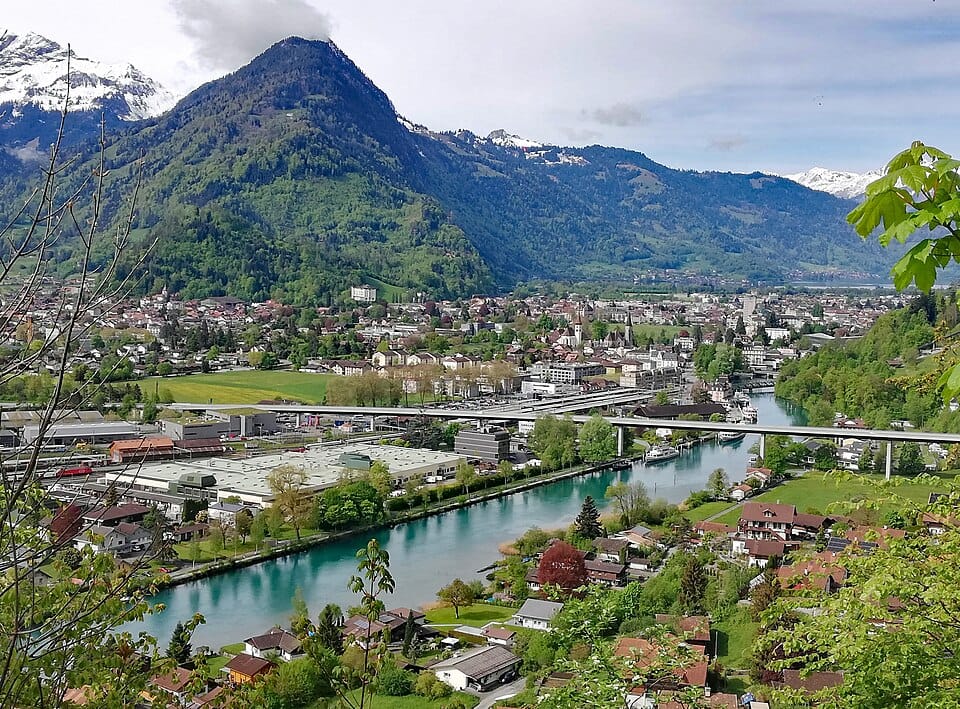
Interlaken is a resort town in the Bernese Oberland, situated on a narrow strip of land between Lake Thun and Lake Brienz; its name literally means 'between lakes.' A base for exploring the surrounding Alps since the 19th century, it has grown into a major hub for outdoor activities such as paragliding, canyoning, and hiking.
Top attractions in Interlaken
Höhematte
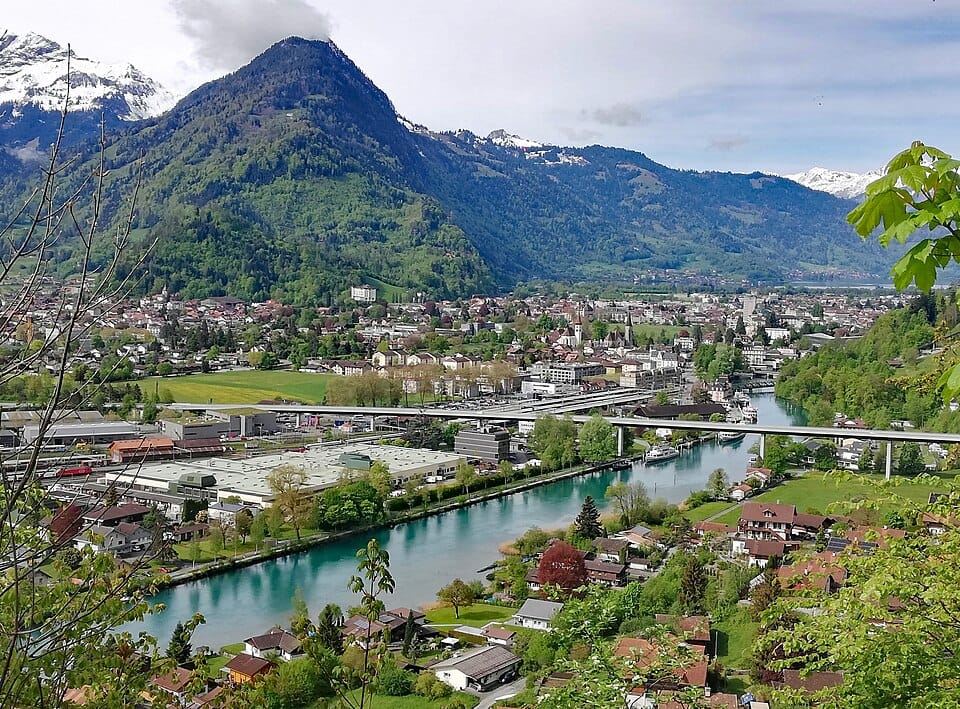
A large open meadow in the center of Interlaken, kept free of buildings by 19th-century town planning rules, offering an unobstructed view of the Jungfrau, Mönch, and Eiger peaks.
Jungfraujoch
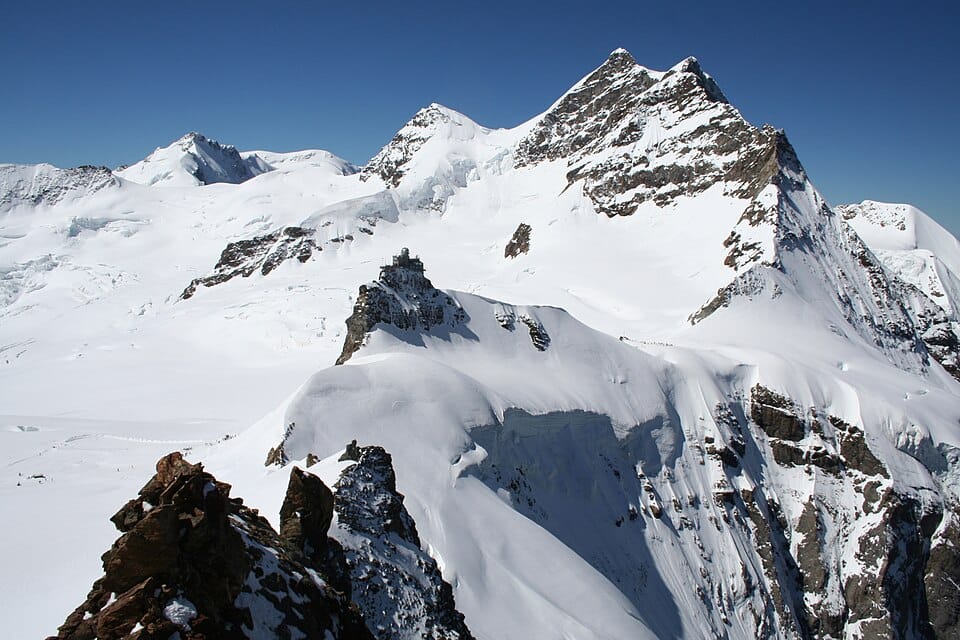
Known as the 'Top of Europe,' a saddle at 3,466 meters between the Mönch and Jungfrau peaks, reached by a rack railway tunneled through rock and completed in 1912, with an ice palace and observation deck at the terminus.
Harder Kulm
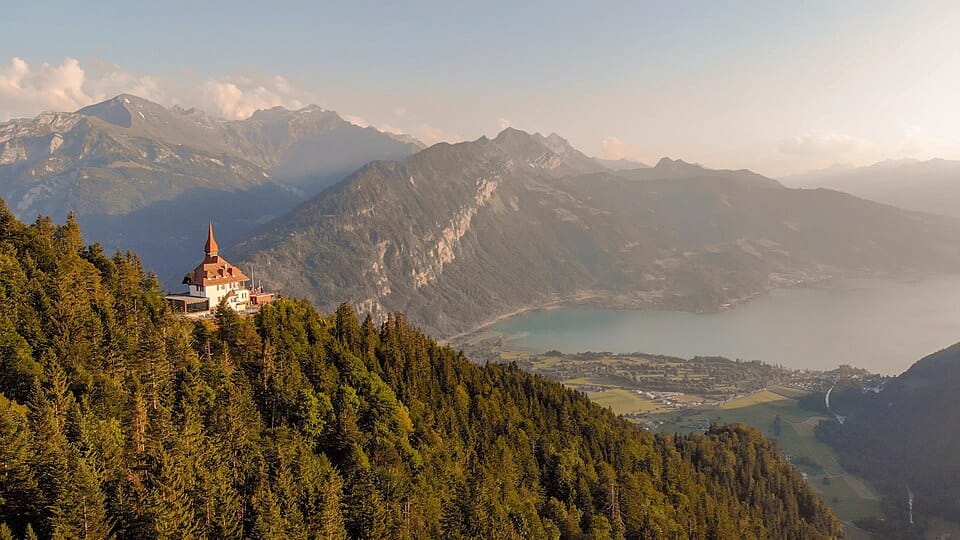
A 1,322-meter viewpoint above Interlaken reached by funicular, with a two-pronged observation platform nicknamed the 'Top of Interlaken' looking down on Lake Thun, Lake Brienz, and the surrounding peaks.
St. Beatus Caves
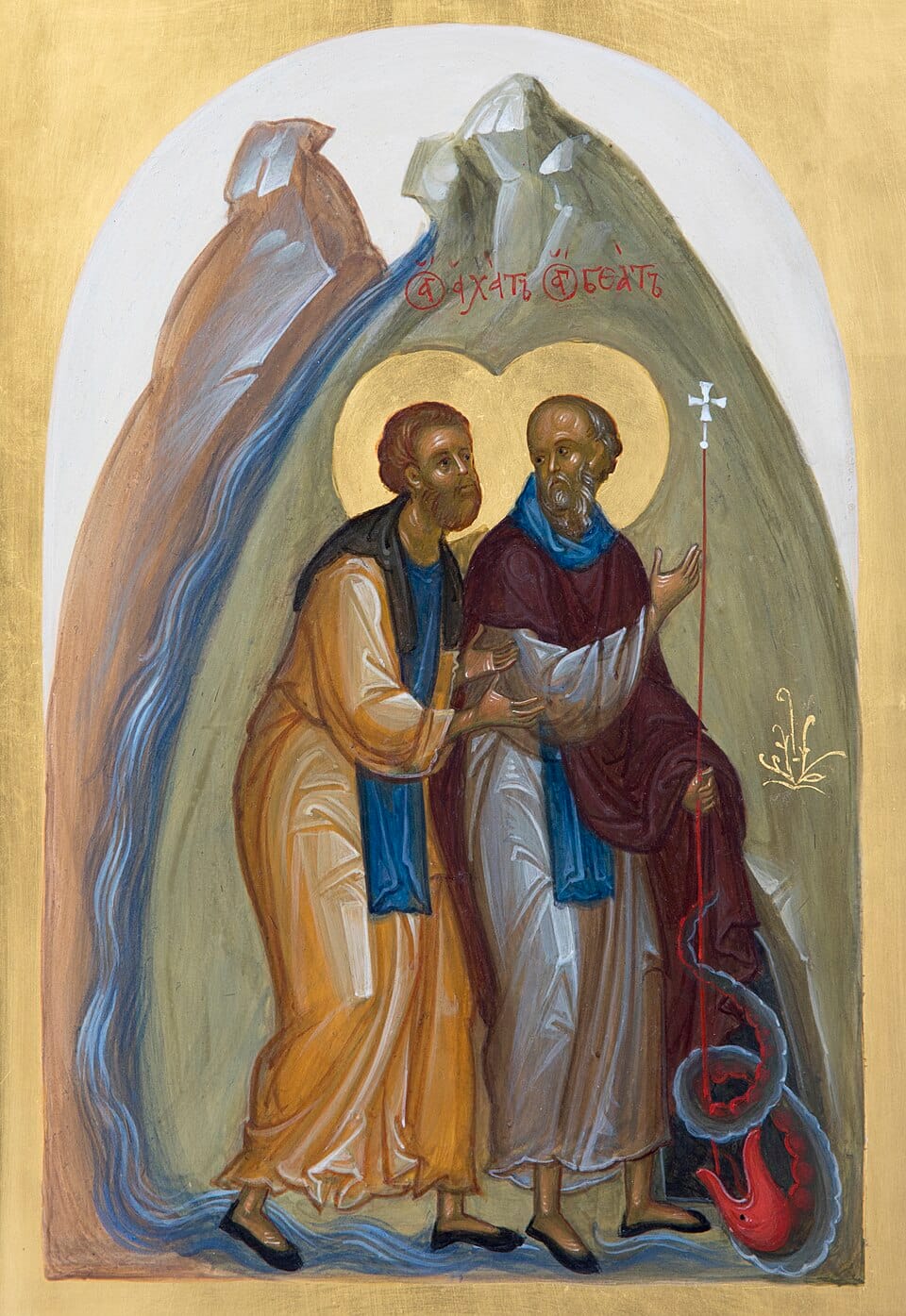
A network of limestone caves on the northern shore of Lake Thun, with illuminated walkways past stalactites and underground waterfalls, named for a hermit said to have lived in the caves in the 6th century.
Lake Brienz
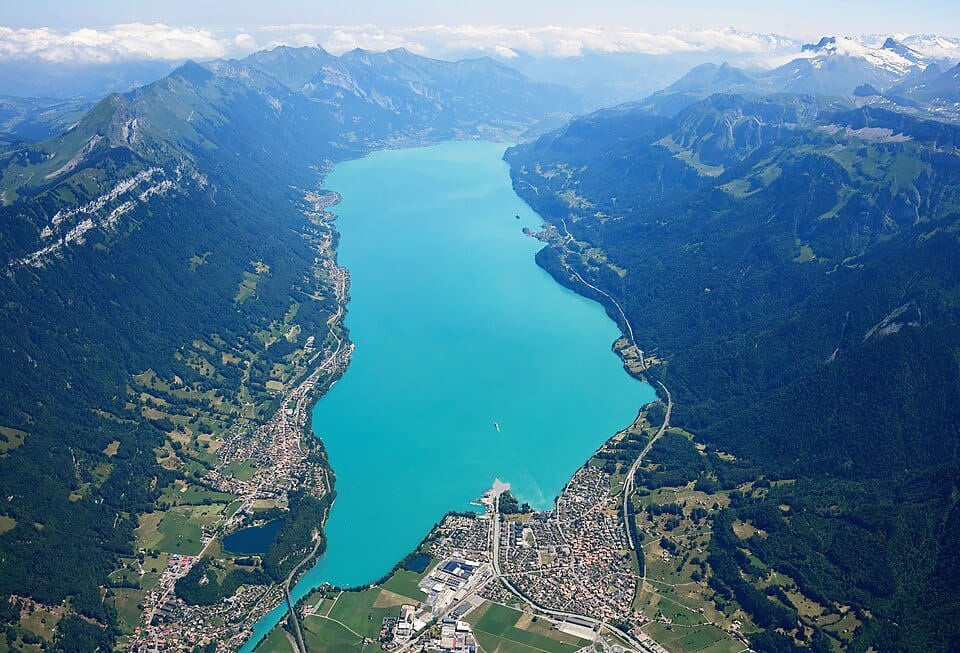
A glacial lake east of Interlaken known for its turquoise-colored water, ringed by steep forested slopes and waterfalls, with passenger boats connecting lakeside villages including Iseltwald and Brienz.
Bern
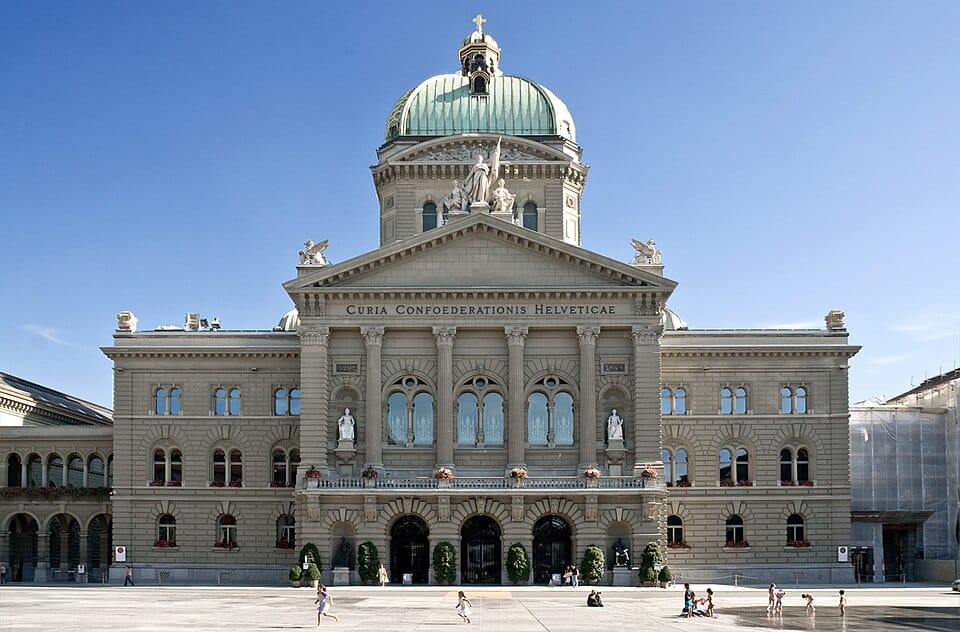
Bern is the capital of Switzerland, built on a peninsula formed by a sharp bend in the Aare River. Its arcaded sandstone old town, largely rebuilt after a fire in 1405 and little changed since, is a UNESCO World Heritage Site, and the city houses the Swiss federal government and parliament in a domed building overlooking the river.
Top attractions in Bern
Zytglogge
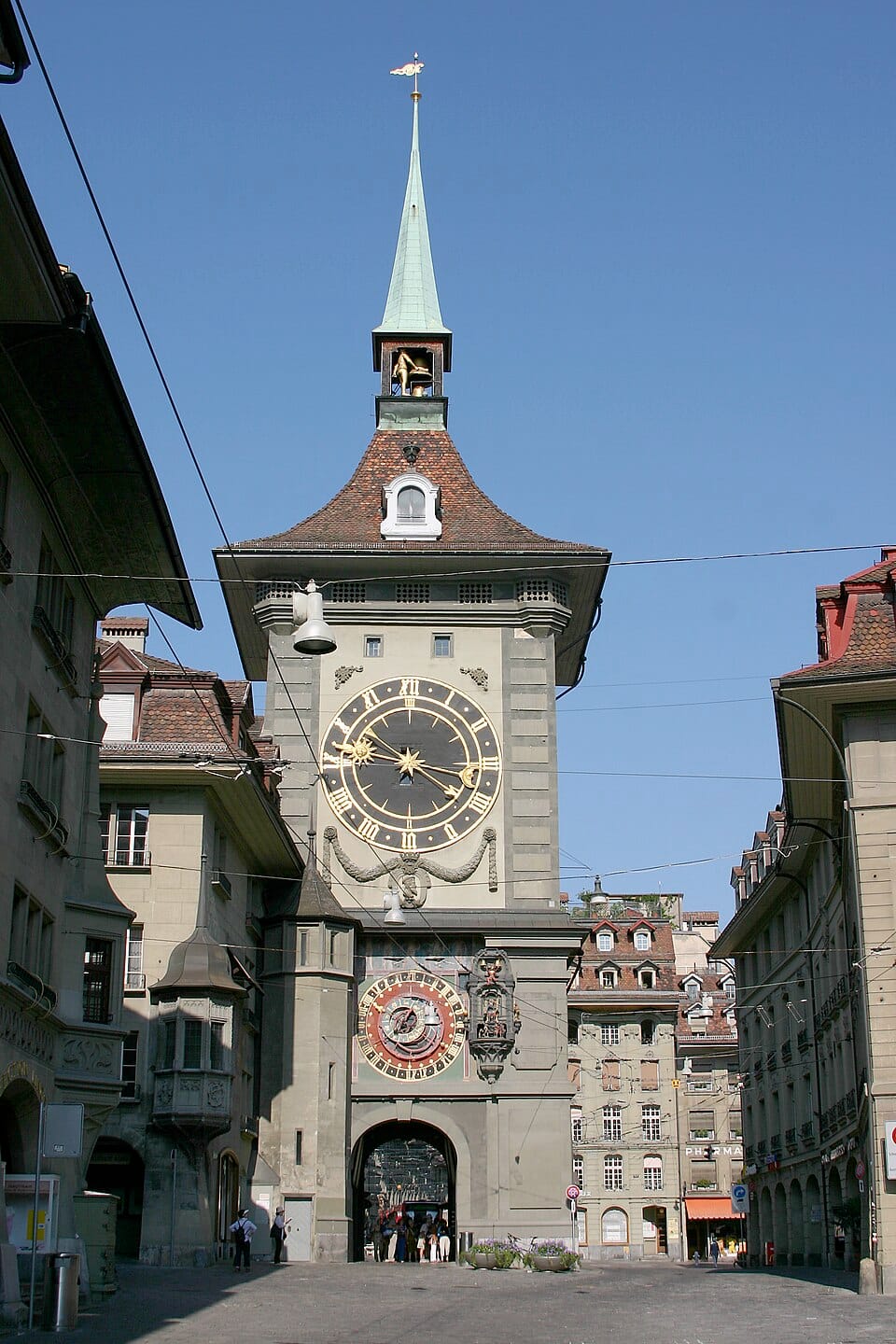
A medieval clock tower dating to the early 13th century, once part of the city's western gate, with an astronomical clock and a mechanical figure display that performs a few minutes before each hour.
BärenPark
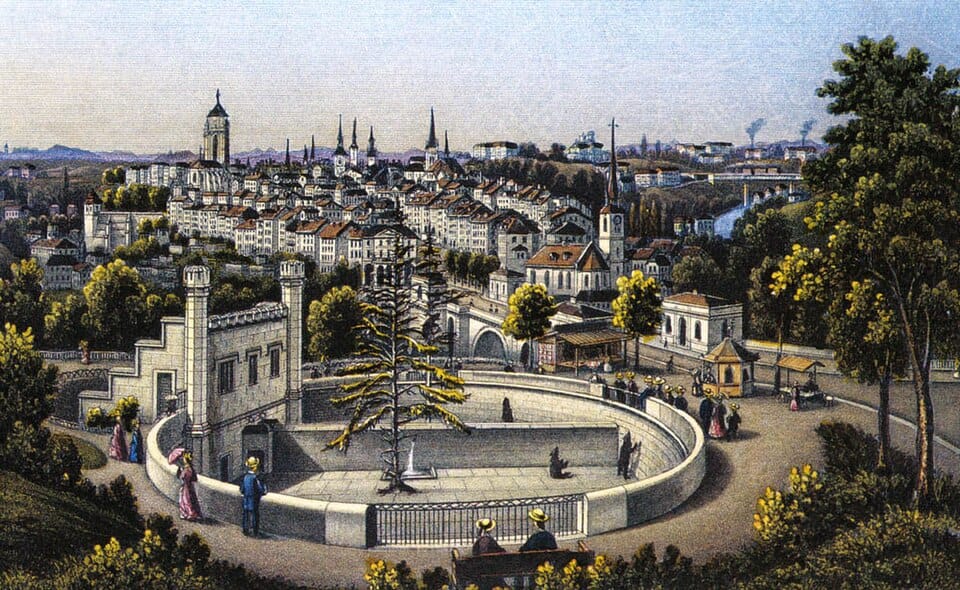
An open-air enclosure along the Aare River below the old town, home to Bern's brown bears, the animal that has symbolized the city since its founding legend in the 12th century.
Federal Palace (Bundeshaus)
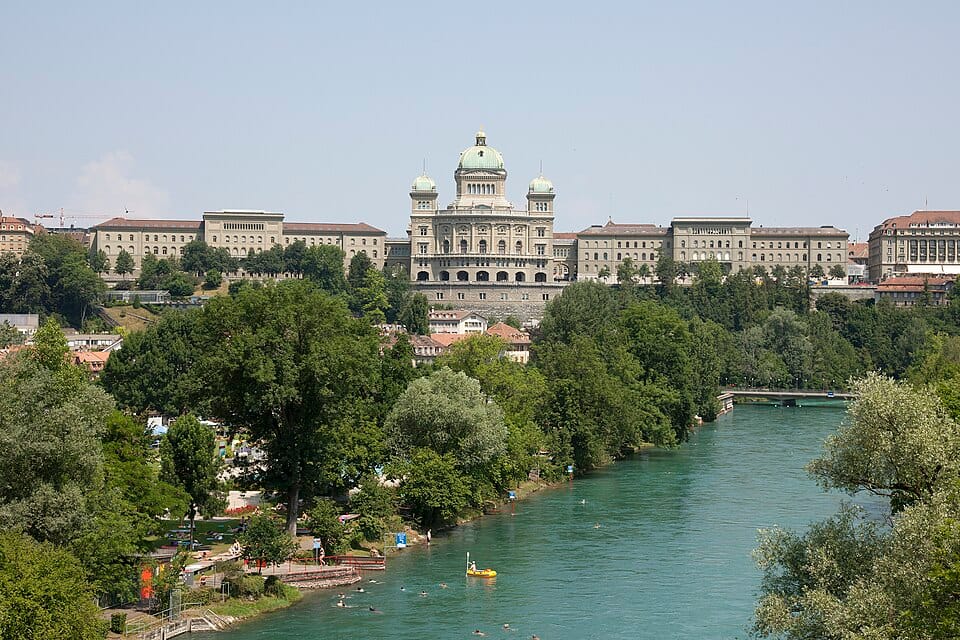
The seat of the Swiss federal government and parliament, completed in 1902 with a central sandstone dome, its terrace opening onto a public square with views over the Aare toward the Alps.
Kramgasse and the Old Town arcades
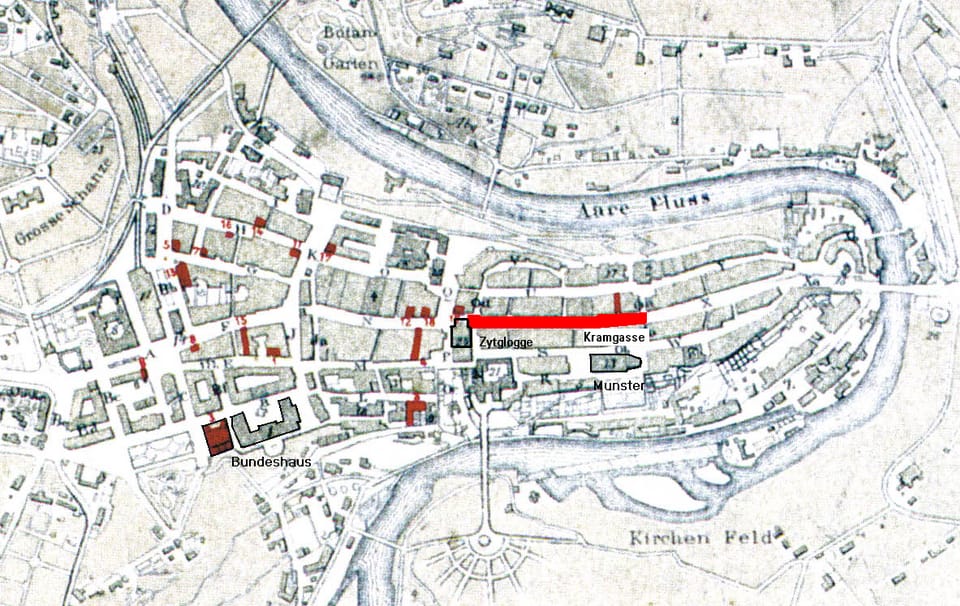
The main street of the old town, lined with roughly six kilometers of covered stone arcades (Lauben) sheltering shops, alongside decorated fountains and the house where Albert Einstein lived from 1903 to 1905.
Rose Garden (Rosengarten)
A hillside park east of the Aare with several hundred rose bushes, offering one of the best panoramic views of the old town's red rooftops and the river below.
Bern Minster (Münster)
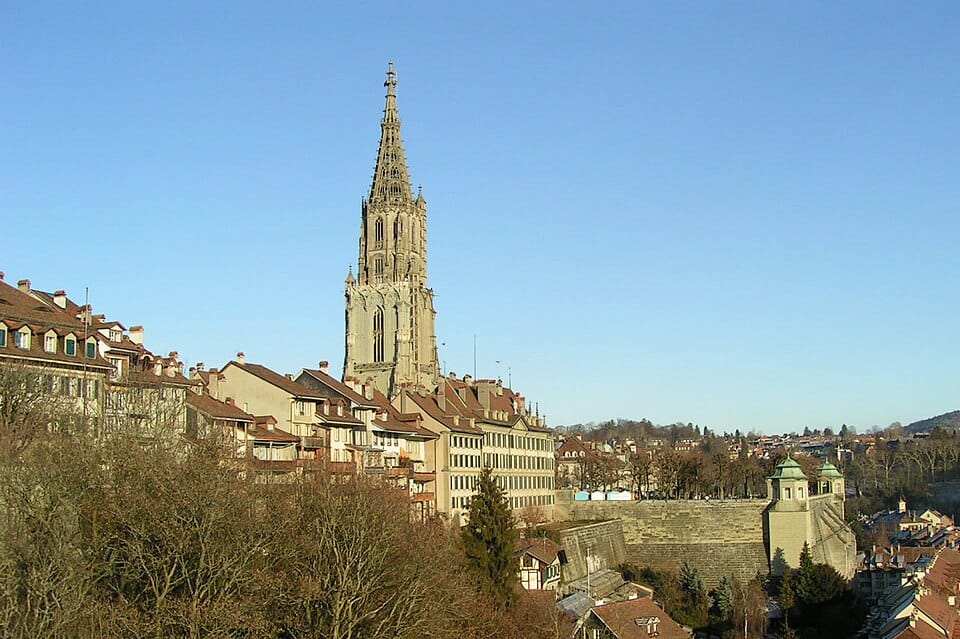
A late Gothic cathedral begun in 1421, the tallest church in Switzerland, with a spire completed only in 1893 and a viewing platform reached by 312 steps that overlooks the old town and the Alps.
Zermatt
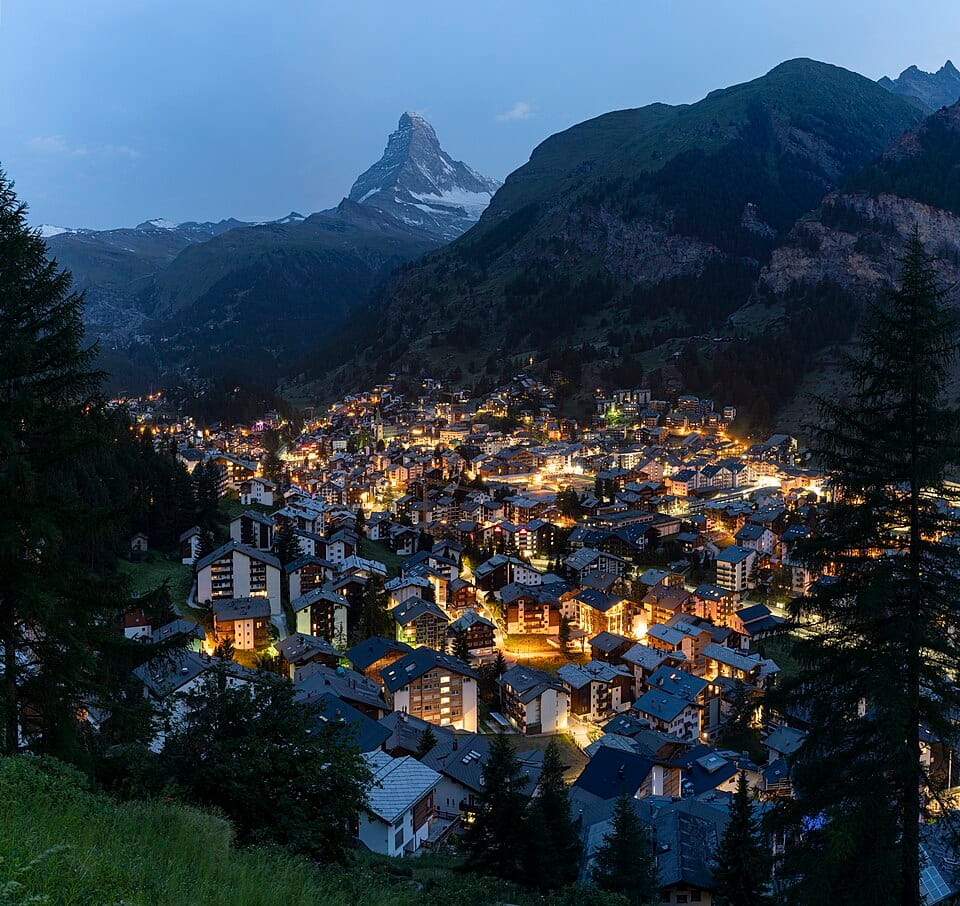
Zermatt is a mountain resort town in the canton of Valais, sitting at the foot of the Matterhorn, one of the most recognizable peaks in the Alps. The car-free village has drawn climbers, skiers, and hikers since the 19th century, and its narrow streets are lined with traditional wooden chalets, hotels, and mountaineering outfitters.
Top attractions in Zermatt
Matterhorn
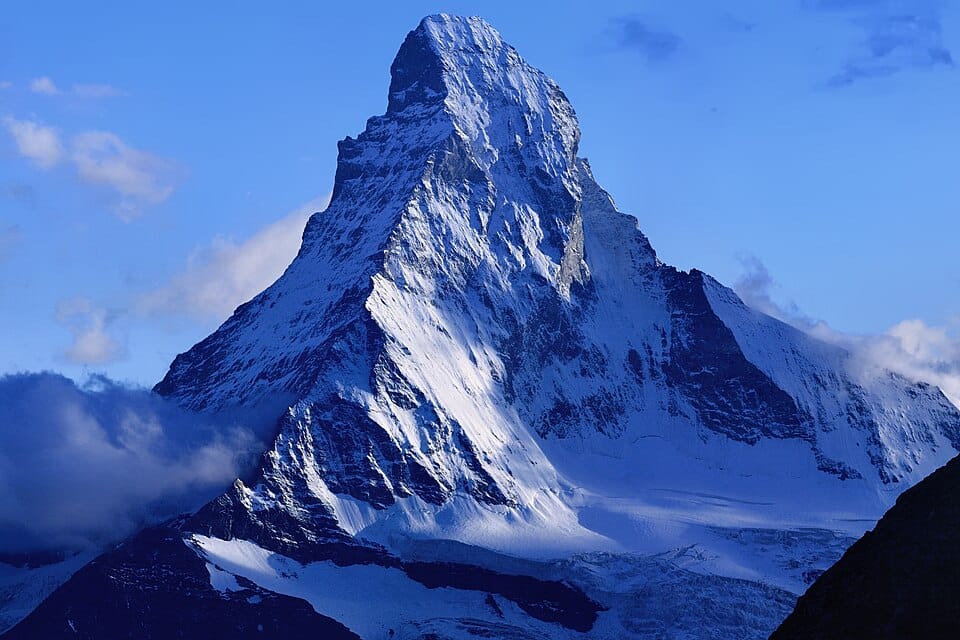
A 4,478-meter pyramidal peak straddling the Swiss-Italian border and the defining backdrop of Zermatt, visible from most points in the village.
Gornergrat Bahn
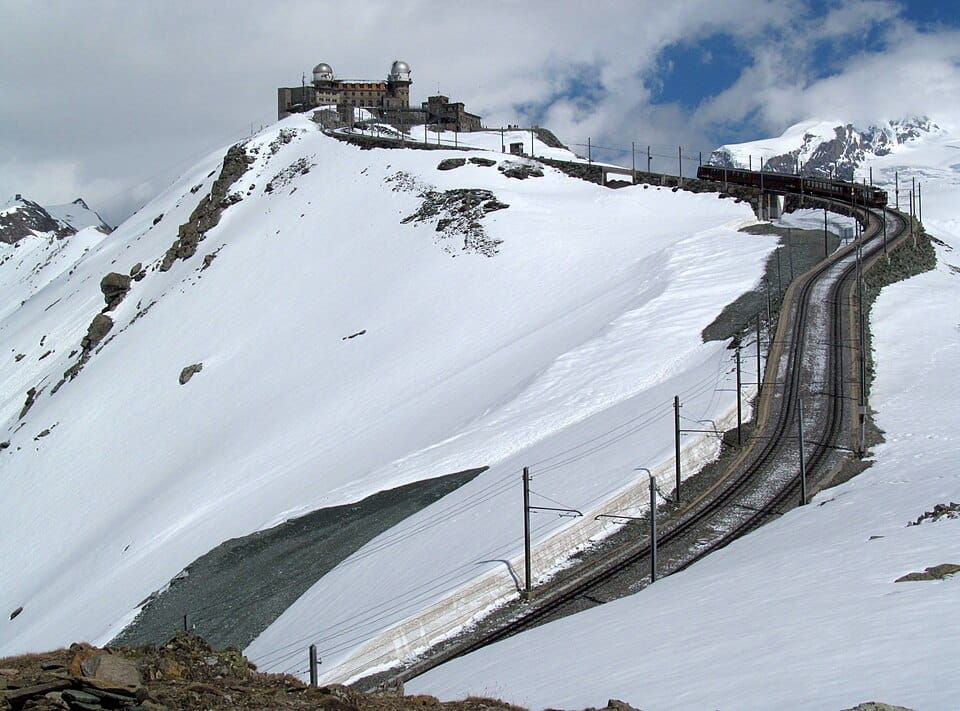
A cog railway opened in 1898 that climbs from Zermatt to the 3,089-meter Gornergrat ridge, giving panoramic views of the Matterhorn and the Gorner Glacier.
Matterhorn Glacier Paradise
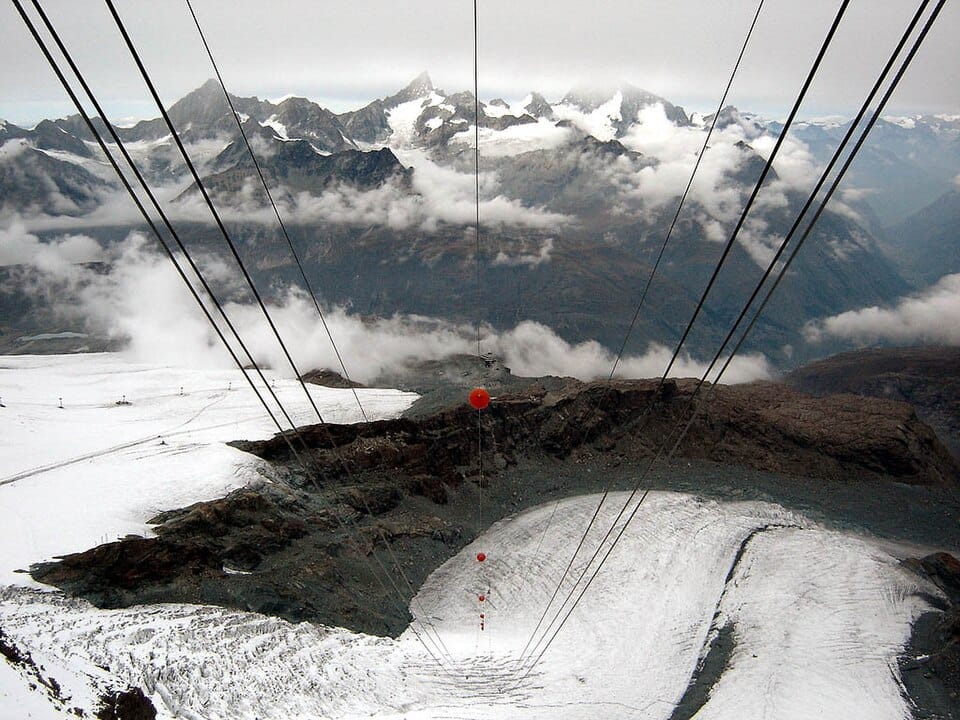
Europe's highest-altitude cable car station, at 3,883 meters, reached from Zermatt in stages and connecting to year-round glacier skiing and an ice grotto.
Matterhorn Museum – Zermatlantis
An underground museum built over the excavated foundations of the old village, tracing Zermatt's history and the 1865 first ascent of the Matterhorn, including original climbing equipment.
Bahnhofstrasse
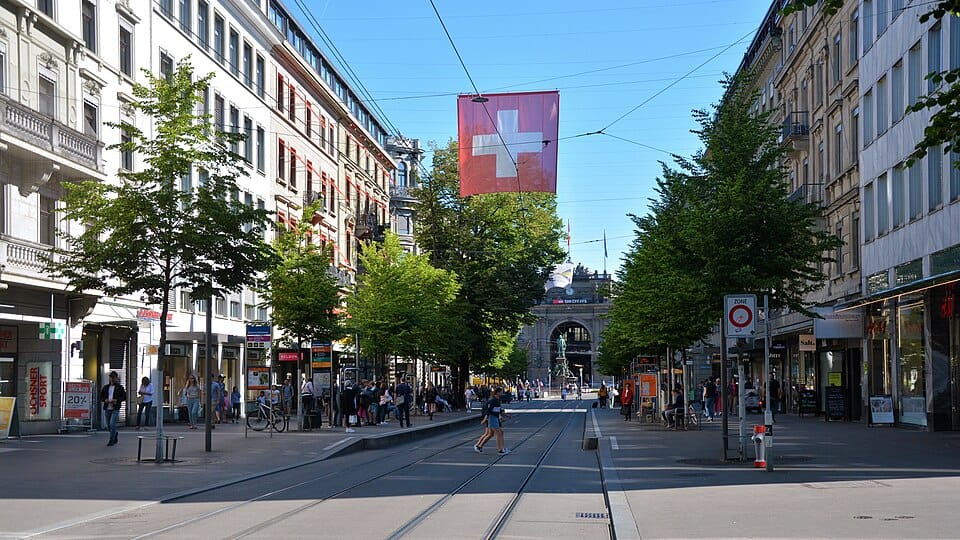
Zermatt's main pedestrian street, running from the train station through the village center, lined with hotels, restaurants, and mountaineering shops.
Montreux
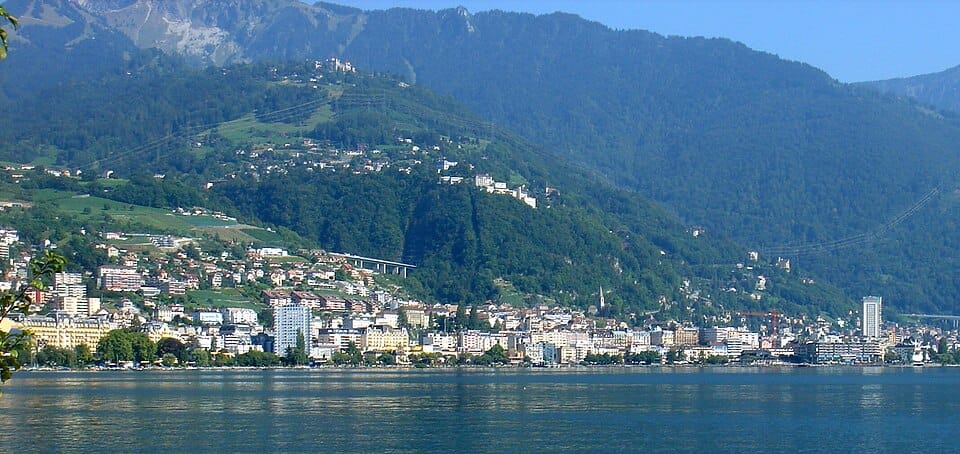
Montreux is a lakeside town on the northeastern shore of Lake Geneva in the canton of Vaud, known for its mild microclimate, palm-lined promenade, and long association with jazz and music through its annual festival. The town rises steeply from the water into terraced vineyards, with Alpine peaks forming a backdrop across the lake.
Top attractions in Montreux
Château de Chillon
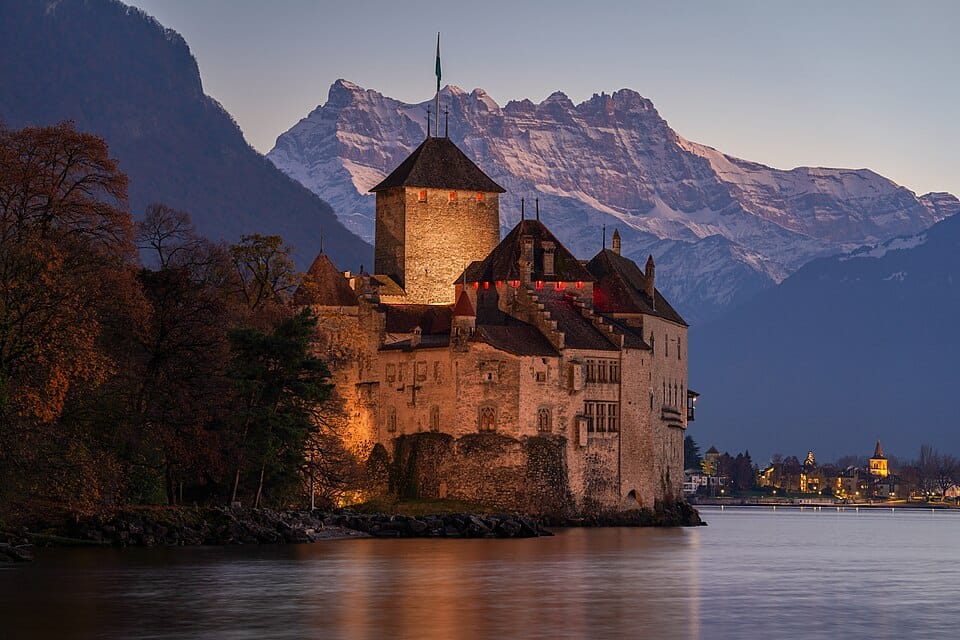
A moated castle built on a rocky islet at the edge of Lake Geneva, just south of Montreux, dating largely from the 13th century and made famous by Lord Byron's poem 'The Prisoner of Chillon'.
Montreux Jazz Festival grounds
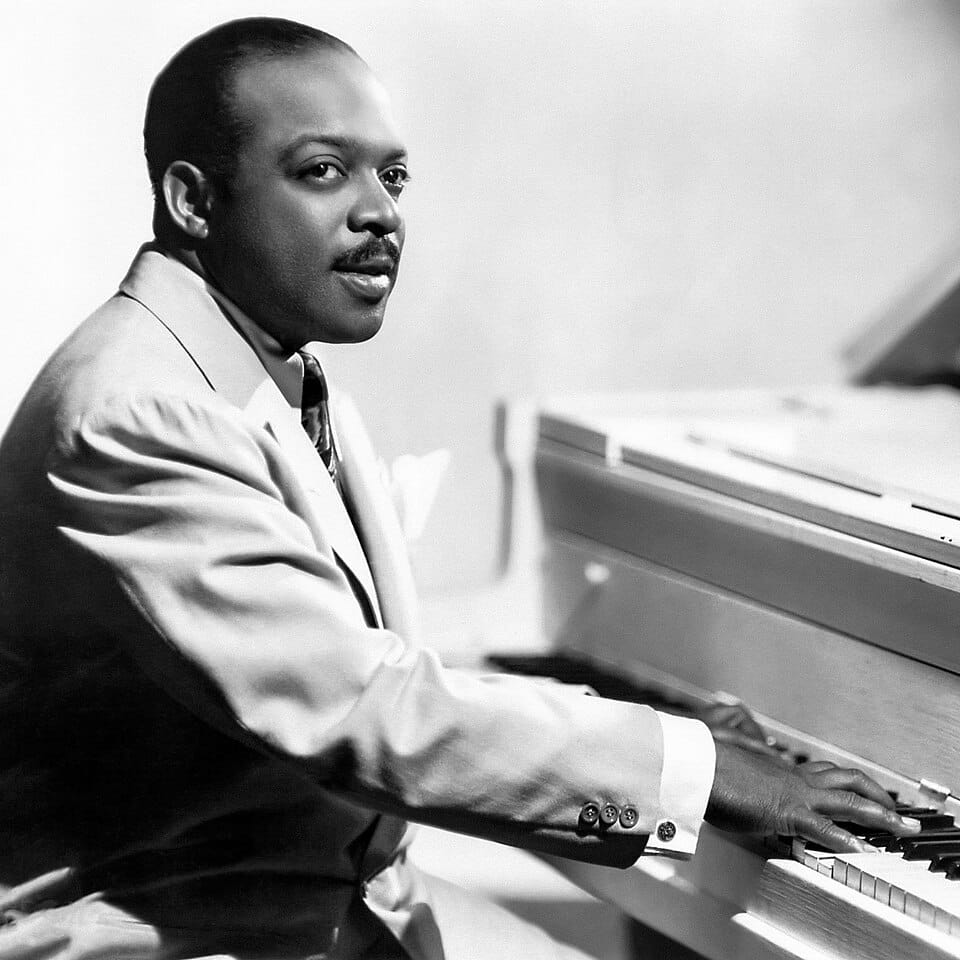
The lakeside venues and promenade where the Montreux Jazz Festival has been held every July since 1967, now also home to a statue of Freddie Mercury who recorded several Queen albums in the town.
Lavaux vineyard terraces
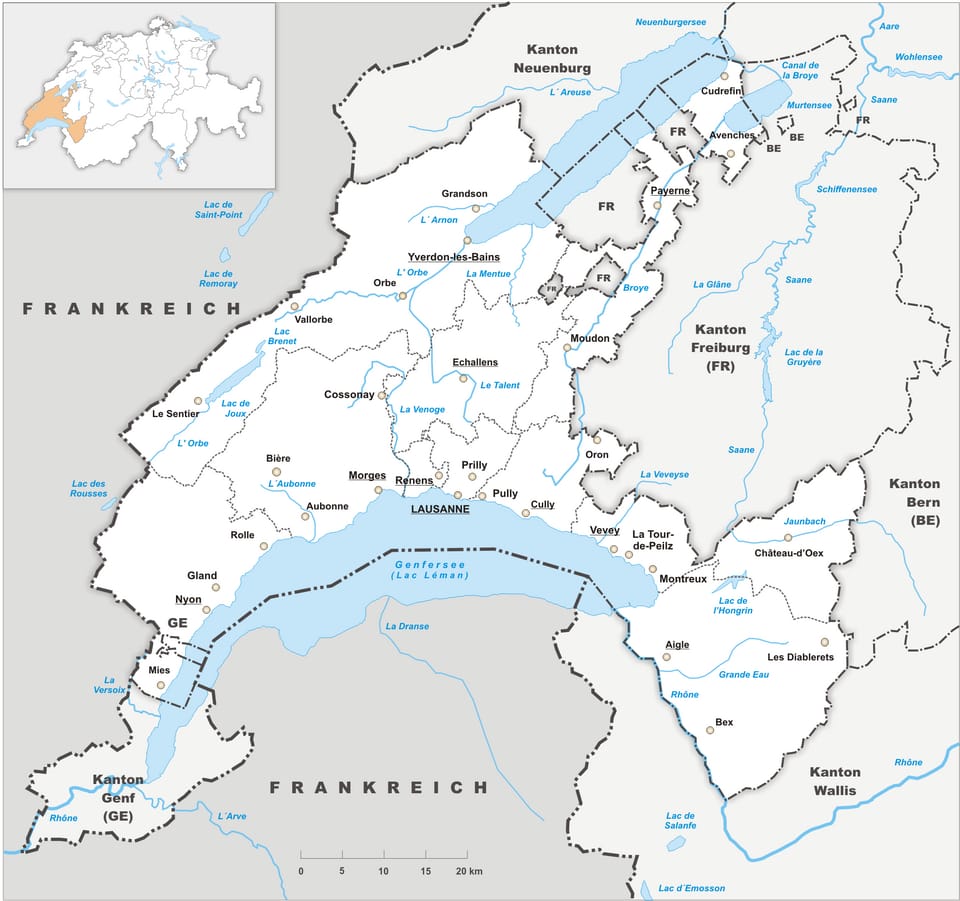
A UNESCO World Heritage vineyard landscape stretching along the lakeshore between Montreux and Lausanne, with narrow terraces cultivated since the 11th century and small winegrowing villages accessible by local road.
Rochers-de-Naye
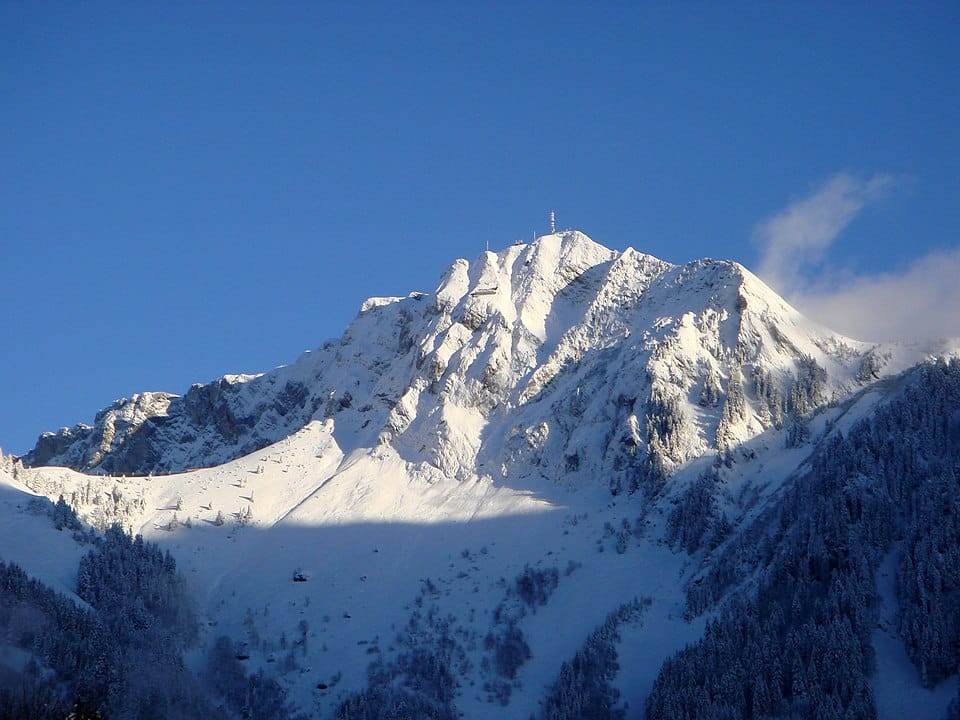
A 2,042-meter summit above Montreux reached by a cogwheel railway that opened in 1892, with panoramic views over Lake Geneva and, in summer, a marmot park near the top station.
Montreux lakeside promenade
A flower-lined waterfront path stretching several kilometers along Lake Geneva, planted with palm trees and cedars that thrive in the town's sheltered microclimate.
Geneva
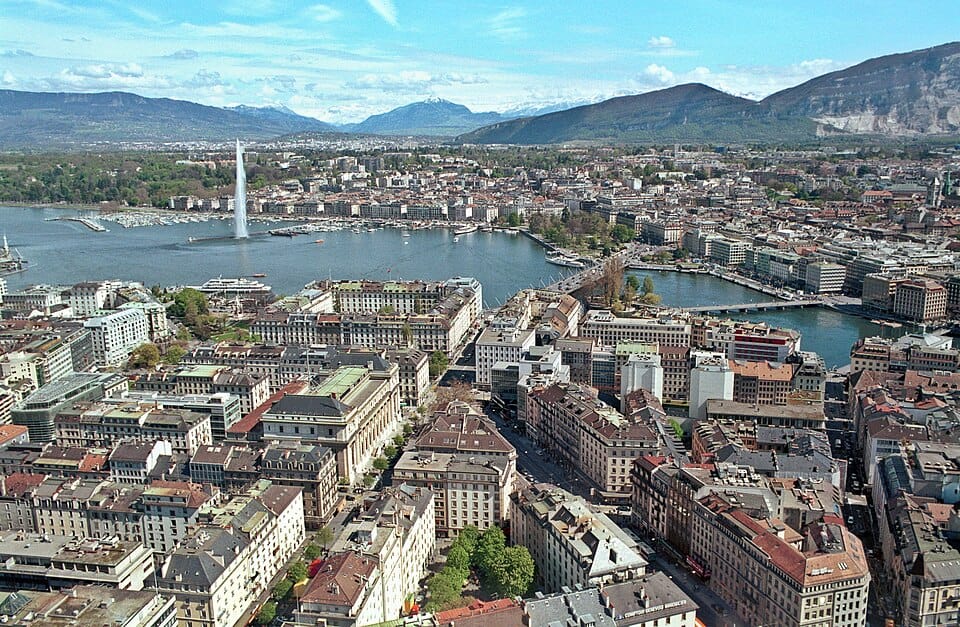
Geneva is Switzerland's second-largest city, situated at the southwestern tip of Lake Geneva where the Rhone River flows out toward France. It is a hub of international diplomacy, hosting the European headquarters of the United Nations and numerous humanitarian organizations, alongside a compact old town and a lakefront known for its towering water fountain.
Top attractions in Geneva
Jet d'Eau
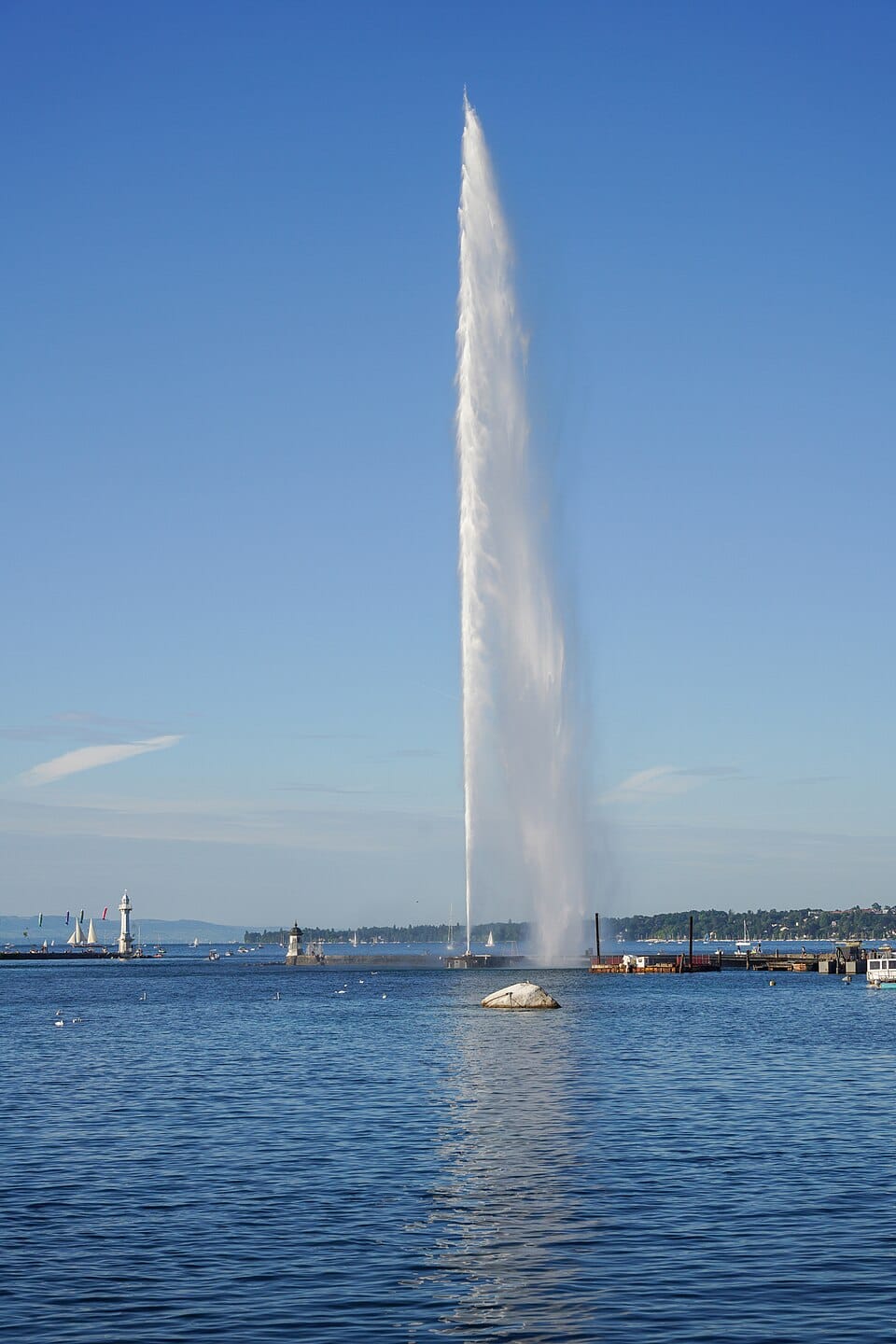
A fountain that shoots lake water up to 140 meters into the air from the point where the harbor meets Lake Geneva, visible from most of the lakefront and one of the city's best-known landmarks.
St. Pierre Cathedral
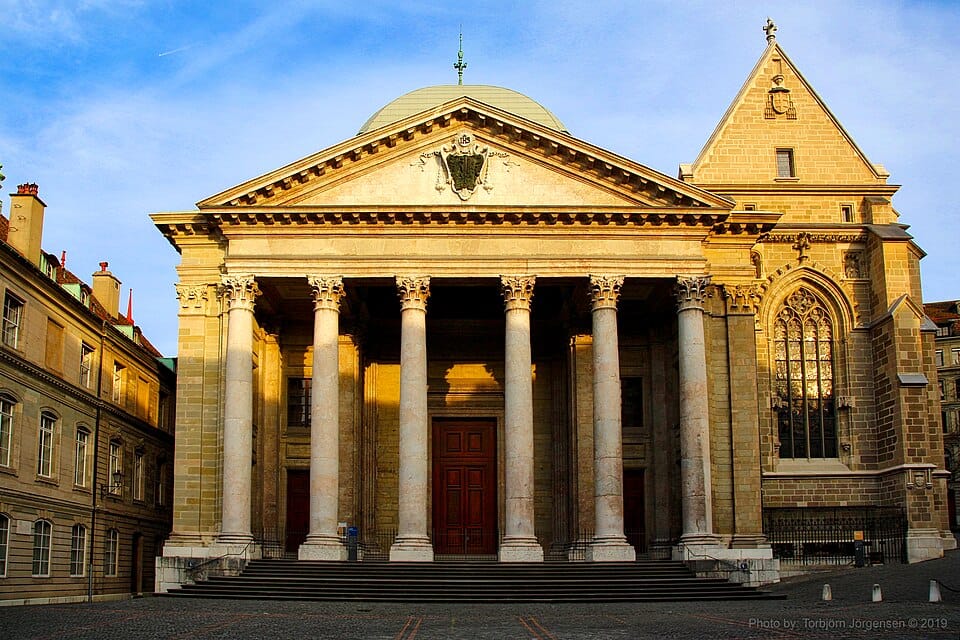
A cathedral in the heart of the old town begun in the 12th century, where the reformer John Calvin preached in the 16th century; visitors can climb the north tower for views over the rooftops and lake.
Palace of Nations
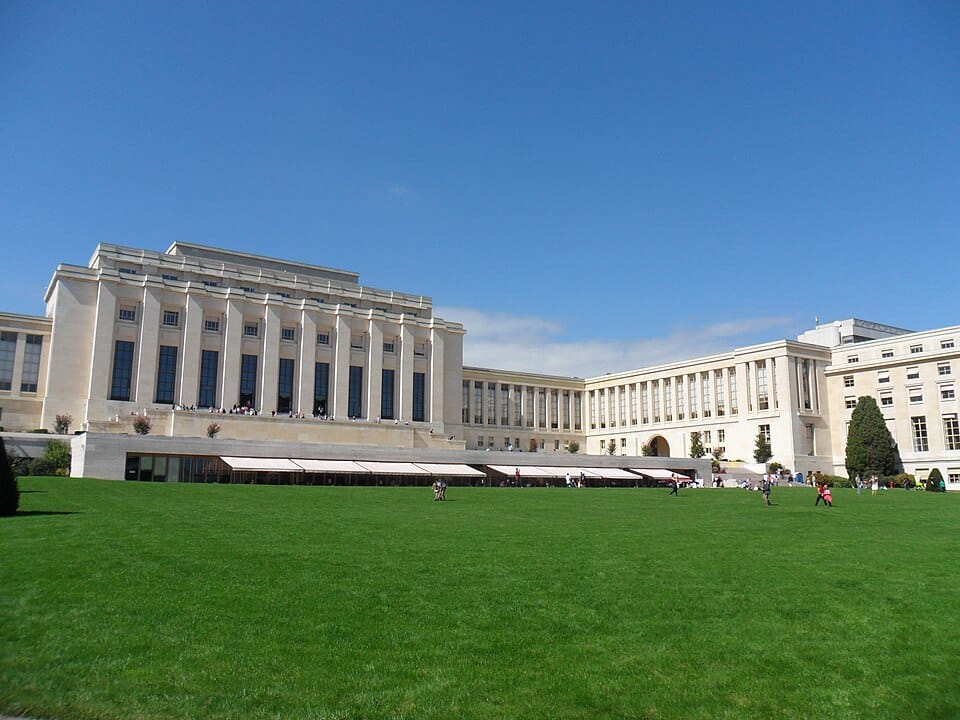
The European headquarters of the United Nations, built in the 1930s for the League of Nations, set in a large park north of the city center and open for guided tours of its assembly halls.
Old Town (Vieille Ville)
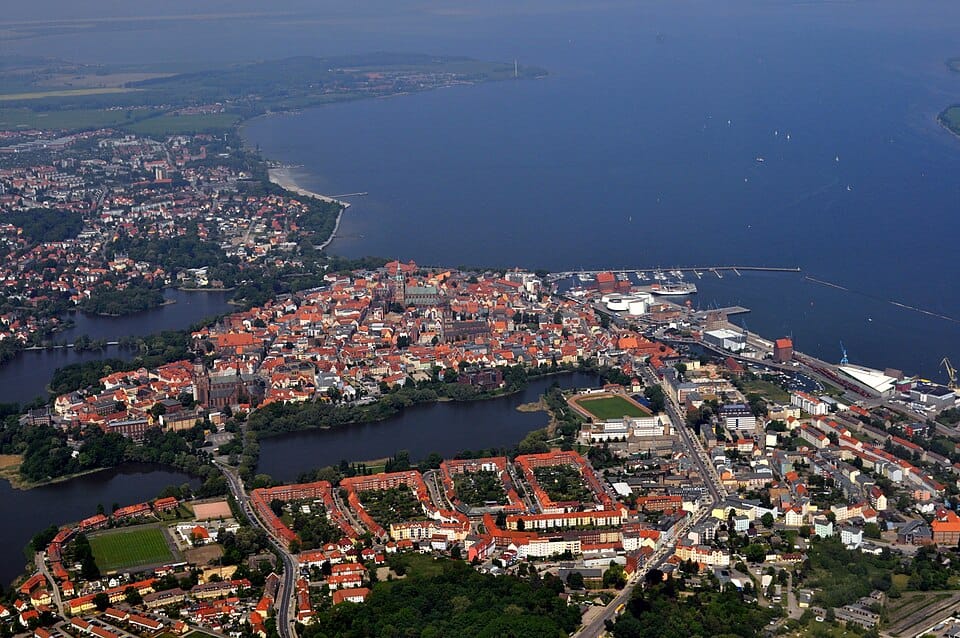
A hilltop district of cobbled streets, small squares, and antique shops surrounding the cathedral, largely dating from the medieval and Renaissance periods and closed to most car traffic.
Patek Philippe Museum
A museum tracing the history of watchmaking from the 16th century to today, housing pieces by the Geneva-based watchmaker Patek Philippe alongside enamel miniatures and automata.
Plan this route with EuroDrive Scout — tolls, vignettes, ZTL alerts, fuel & parking →