Le Puy Route: attractions & sights guide
A stop-by-stop guide to the best things to see along the Le Puy Route route — 6 destinations, their must-see sights and how to drive between them.
Plan this route with EuroDrive Scout — tolls, vignettes, ZTL alerts, fuel & parking →
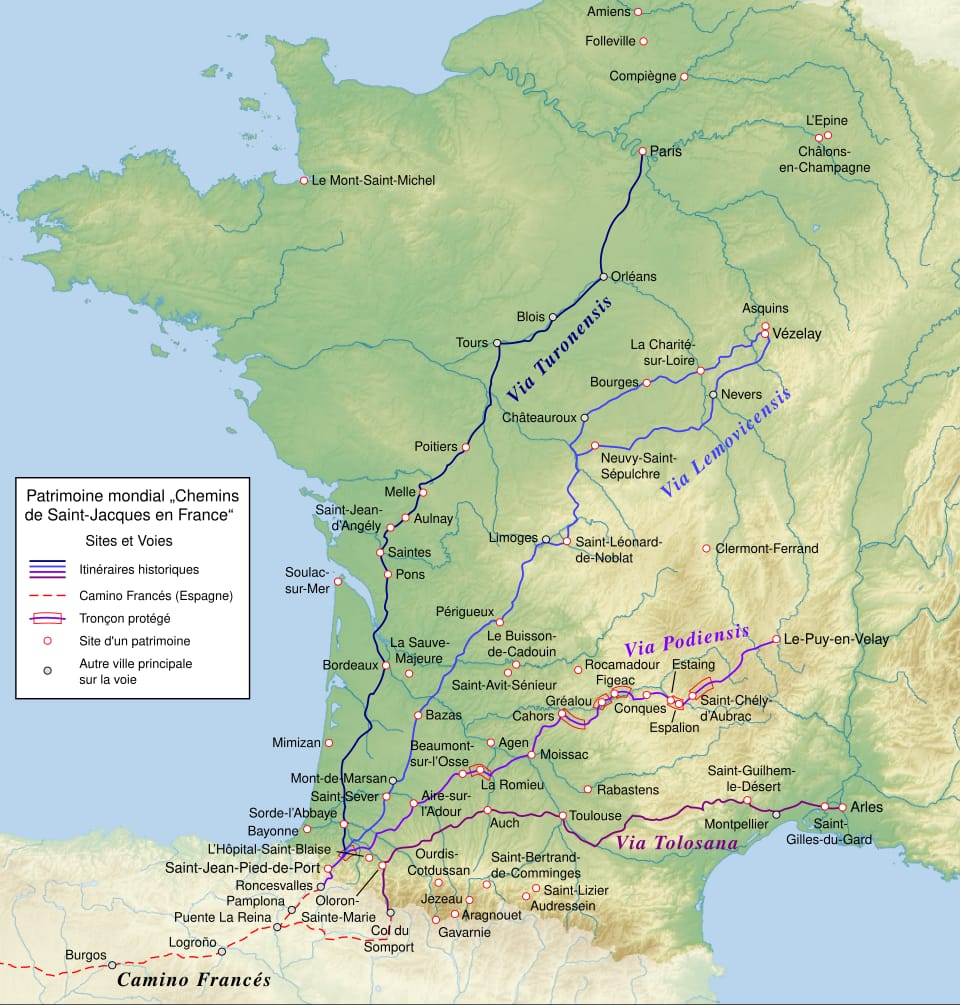
Le Puy-en-Velay
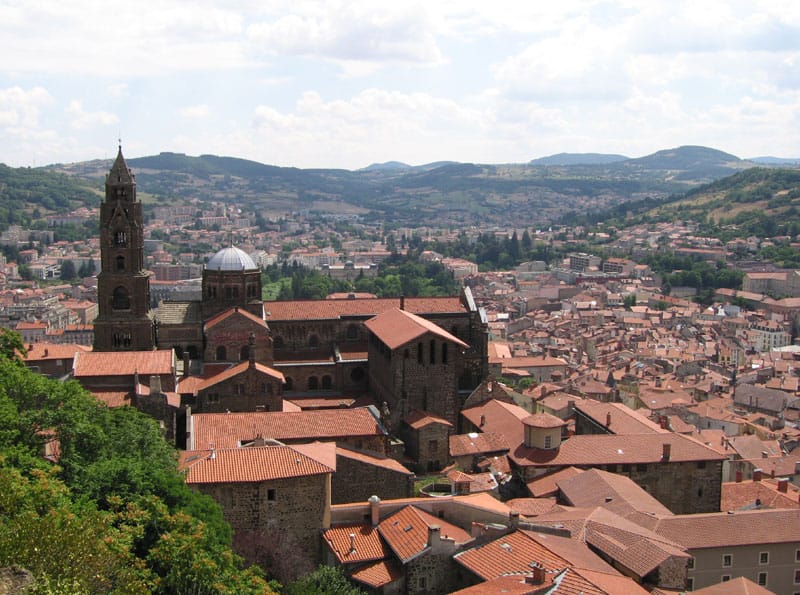
Le Puy-en-Velay is a dramatic volcanic town in the Auvergne, built around two towering rock pinnacles crowned by a chapel and a giant red statue of the Virgin Mary. Its Romanesque cathedral, black Madonna, and lace-making tradition have made it one of the most distinctive towns in central France.
Top attractions in Le Puy-en-Velay
Cathedral of Notre-Dame du Puy
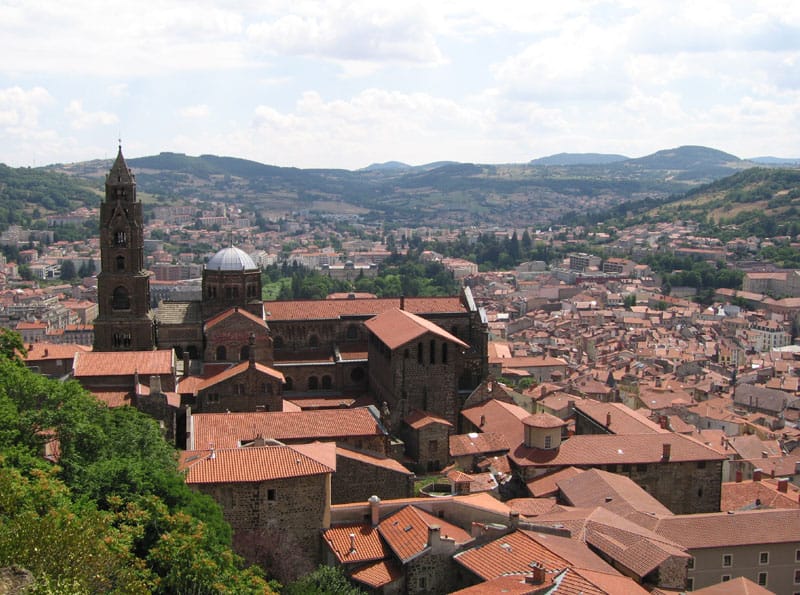
A Romanesque cathedral with Byzantine-influenced domes, reached by a steep staircase, home to the venerated Black Madonna statue and a UNESCO-listed Camino heritage site.
Statue of Notre-Dame de France
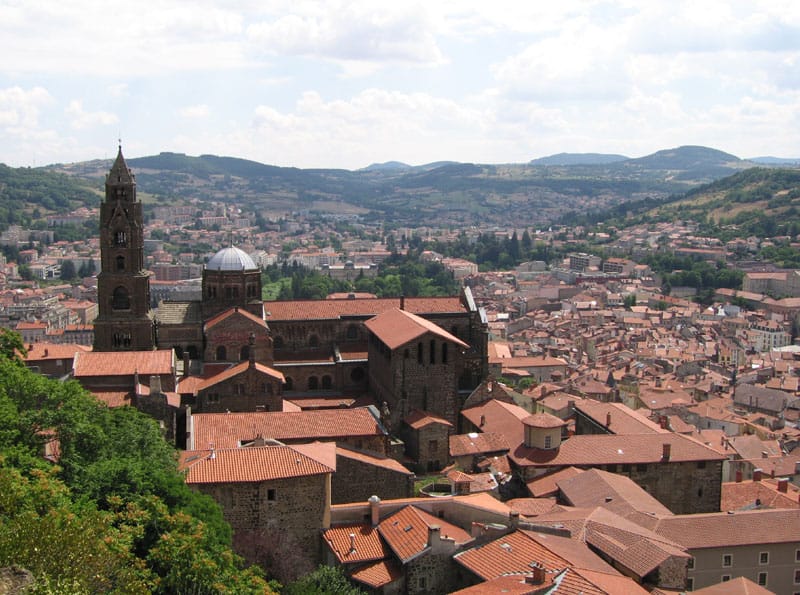
A colossal 19th-century cast-iron statue of the Virgin and Child atop the Rocher Corneille, made from melted-down cannons captured at Sevastopol, with an interior staircase to a viewing platform.
Chapel of Saint-Michel d'Aiguilhe
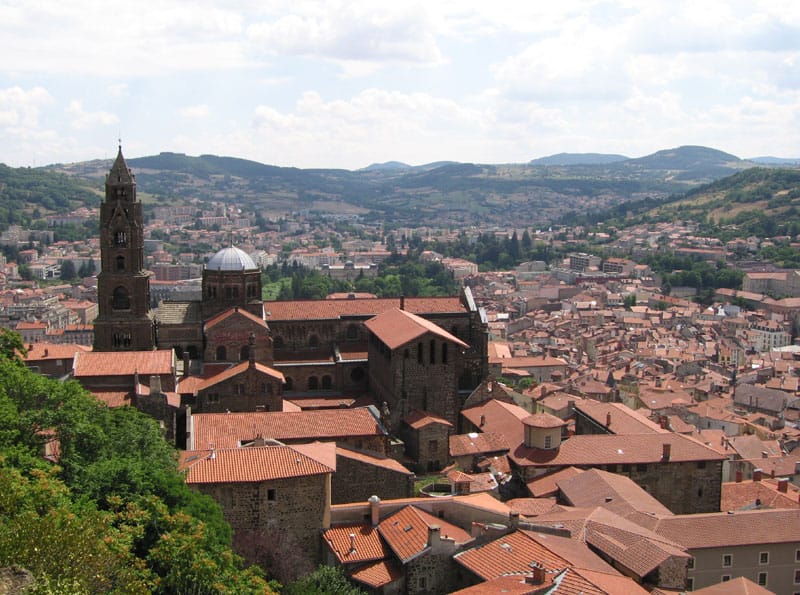
A tiny 10th-century Romanesque chapel perched atop a 85-metre volcanic needle, reached by 268 steps cut into the rock.
Rocher Corneille
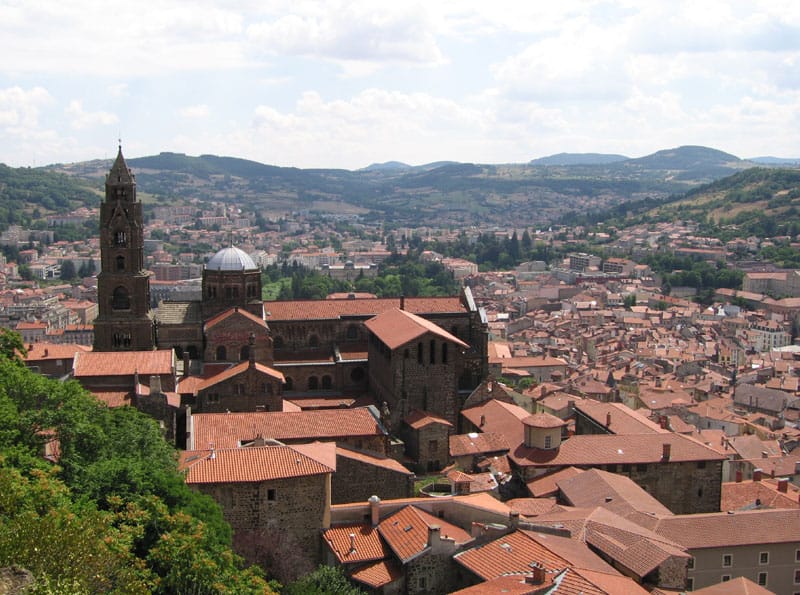
A 132-metre volcanic plug rising directly above the old town, topped by the Notre-Dame de France statue and offering wide views over Le Puy and the Velay countryside.
Lace Museum (Centre d'Enseignement de la Dentelle au Fuseau)
A museum and workshop dedicated to Le Puy's centuries-old bobbin lace-making tradition, with demonstrations of the craft still practiced by local lacemakers.
Conques
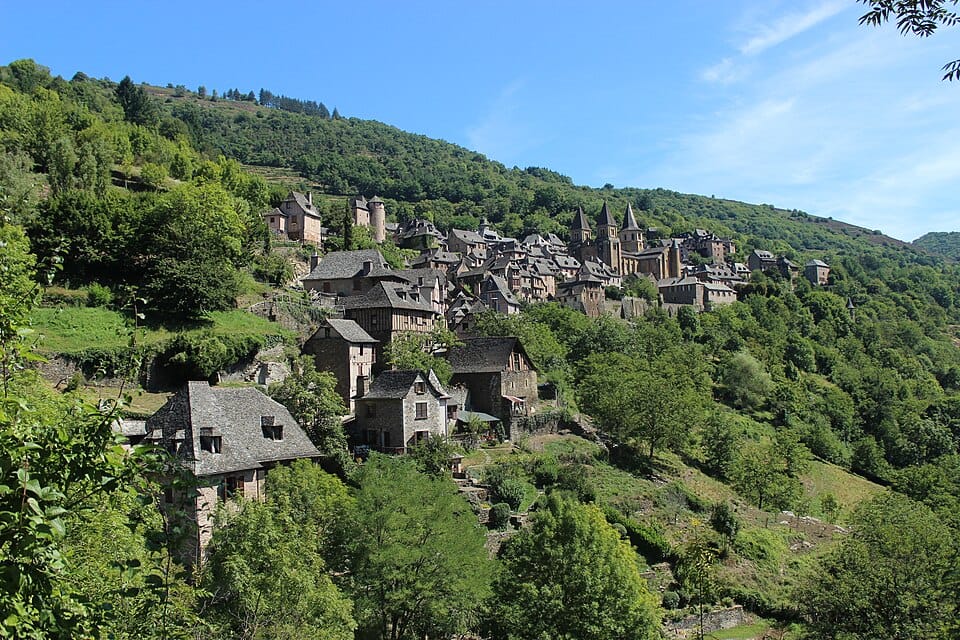
Conques is a small medieval village in the Aveyron department, built into a steep valley where two streams meet. It is famous for the Abbey Church of Sainte-Foy, a Romanesque masterpiece that has drawn pilgrims for over a thousand years, and it remains one of the essential stops on the Via Podiensis, the Le Puy route to Santiago de Compostela.
Top attractions in Conques
Abbey Church of Sainte-Foy
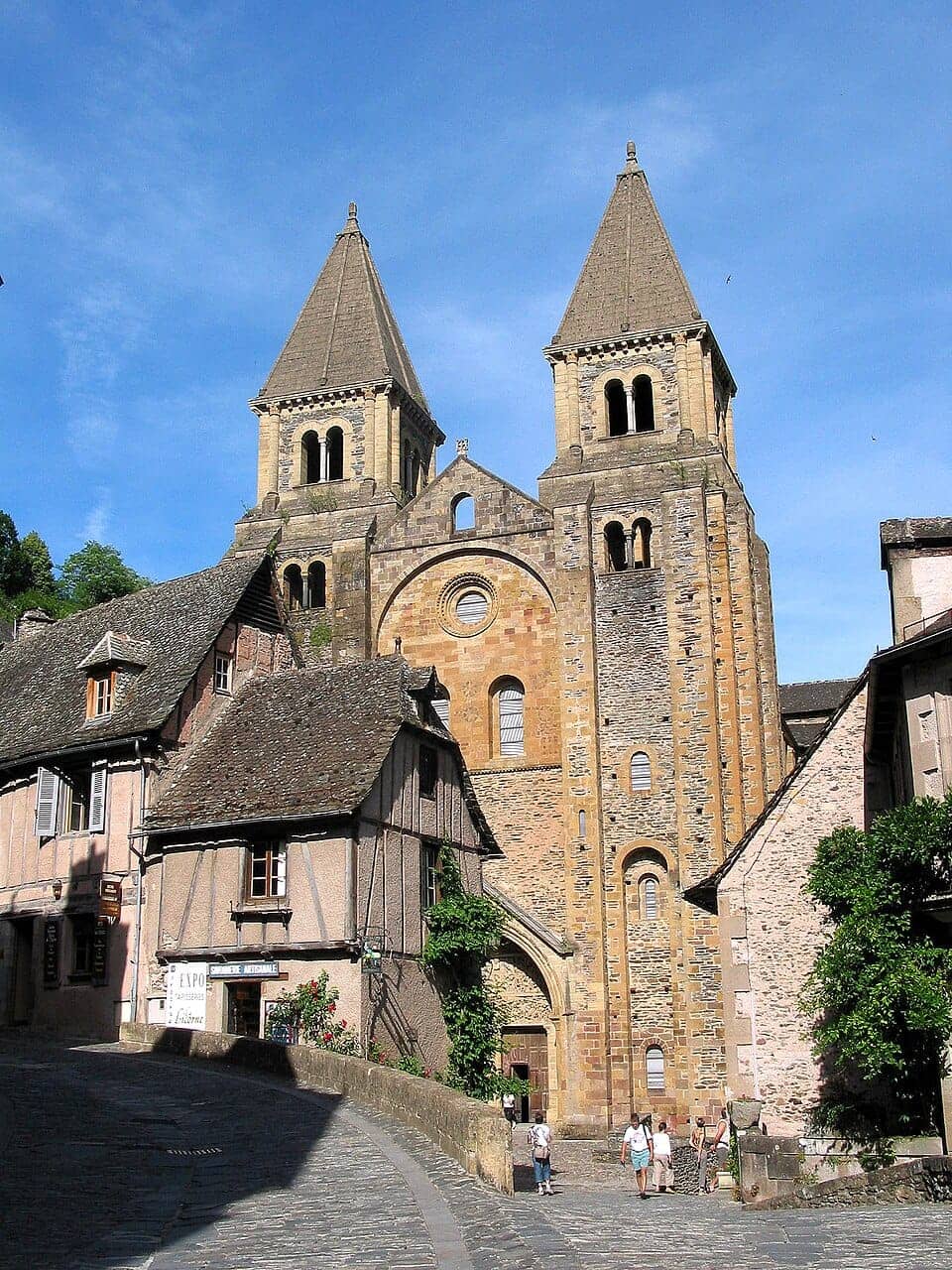
An 11th-century Romanesque abbey church renowned for its tympanum depicting the Last Judgment, one of the best-preserved in France.
Treasury of Conques
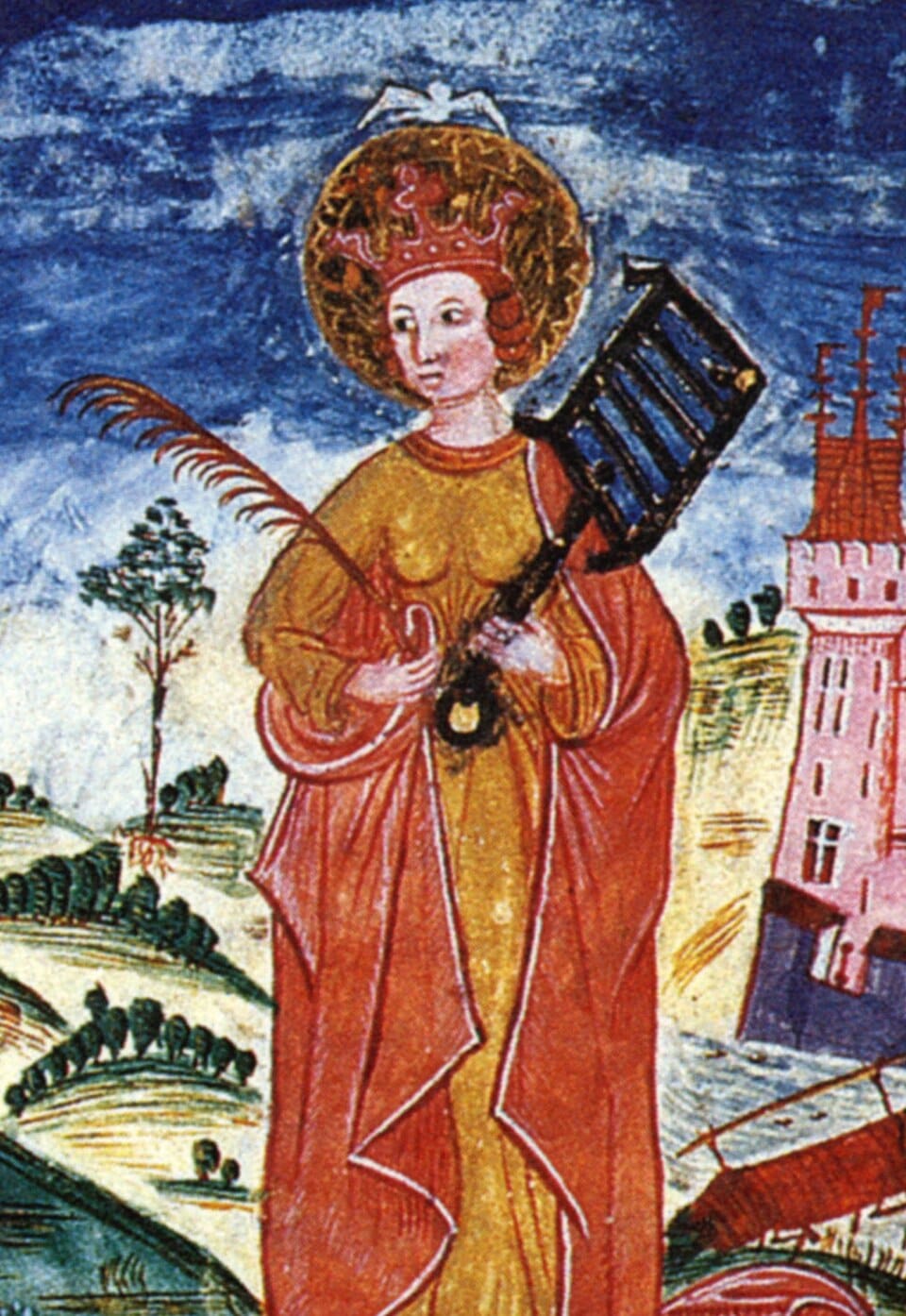
One of the richest surviving collections of medieval goldsmith work in Europe, centered on the jeweled gold reliquary statue of Sainte Foy.
Pont des Pèlerins
A stone bridge over the Dourdou river just below the village, still used by walkers joining the Via Podiensis toward the next stage.
Château d'Humières and village lanes
A cluster of half-timbered and stone houses climbing the hillside around a former seigneurial residence, largely unchanged since the pilgrimage's medieval heyday.
Figeac
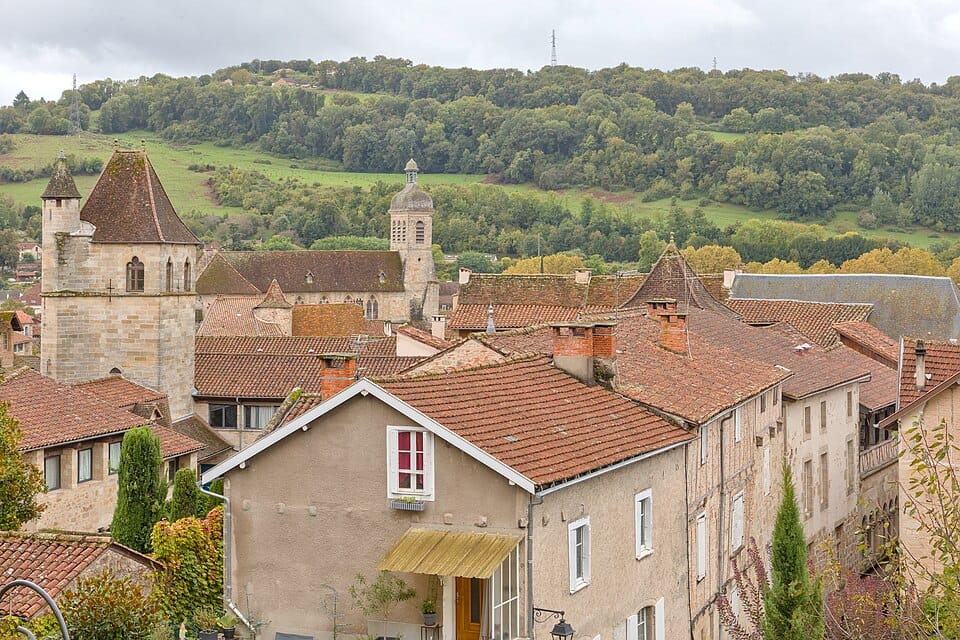
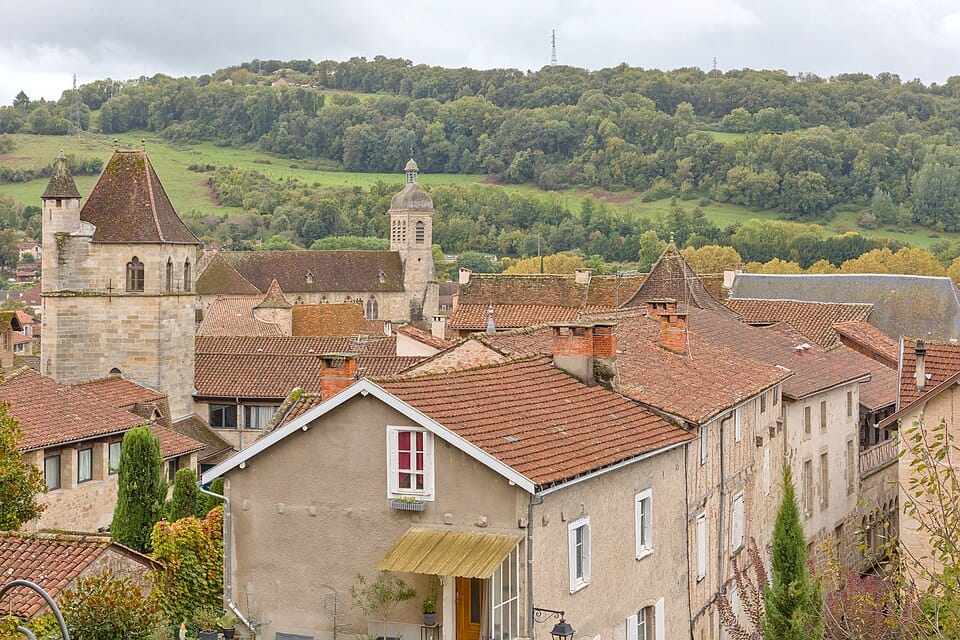
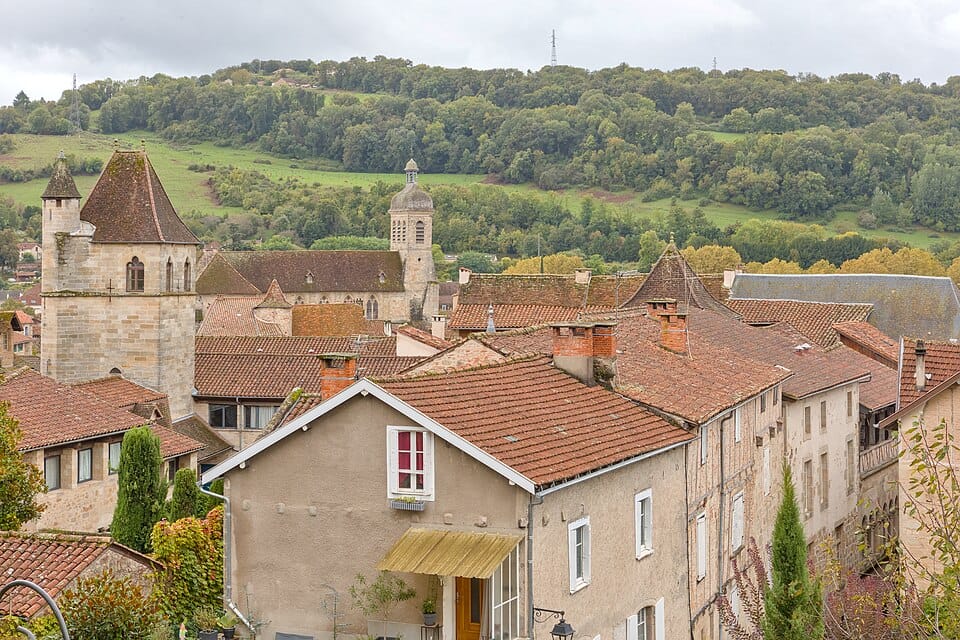
Figeac is a market town on the banks of the Célé river in the Lot department, built around a medieval core of merchant houses that grew wealthy from trade along the pilgrimage roads. It lies on a variant of the Via Podiensis and served historically as a waystation for pilgrims heading toward Cahors and on to Santiago de Compostela.
Top attractions in Figeac
Place des Écritures
A square holding a giant granite reproduction of the Rosetta Stone by artist Joseph Kosuth, honoring Figeac native Jean-François Champollion, who deciphered Egyptian hieroglyphs.
Church of Saint-Sauveur
The former abbey church around which the town grew, combining Romanesque origins with later Gothic additions and an unusual painted chapter house.
Medieval merchant houses of the old town

A dense network of stone and half-timbered facades with distinctive open-air rooftop galleries called soleilhos, once used to dry skins and store goods.
Champollion Museum – The Writing of the World
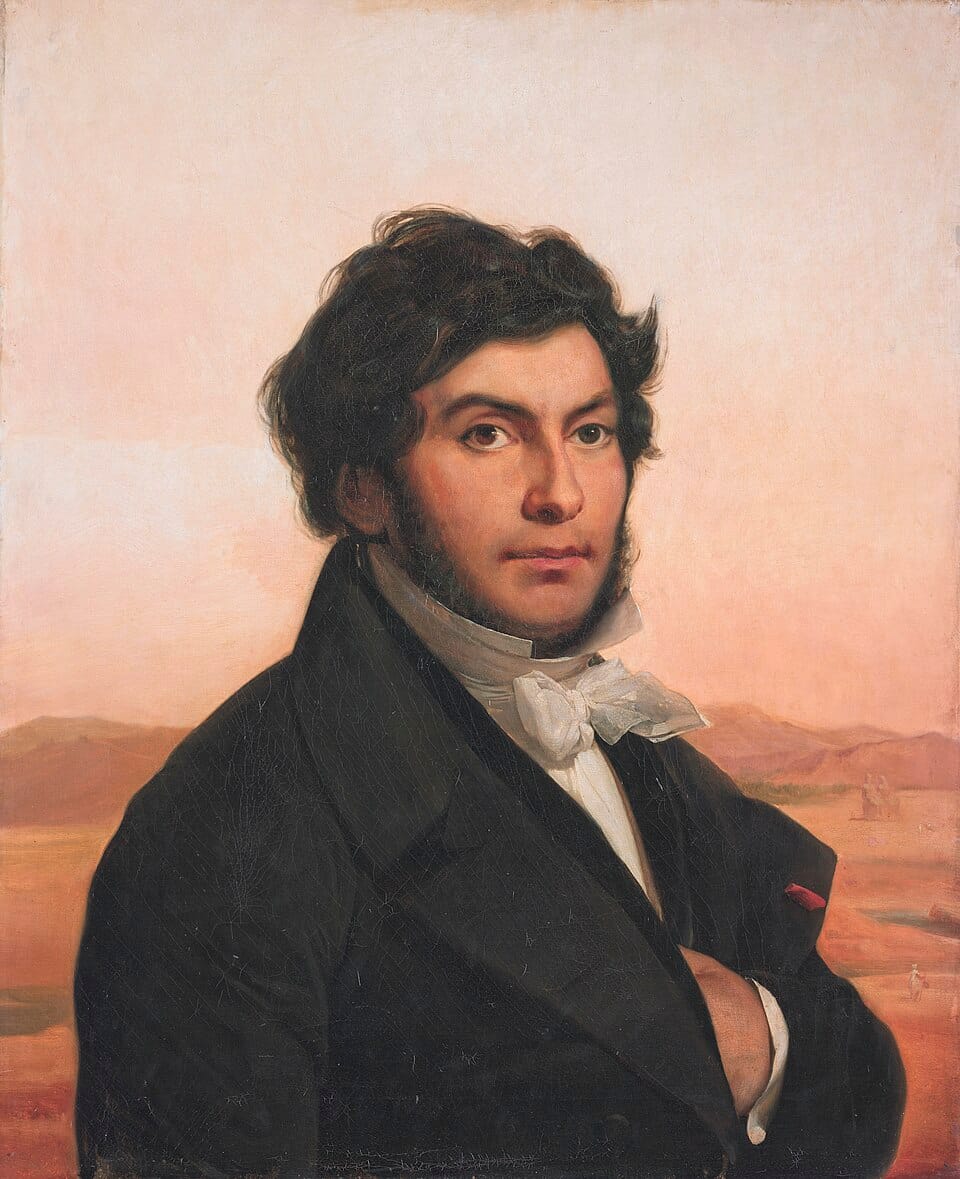
A museum built around Champollion's birthplace, tracing the history of writing systems from cuneiform to modern scripts alongside his own discoveries.
Cahors
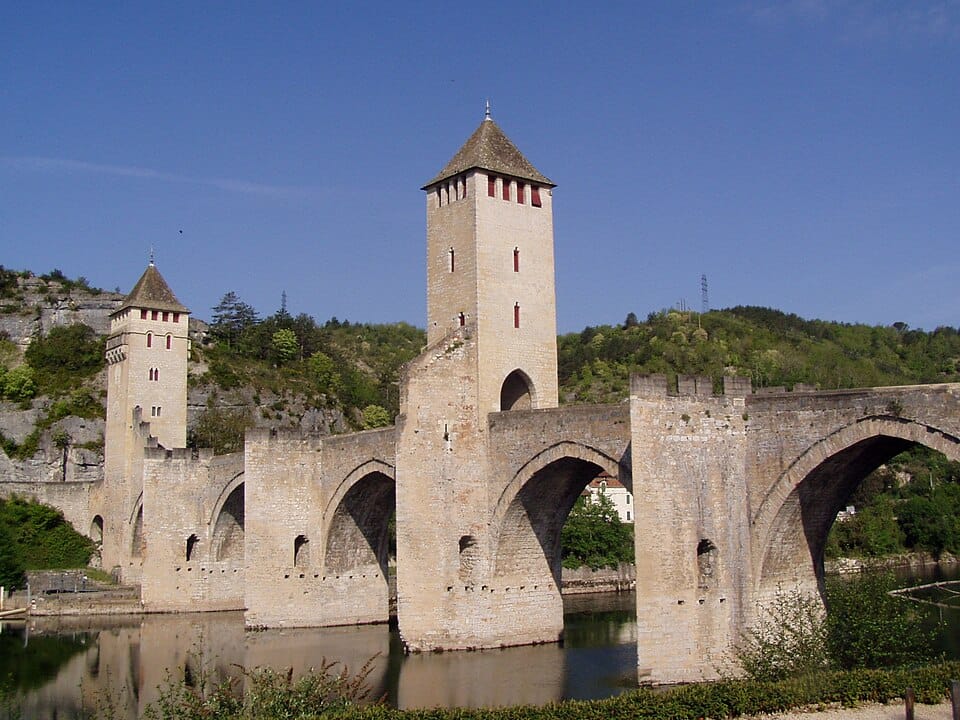
Cahors is the capital of the Lot department, wrapped almost entirely by a loop of the Lot river and centered on a well-preserved medieval quarter. The town is known for the fortified Pont Valentré and for the dark, tannic Malbec-based wines that carry its name, and it lies directly on the Via Podiensis as pilgrims cross the river on their way south toward Cahors' cathedral before continuing to Santiago de Compostela.
Top attractions in Cahors
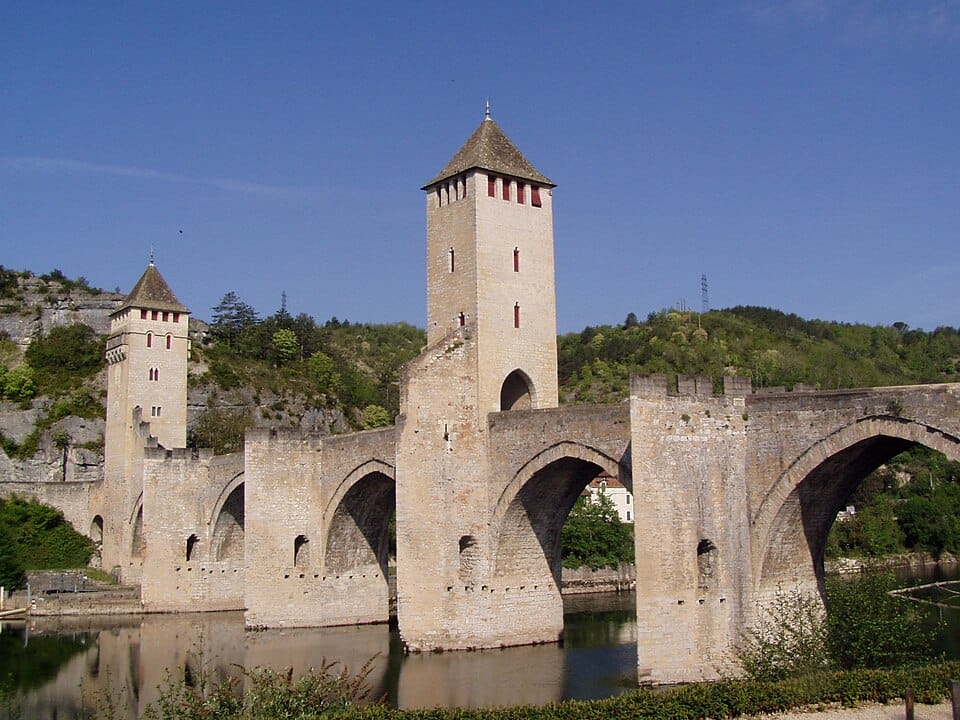
Pont Valentré
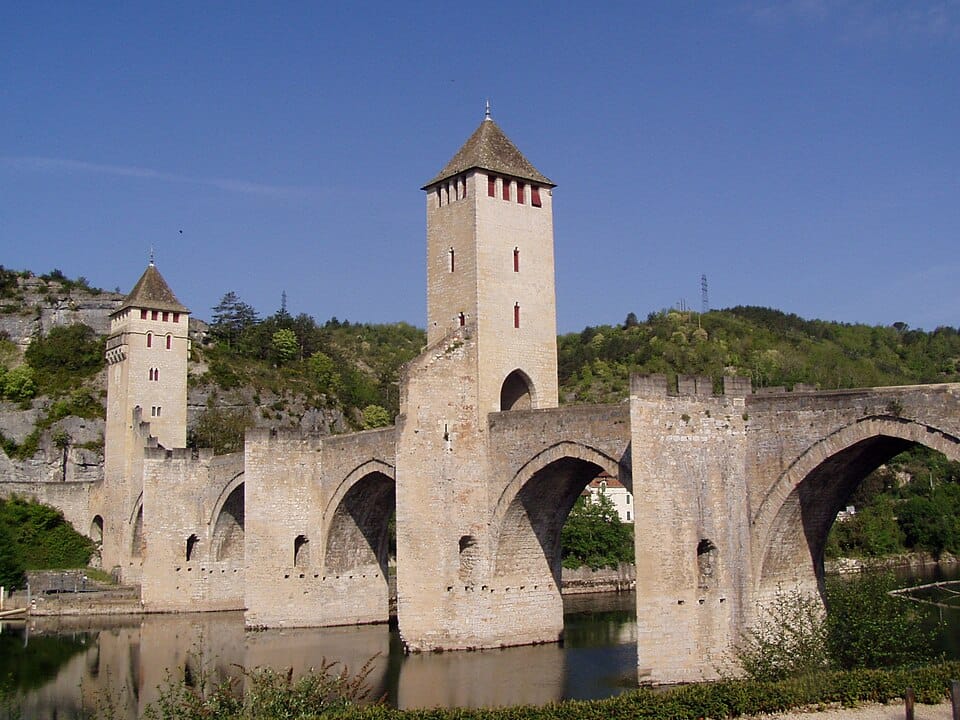
A fortified 14th-century bridge with three tall towers spanning the Lot river, considered one of the finest surviving examples of medieval military architecture in France.
Cahors Cathedral (Saint-Étienne)
A Romanesque cathedral notable for its two large domes and a carved tympanum over the north portal depicting the Ascension.
Barbican and Tour Saint-Jean
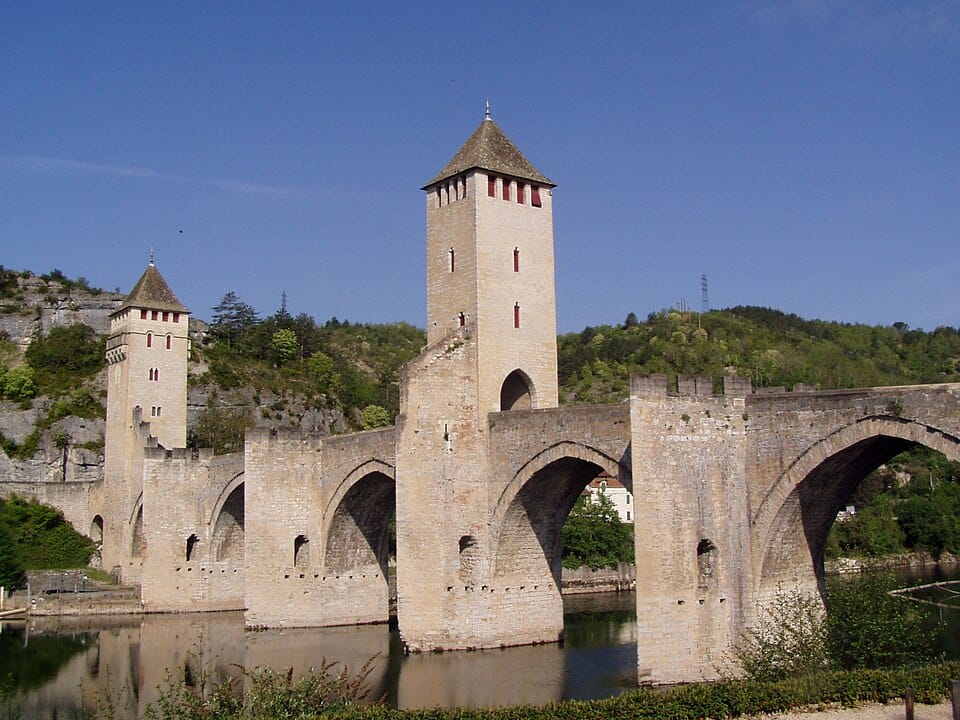
Remnants of the eastern defensive wall built to protect the vulnerable neck of land where the river loop nearly closes on itself.
Vineyards of the Cahors AOC
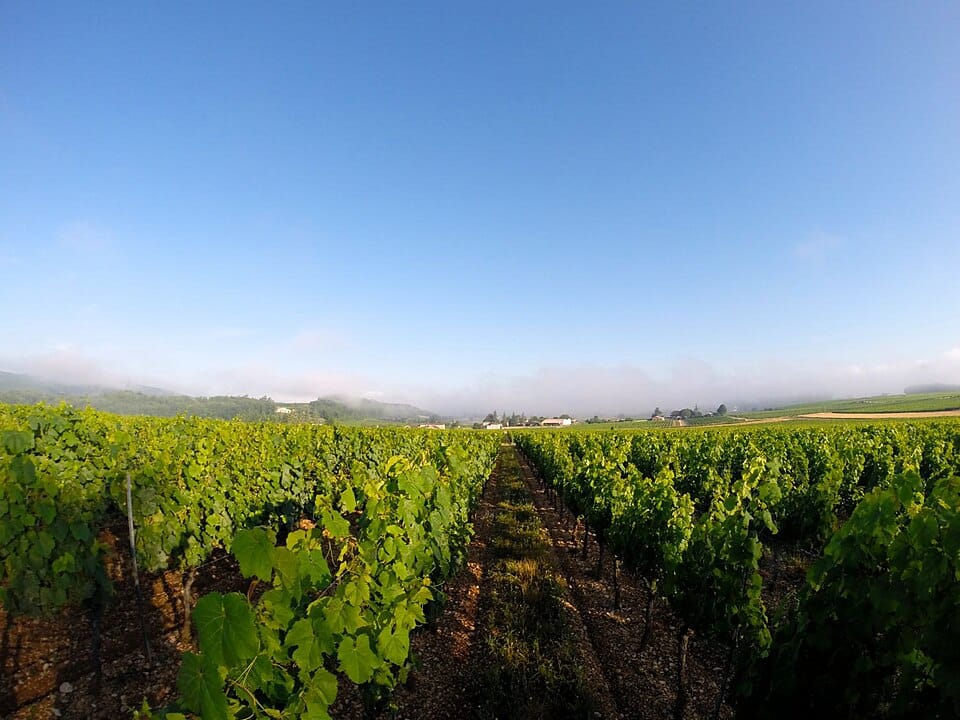
Terraced hillsides and river-valley plots east and south of town growing the Malbec grape locally called Côt or Auxerrois, the source of the region's signature dark red wine.
Moissac
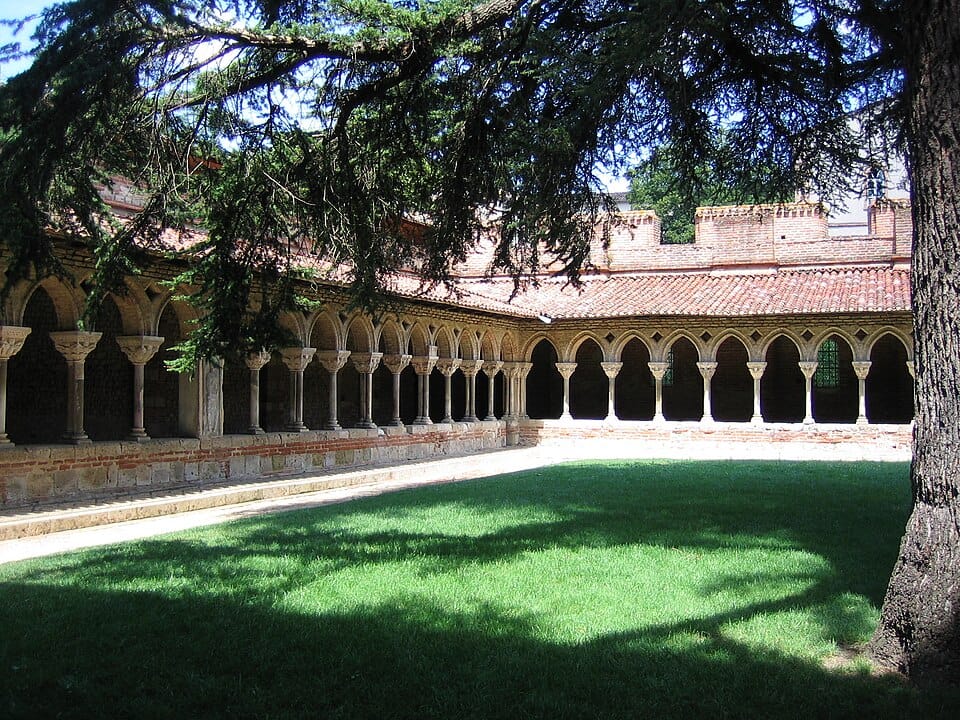
Moissac is a small town in the Tarn-et-Garonne department, set where the Tarn river meets the Garonne canal system, and it grew around the Abbey of Saint-Pierre, one of the most important monastic foundations on the pilgrimage roads to Santiago de Compostela. It lies on the Via Podiensis, and pilgrims following the route have paused here since the Middle Ages to see the abbey before continuing south and west.
Top attractions in Moissac
Abbey of Saint-Pierre
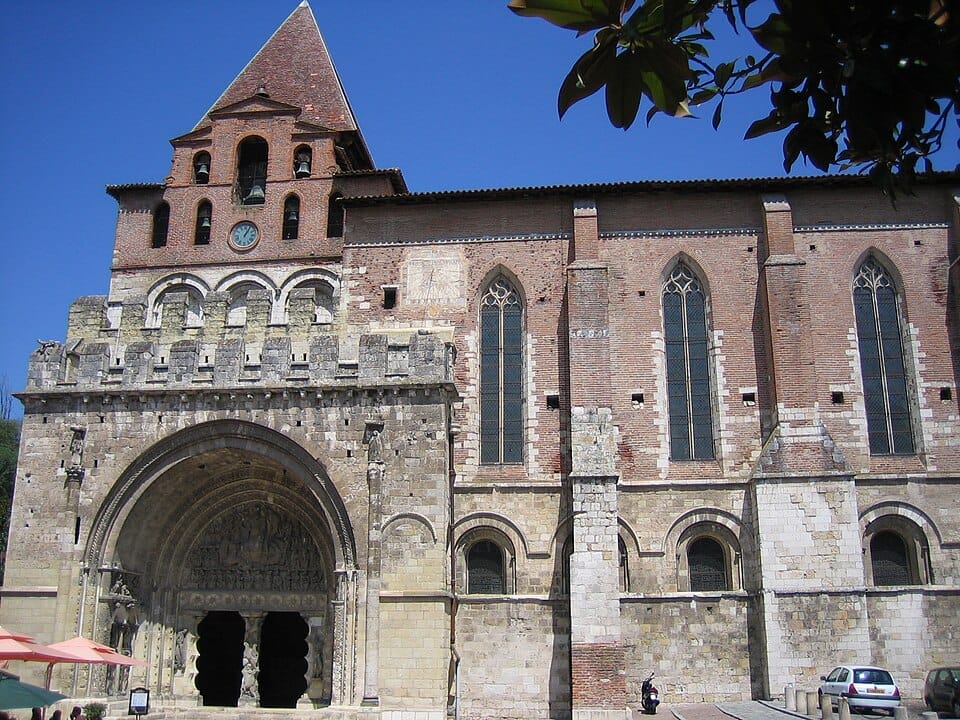
A Benedictine abbey founded in the 7th century and rebuilt in Romanesque and Gothic styles, recognized by UNESCO as part of the Routes of Santiago de Compostela in France.
South Portal Tympanum of Saint-Pierre
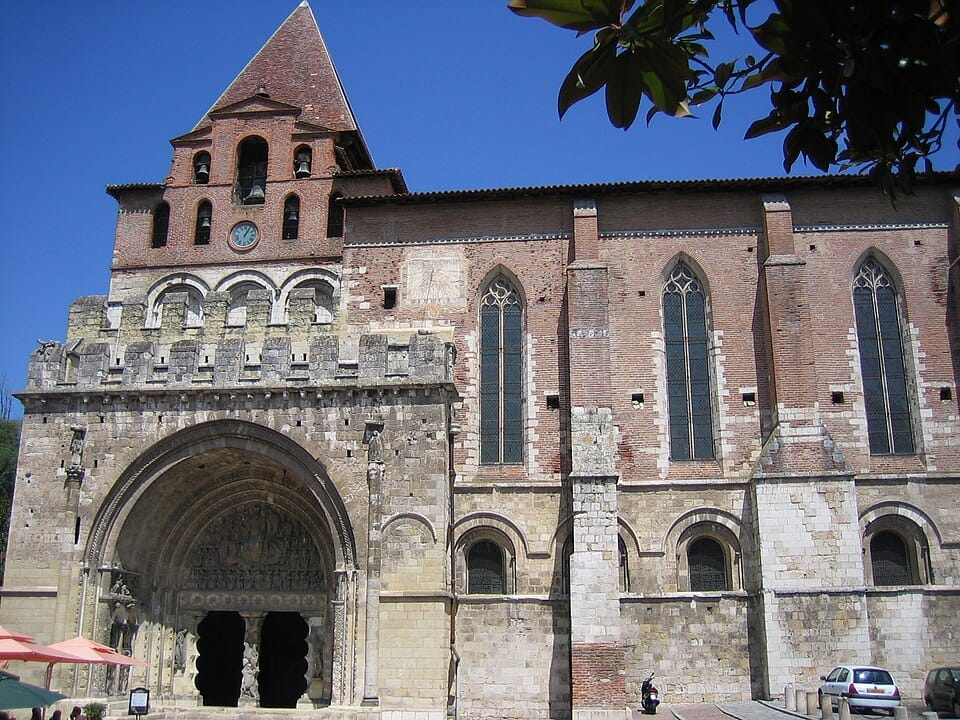
A carved 12th-century tympanum depicting Christ in Majesty surrounded by the Evangelists and the twenty-four elders of the Apocalypse, considered a landmark of Romanesque sculpture.
Cloister of Saint-Pierre
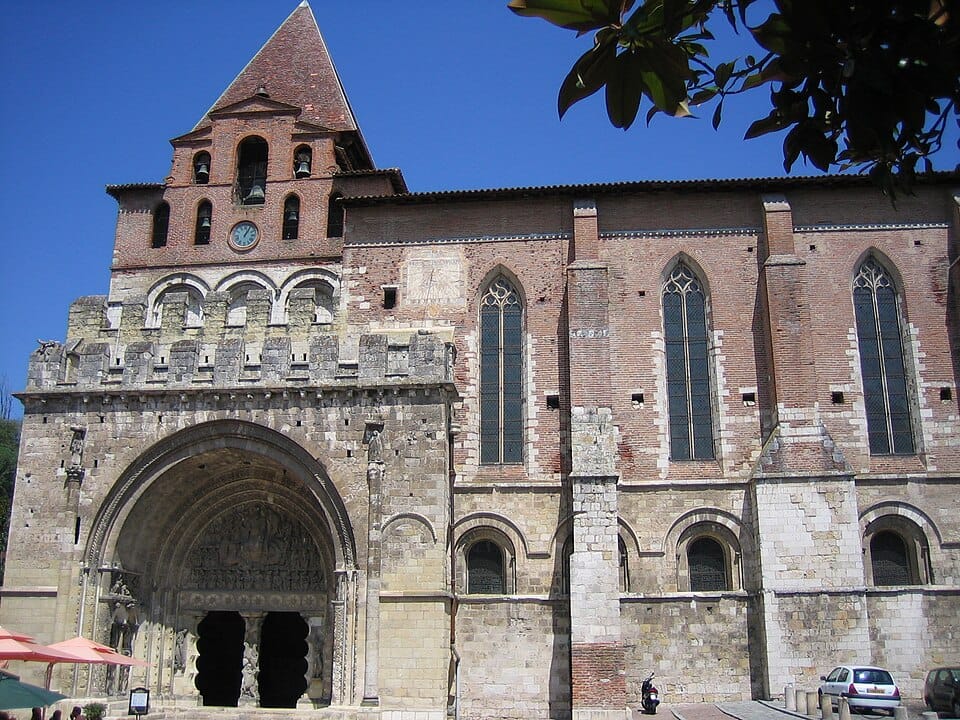
A late 11th-century cloister with alternating single and paired marble columns, each capital carved with distinct biblical scenes or foliage.
Canal de Garonne towpath at Moissac
A tree-lined canal path that crosses the Tarn on the Moissac water bridge, part of a long-distance cycling and walking route linking the Atlantic to the Mediterranean.
Saint-Jean-Pied-de-Port
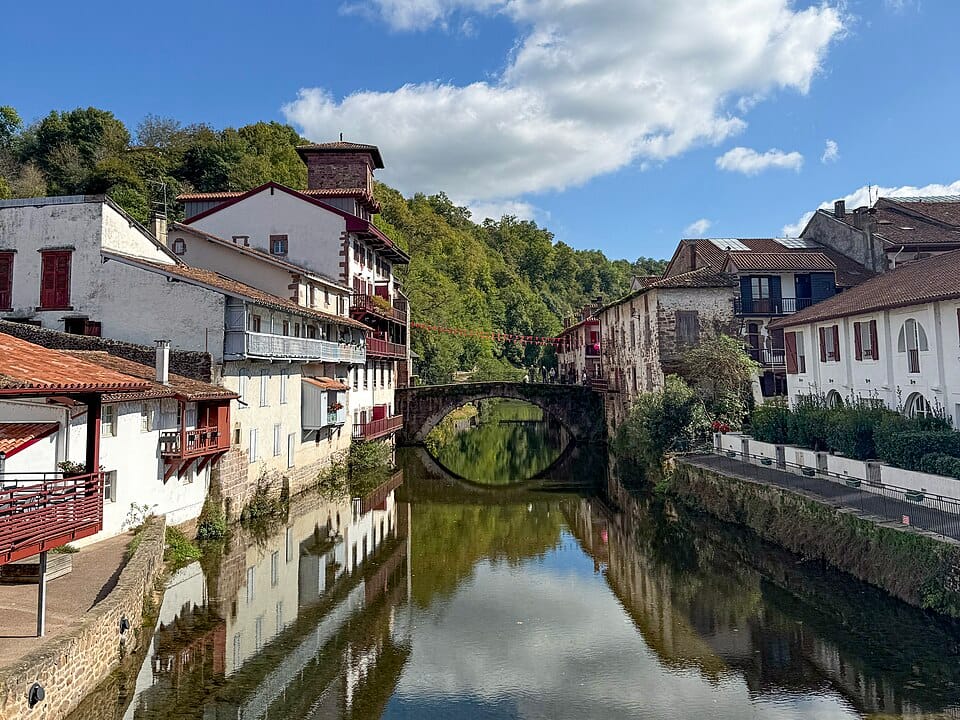
Saint-Jean-Pied-de-Port is a fortified Basque town in the French Pyrenees, built along the Nive river at the foot of the Roncevaux Pass. Its citadel, ramparts, and pink-and-white sandstone houses along the Rue de la Citadelle preserve one of the best-kept medieval townscapes in the region.
Top attractions in Saint-Jean-Pied-de-Port
Rue de la Citadelle
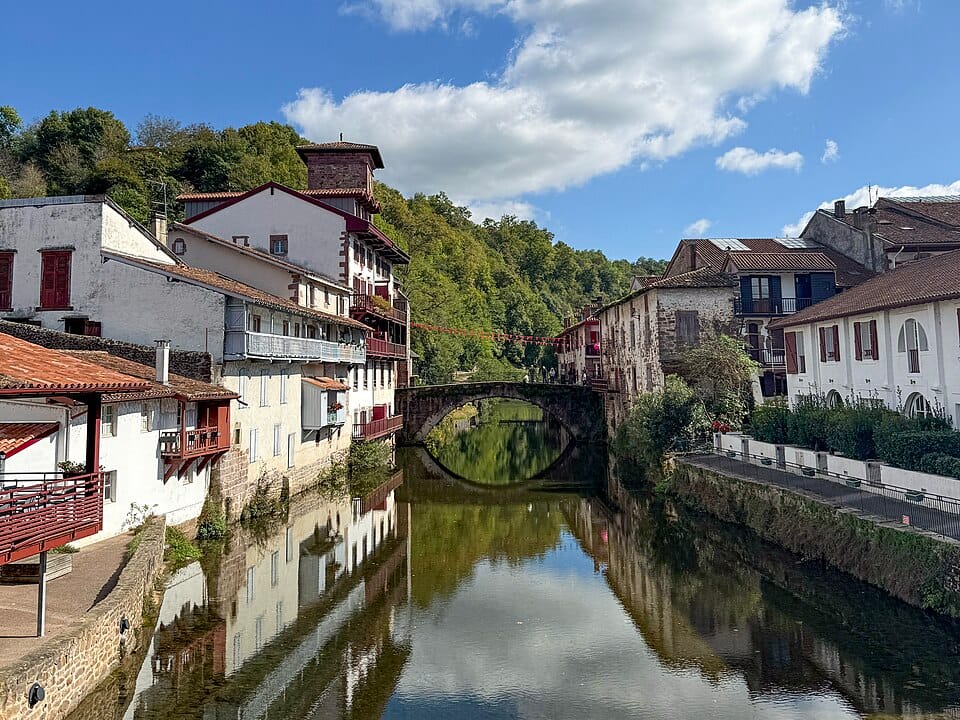
The steep cobbled main street lined with 16th- and 17th-century pink sandstone houses, leading up from the pilgrims' office to the citadel.
Citadel of Saint-Jean-Pied-de-Port
A 17th-century star-shaped fortress redesigned by Vauban's engineers, offering panoramic views over the town and the surrounding Pyrenean foothills.
Notre-Dame-du-Bout-du-Pont Church
A 13th- and 14th-century Gothic church straddling the old fortified gate by the Nive, traditionally the first stop for pilgrims setting out on the Camino.
Pont Romain (Roman Bridge)
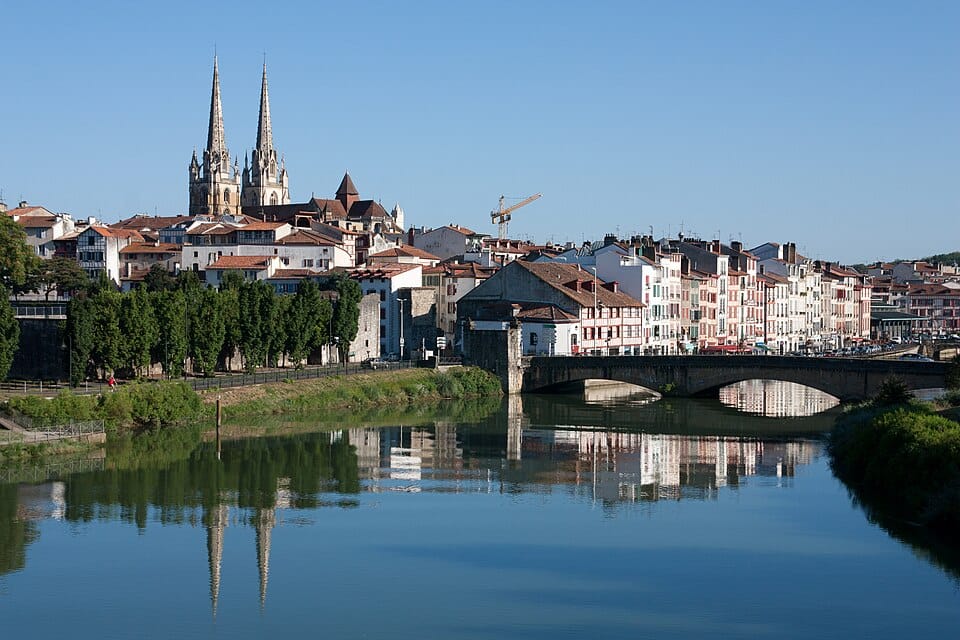
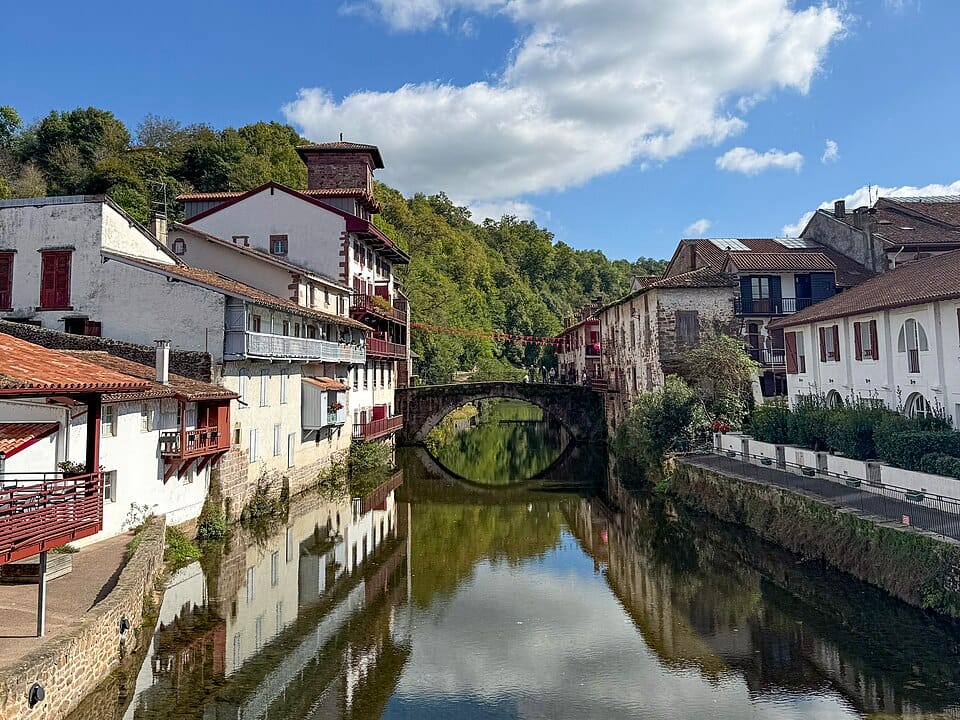
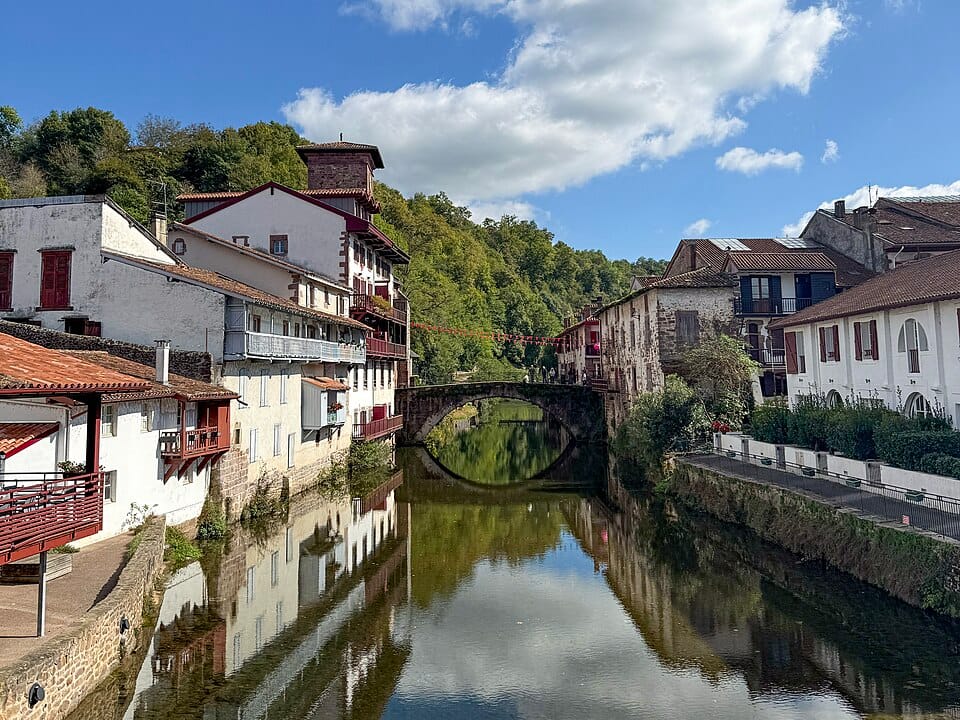
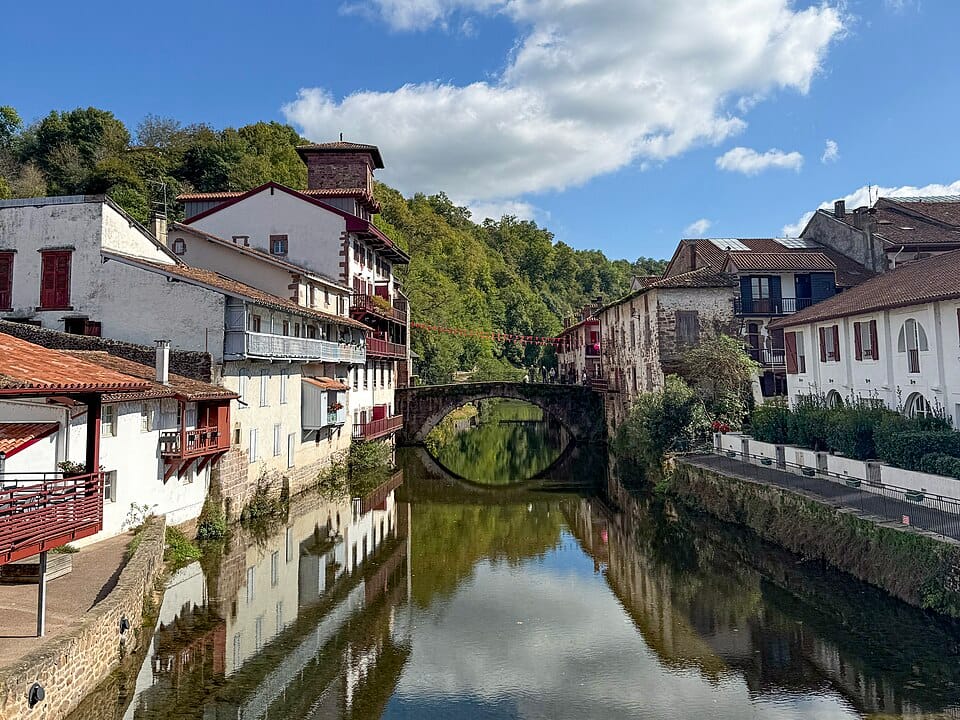
A single-arch stone bridge over the Nive, offering a classic photo view of the fortified houses reflected in the river below.
Porte Saint-Jacques (Gate of Saint James)
A 15th-century fortified gate and UNESCO World Heritage listing marking the traditional entrance for pilgrims arriving into the old town.
Plan this route with EuroDrive Scout — tolls, vignettes, ZTL alerts, fuel & parking →