Austria: Vienna, Salzburg & the Tyrol: attractions & sights guide
A stop-by-stop guide to the best things to see along the Austria: Vienna, Salzburg & the Tyrol route — 5 destinations, their must-see sights and how to drive between them.
Plan this route with EuroDrive Scout — tolls, vignettes, ZTL alerts, fuel & parking →
Vienna
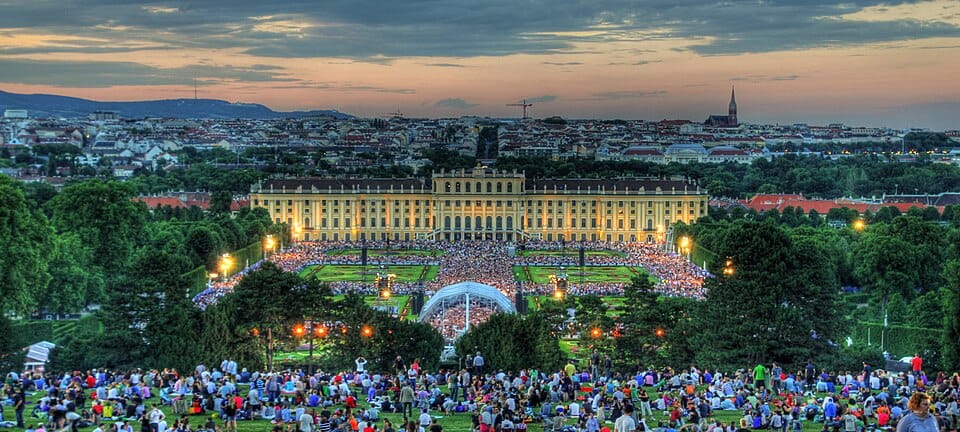
Vienna is Austria's capital and its cultural heart, a city built around Habsburg palaces, grand boulevards, and a musical legacy that includes Mozart, Beethoven, and Strauss. Its historic center, a UNESCO World Heritage site, blends Baroque architecture with coffeehouse culture, opera houses, and world-class museums along the Ringstrasse.
Top attractions in Vienna
Schönbrunn Palace
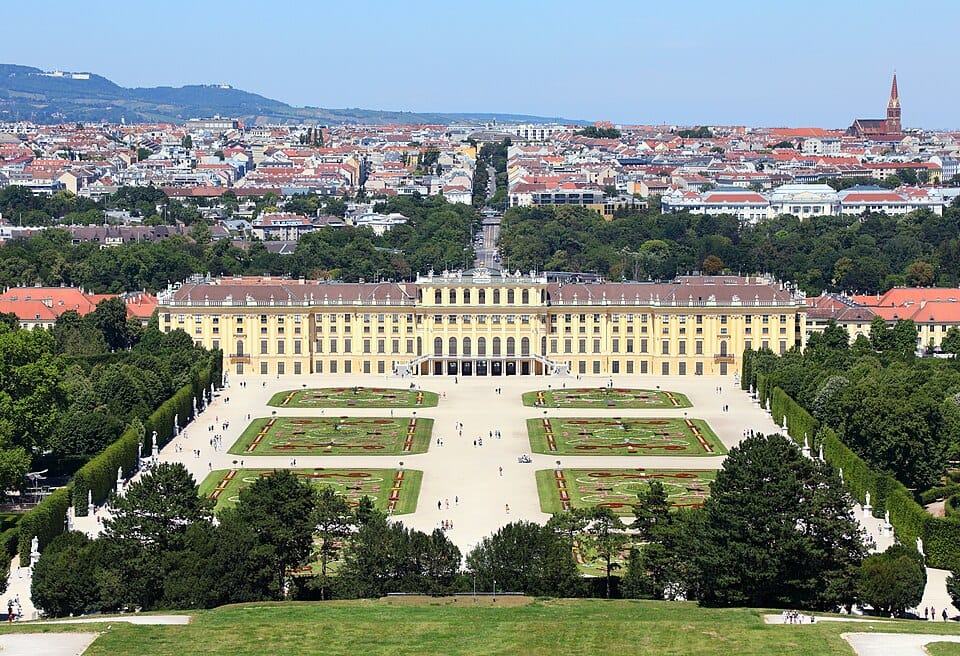
The former imperial summer residence of the Habsburgs, with over 1,400 rooms and vast Baroque gardens open to the public.
St. Stephen's Cathedral
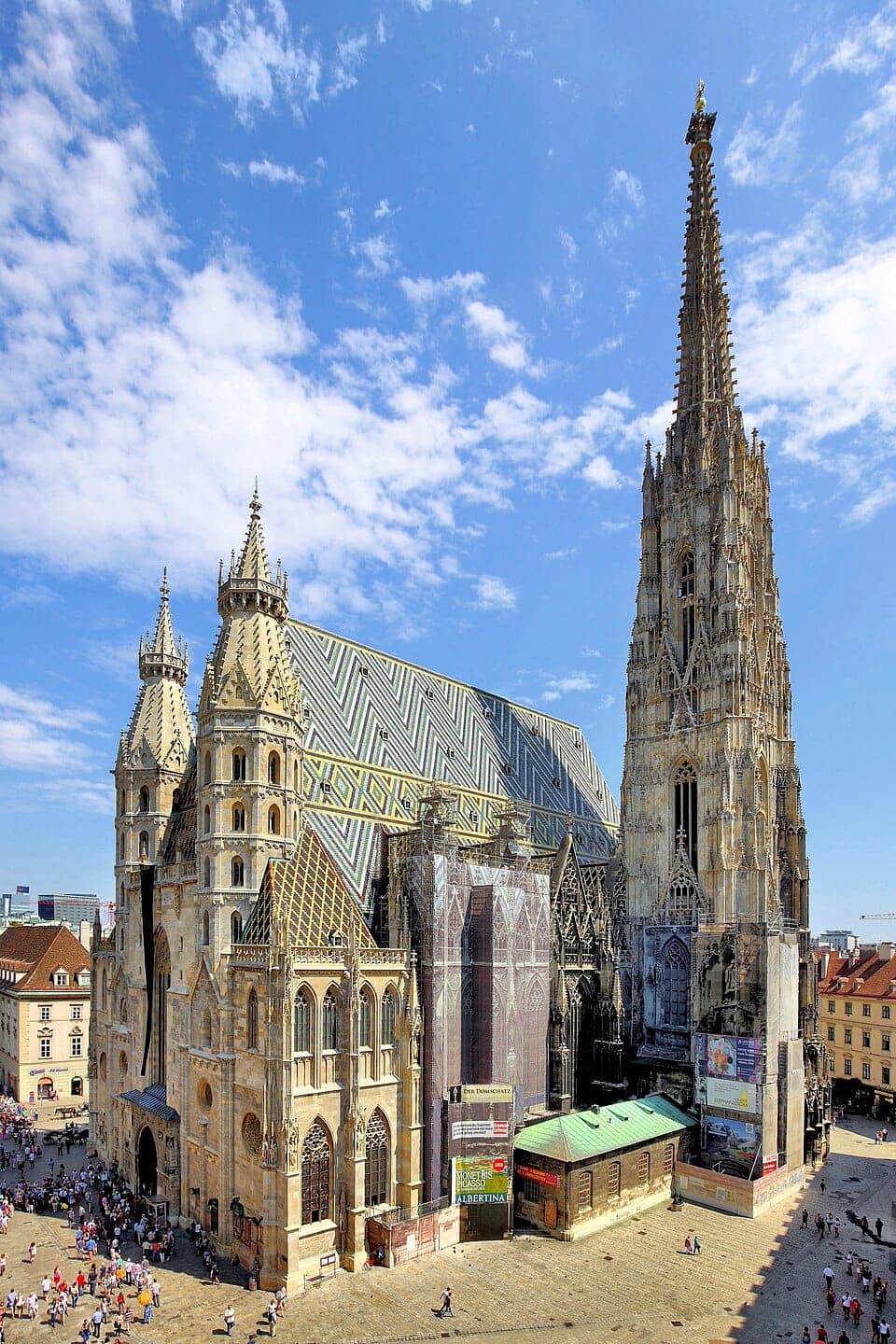
Vienna's Gothic mother church, instantly recognizable by its patterned tile roof and towering south spire in the heart of the old city.
Hofburg Palace
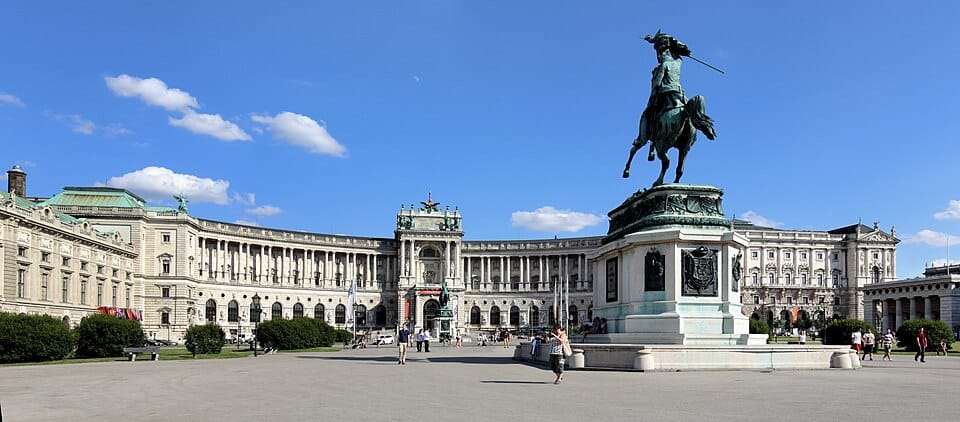
The former principal imperial palace, now home to the Austrian president, the Spanish Riding School, and several major museums.
Belvedere Palace
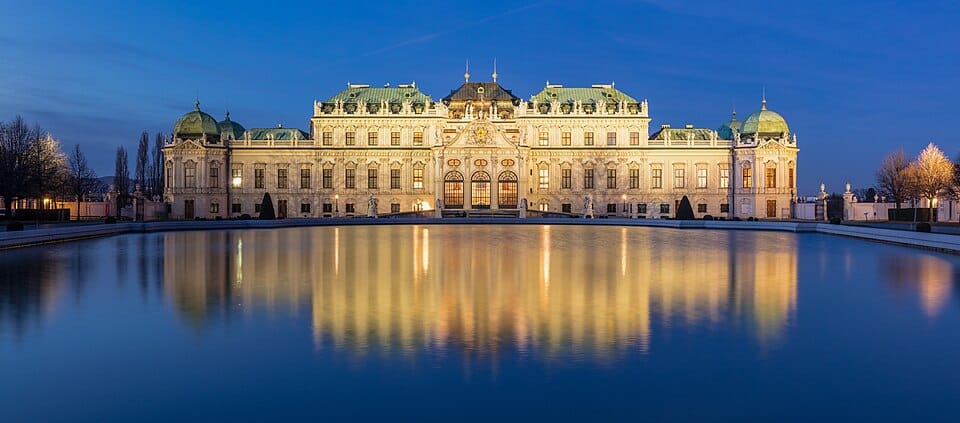
A Baroque palace complex housing Gustav Klimt's painting The Kiss, set among terraced gardens overlooking the city.
Prater and the Wiener Riesenrad
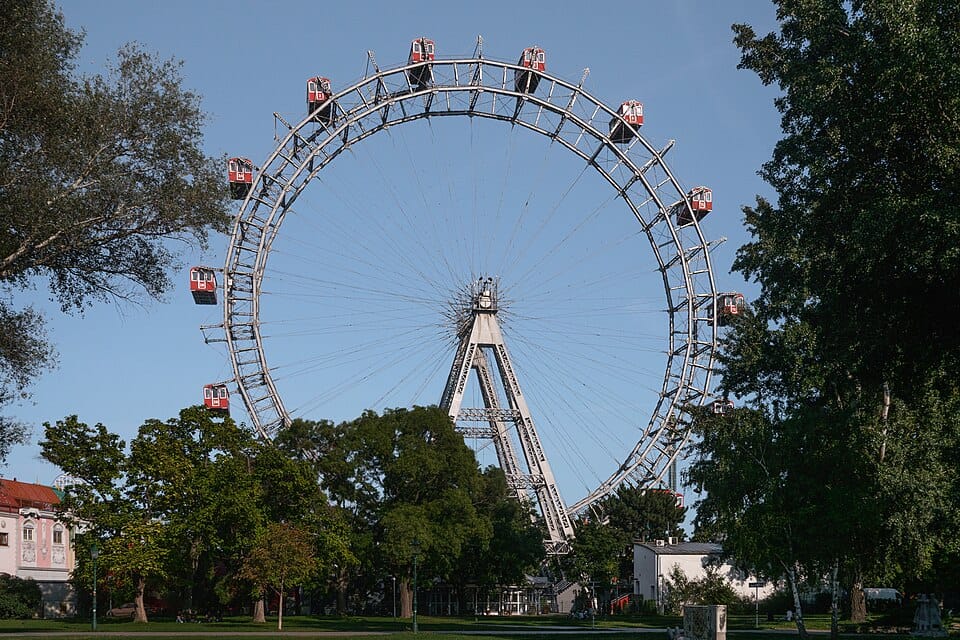
A historic public park with an amusement area centered on the 1897 Ferris wheel, made famous by the film The Third Man.
Salzburg
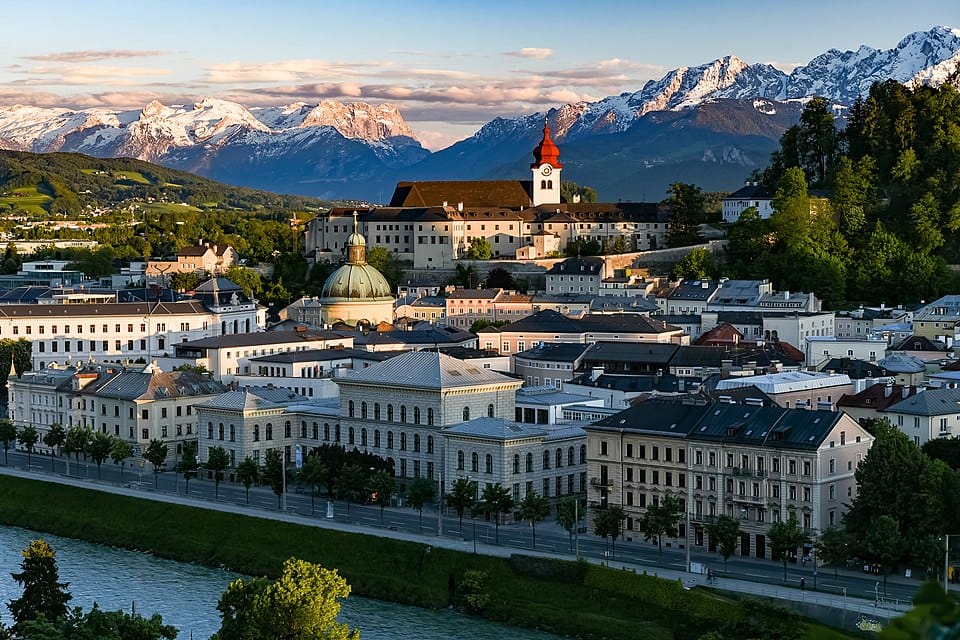
Salzburg is the birthplace of Wolfgang Amadeus Mozart and the setting for much of The Sound of Music, a compact Baroque city wedged between the Salzach River and the forested Mönchsberg hill. Its old town, a UNESCO World Heritage site, is dominated by the hilltop Hohensalzburg Fortress and a skyline of church domes and spires.
Top attractions in Salzburg
Hohensalzburg Fortress
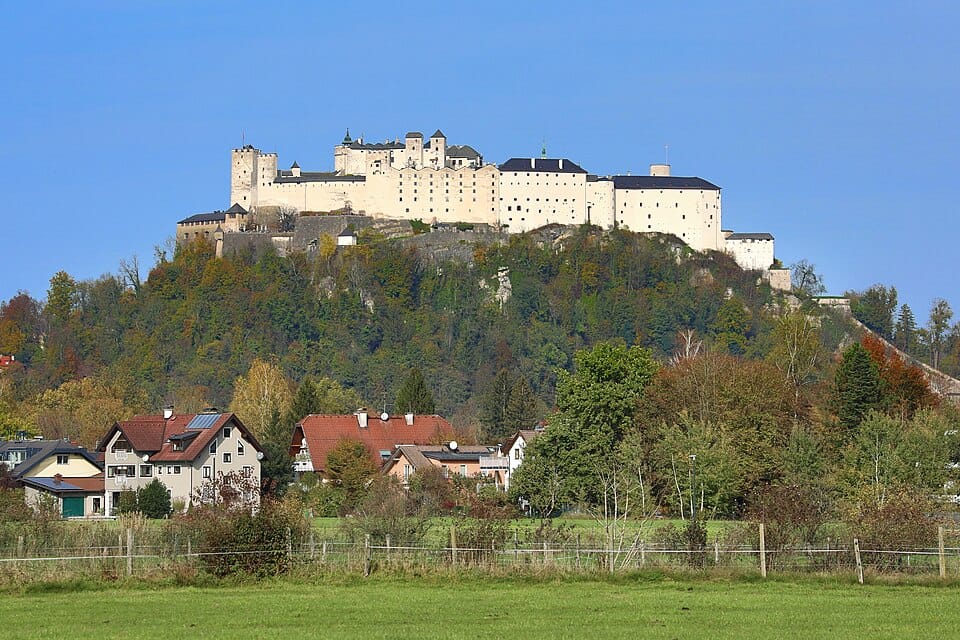
One of the largest fully preserved medieval castles in Europe, perched on the Festungsberg hill and reachable by funicular.
Mozart's Birthplace
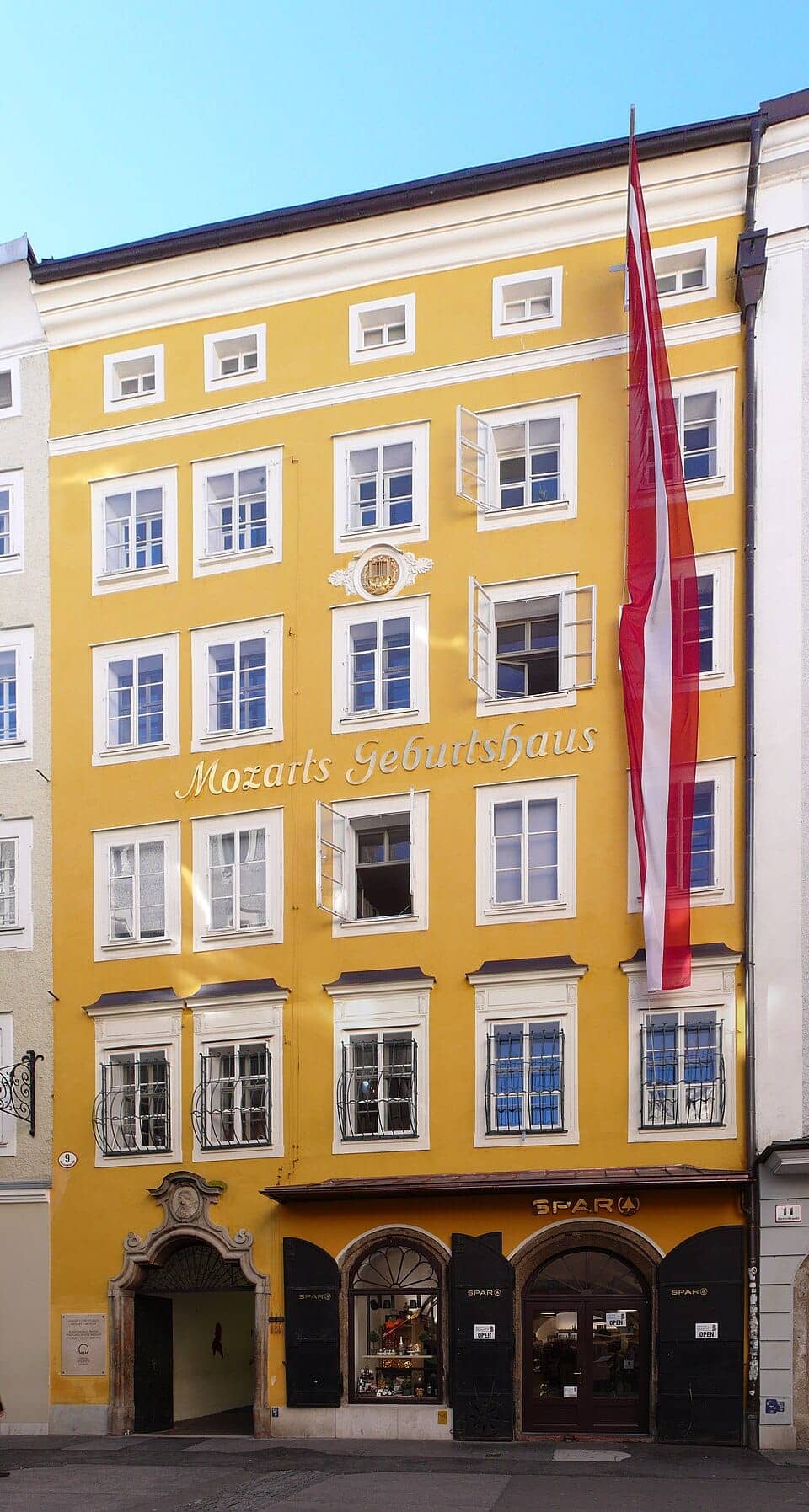
The yellow townhouse on Getreidegasse where Mozart was born in 1756, now a museum of his childhood instruments and letters.
Mirabell Palace and Gardens
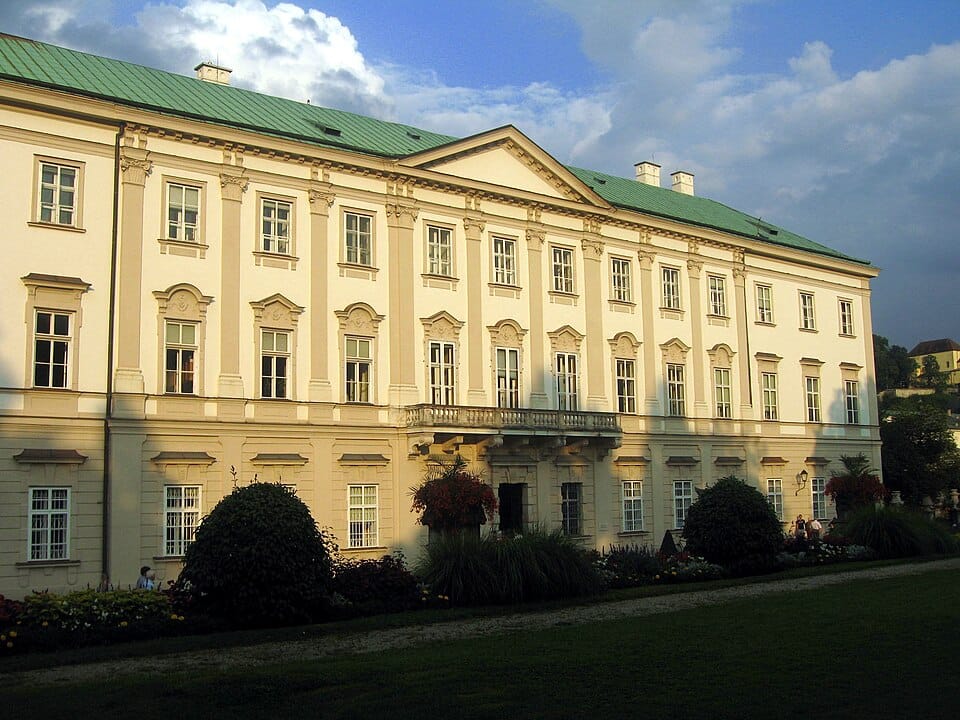
A 17th-century palace with formal Baroque gardens, fountains, and statuary that appeared in scenes from The Sound of Music.
Salzburg Cathedral
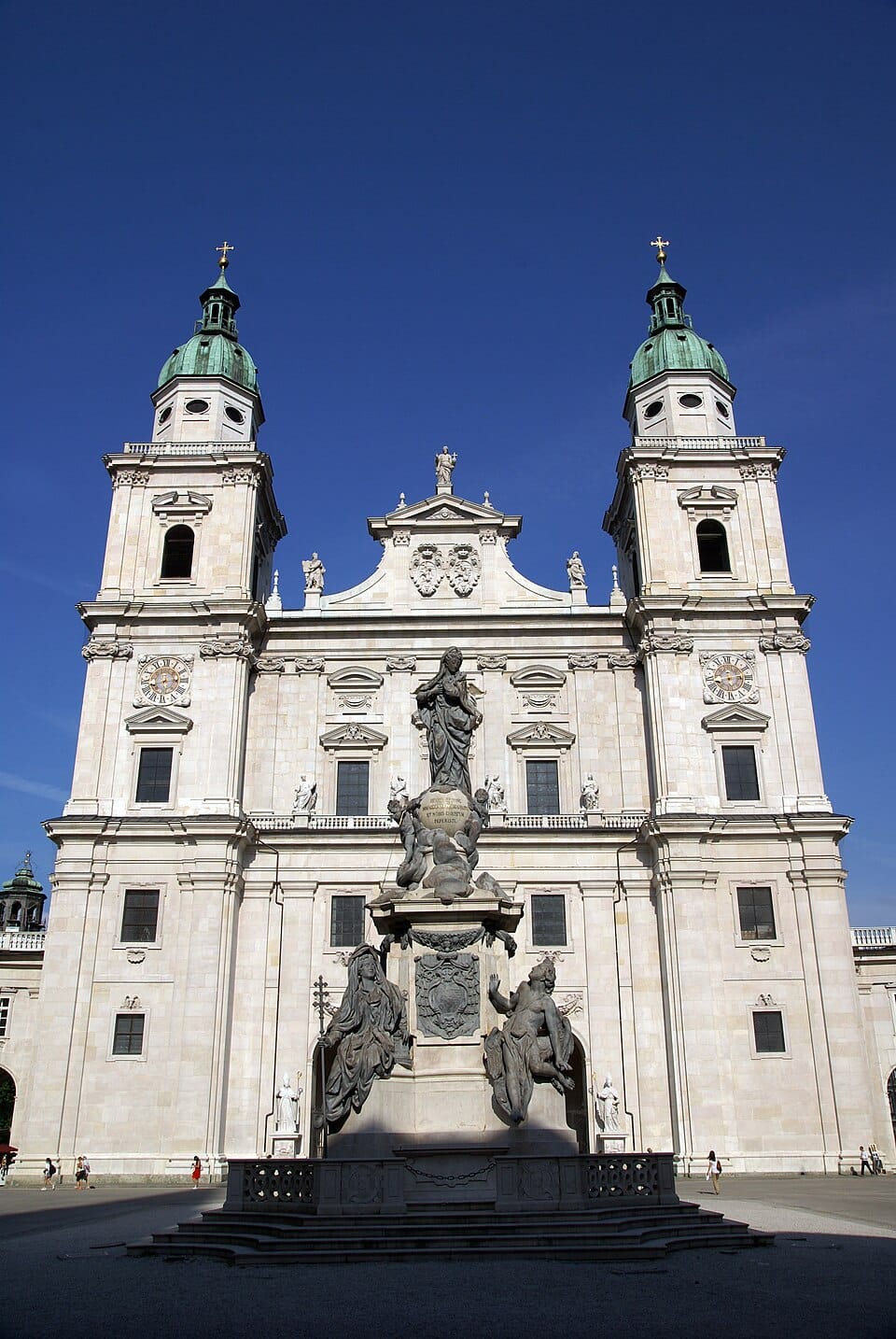
A twin-towered Baroque cathedral where Mozart was baptized, rebuilt in its current form after a 17th-century fire.
Hellbrunn Palace and Trick Fountains
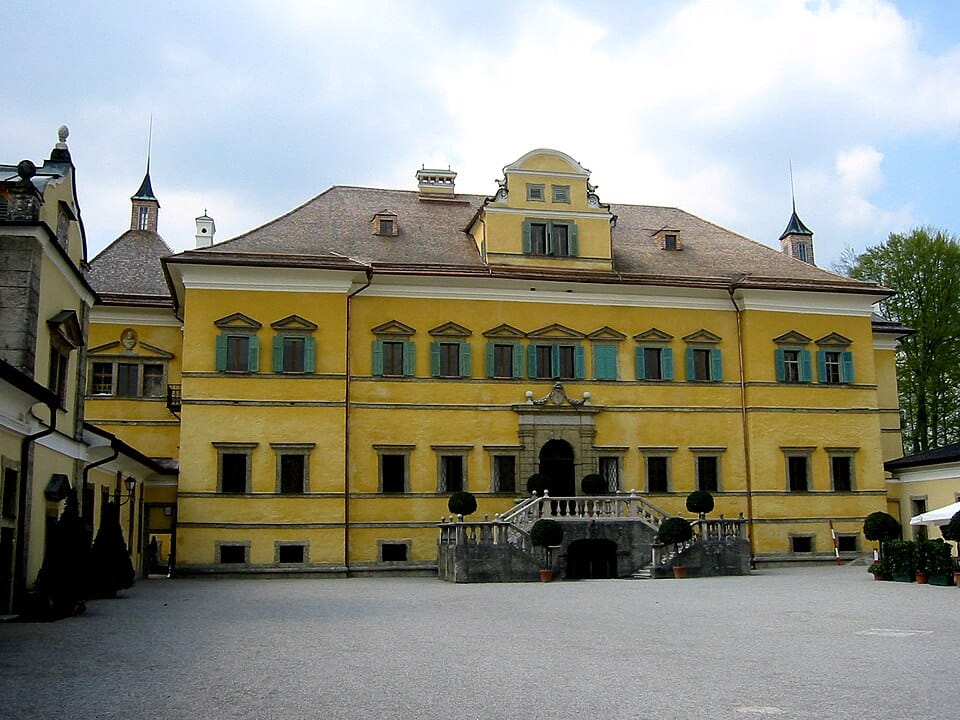
A 17th-century pleasure palace just south of the city known for hidden water jokes built into its garden fountains and grottoes.
Hallstatt
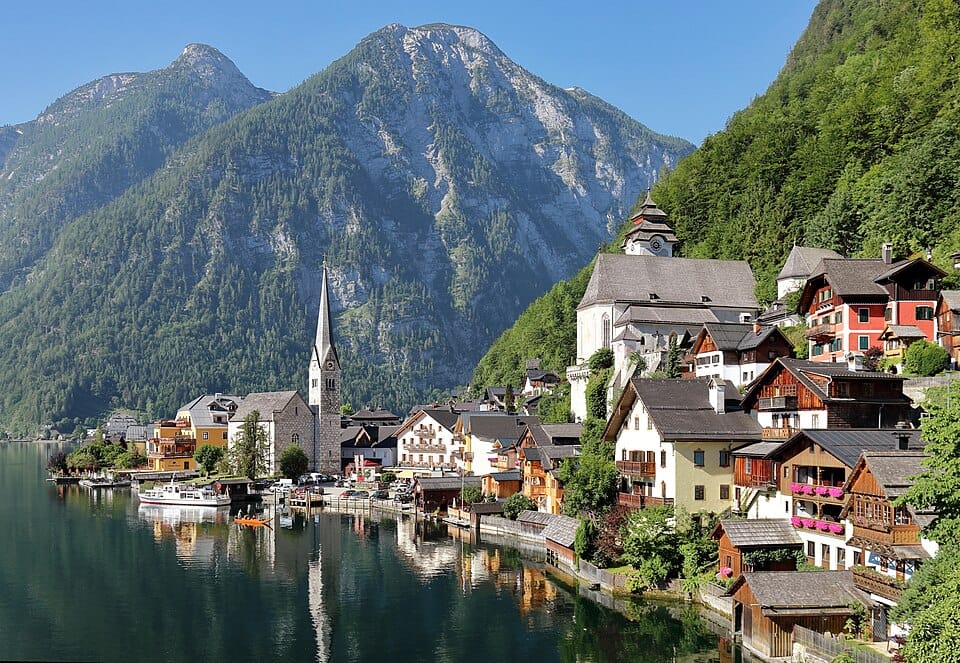
Hallstatt is a small lakeside village in the Salzkammergut region, famous for its pastel houses stacked against a steep mountainside above the dark waters of Hallstätter See. It gave its name to the Hallstatt culture of the early Iron Age, and its ancient salt mine, still in operation, is one of the oldest in the world.
Top attractions in Hallstatt
Hallstatt Skywalk
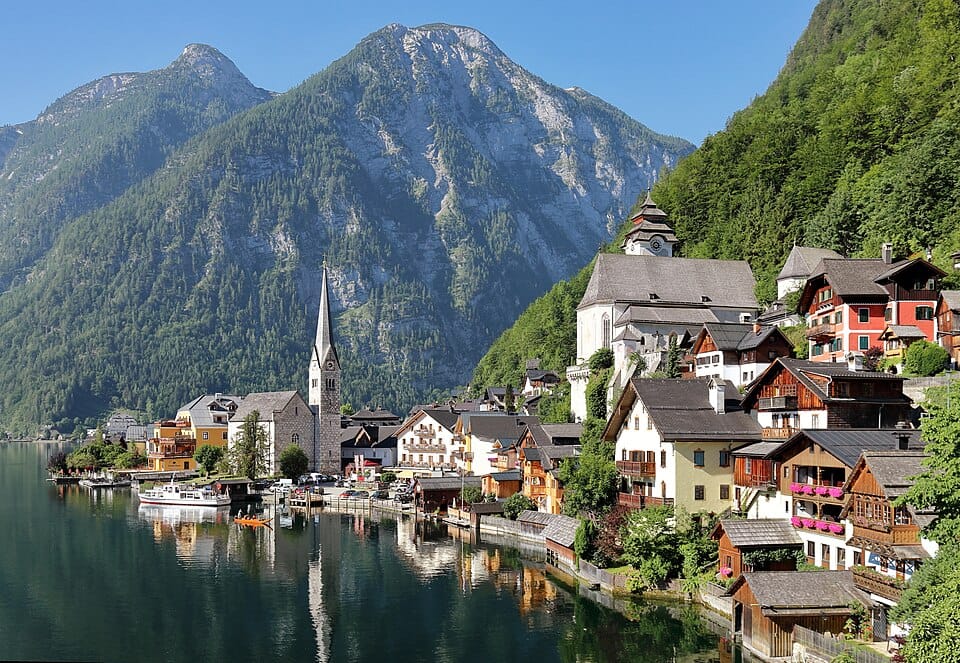
A cliffside viewing platform above the village reached by funicular, offering a panoramic view over the lake and rooftops below.
Hallstatt Salt Mine
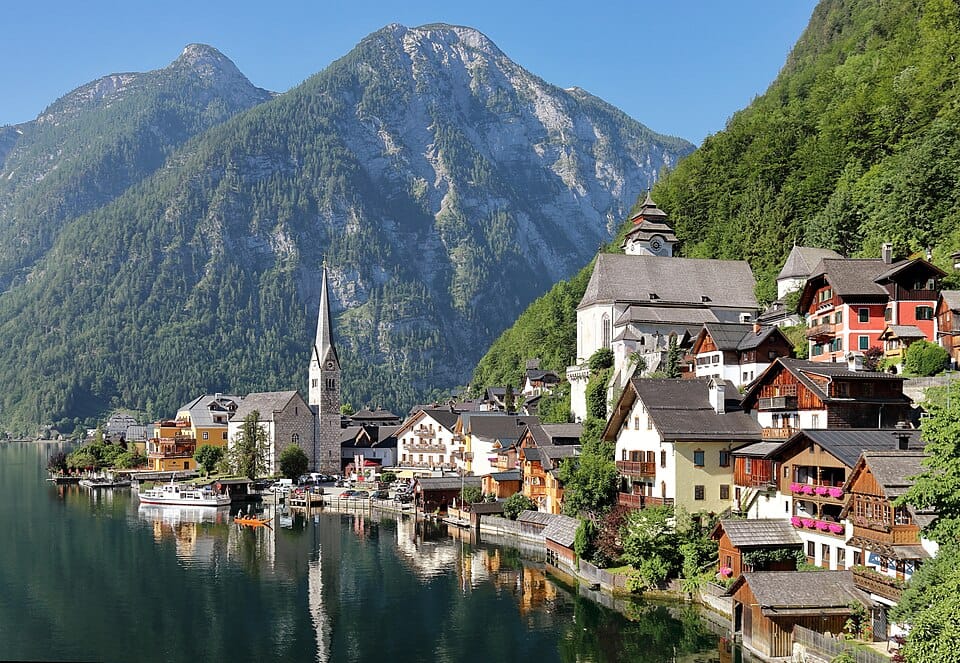
One of the world's oldest salt mines, with tours through ancient tunnels and a long wooden slide used by miners for centuries.
Hallstatt Parish Church and Bone House
A Gothic church overlooking the lake, next to a small chapel holding hundreds of hand-painted skulls due to the village's limited burial space.
Hallstätter See
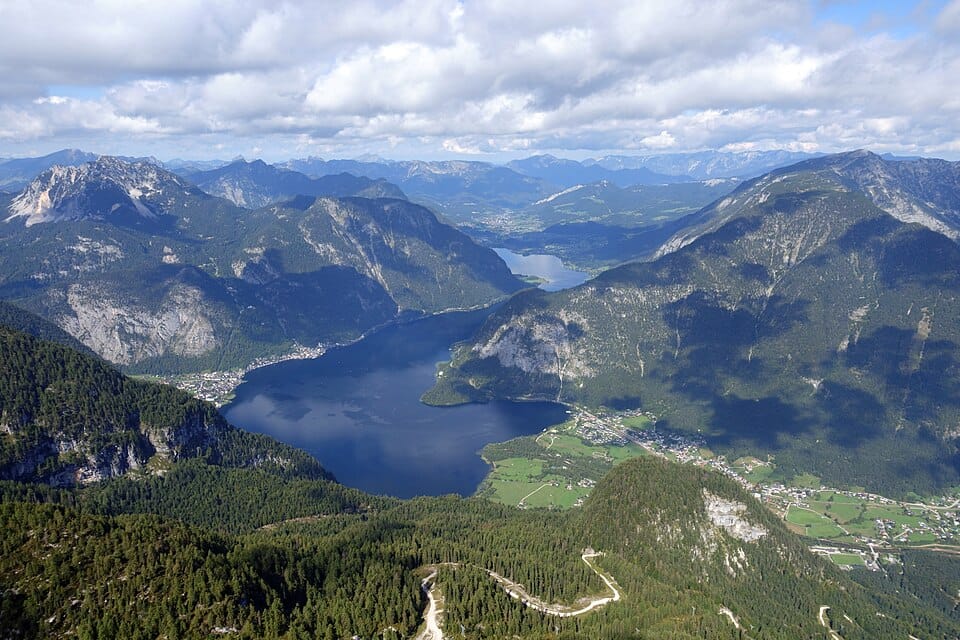
A deep Alpine lake surrounded by steep mountains, popular for boat rides that give the classic postcard view of the village.
Grossglockner High Alpine Road
The Grossglockner High Alpine Road (Großglockner Hochalpenstraße) is Austria's most famous panoramic mountain road, a 48-kilometre toll route opened in 1935 that climbs through 36 numbered hairpin bends to the Hochtor tunnel at 2,504 metres. Threading the heart of Hohe Tauern National Park, it links Bruck in the Salzburg valley with Heiligenblut in Carinthia and delivers close-up views of the Grossglockner, at 3,798 metres Austria's highest peak, and the Pasterze, its largest glacier.
Top attractions in Grossglockner High Alpine Road
Hochtor Pass (2,504 m)
The highest point of the through-route, where a short tunnel pierces the main Alpine ridge and marks the watershed between the Salzburg and Carinthia sides of the drive.
Edelweißspitze (2,571 m)
The highest point on the road reachable by car, up a short cobbled spur, with a 360-degree panorama over dozens of Hohe Tauern peaks and glaciers from a viewing tower.
Kaiser-Franz-Josefs-Höhe & Pasterze Glacier
A terrace viewpoint at the end of a spur road, facing the Grossglockner summit and the Pasterze, Austria's largest glacier, with a visitor centre and trails down toward the ice.
Fuscher Törl & Fuscher Lacke
A saddle viewpoint and a small alpine lake near the road's high section, with parking, a memorial chapel and an exhibition on the building of the historic road.
Heiligenblut Pilgrimage Church
The slender Gothic church of St. Vincent at the southern gateway village, its spire framed by the Grossglockner behind it — one of the most photographed scenes in the Austrian Alps.
Full Grossglockner High Alpine Road guide: driving, tolls & fuel →
Innsbruck
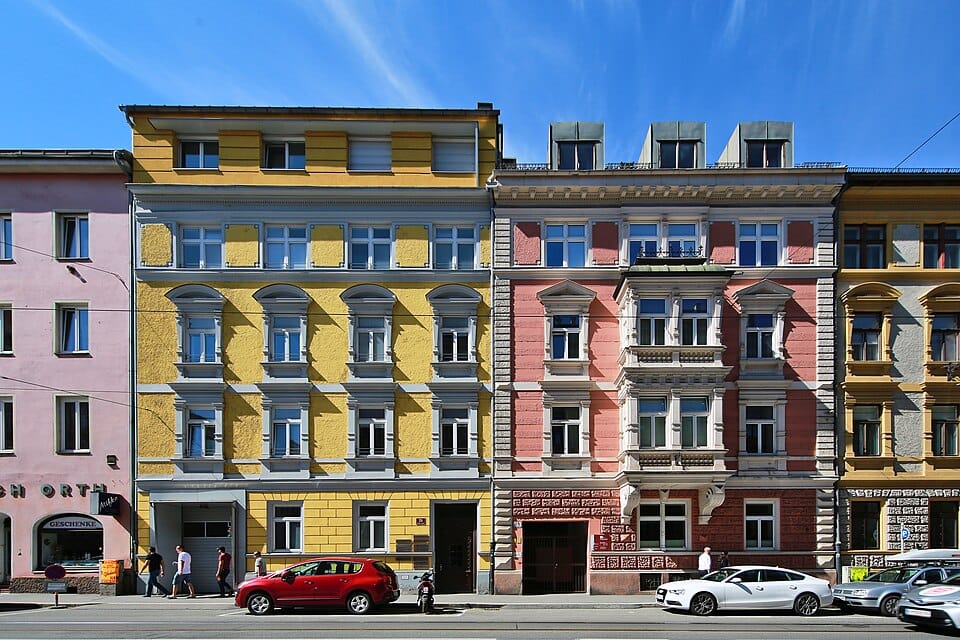
Innsbruck is the capital of Tyrol, a university city set directly against the Nordkette range of the Austrian Alps, with mountain peaks visible from nearly every street in the old town. It hosted the Winter Olympics twice, in 1964 and 1976, and its ski-jump and Alpine sports facilities remain active landmarks.
Top attractions in Innsbruck
Golden Roof
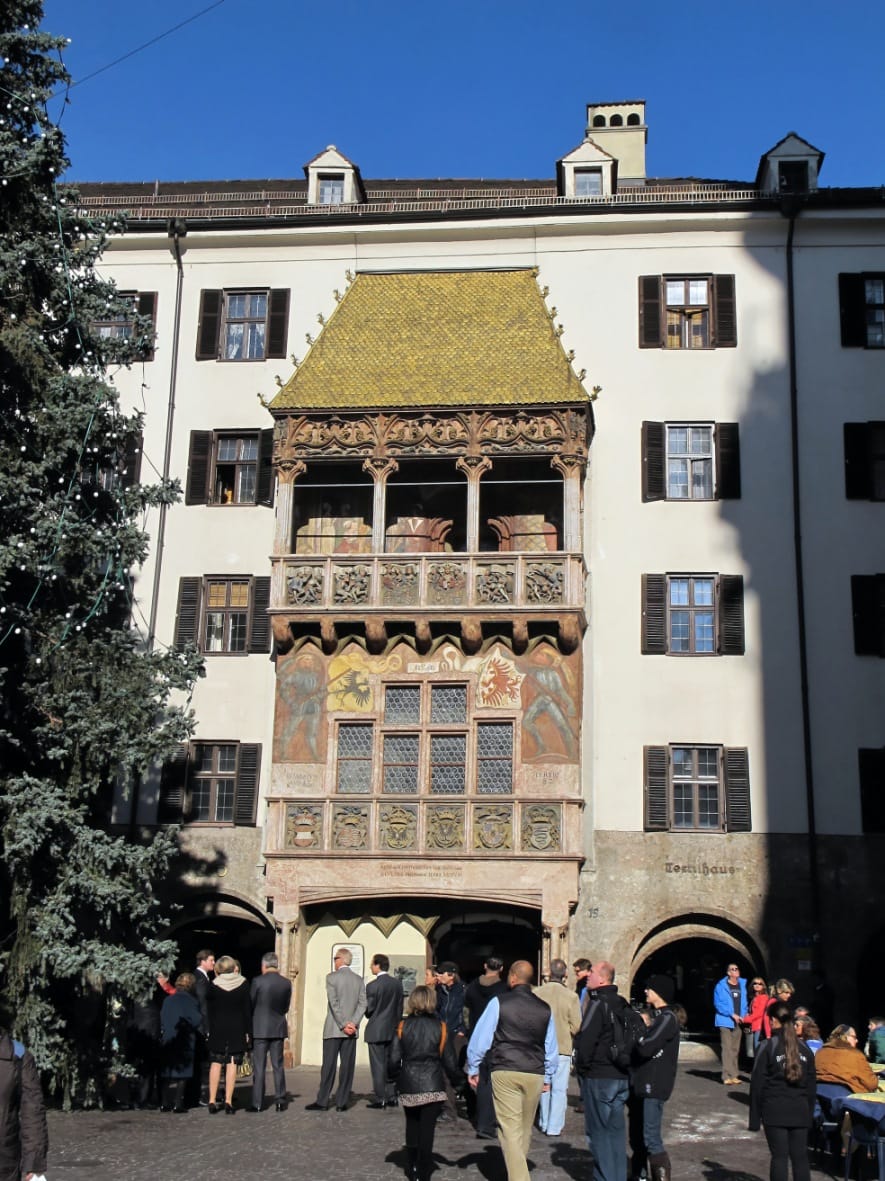
A late-Gothic oriel window covered in gilded copper tiles, built for Emperor Maximilian I and now the city's best-known landmark.
Nordkette Cable Car
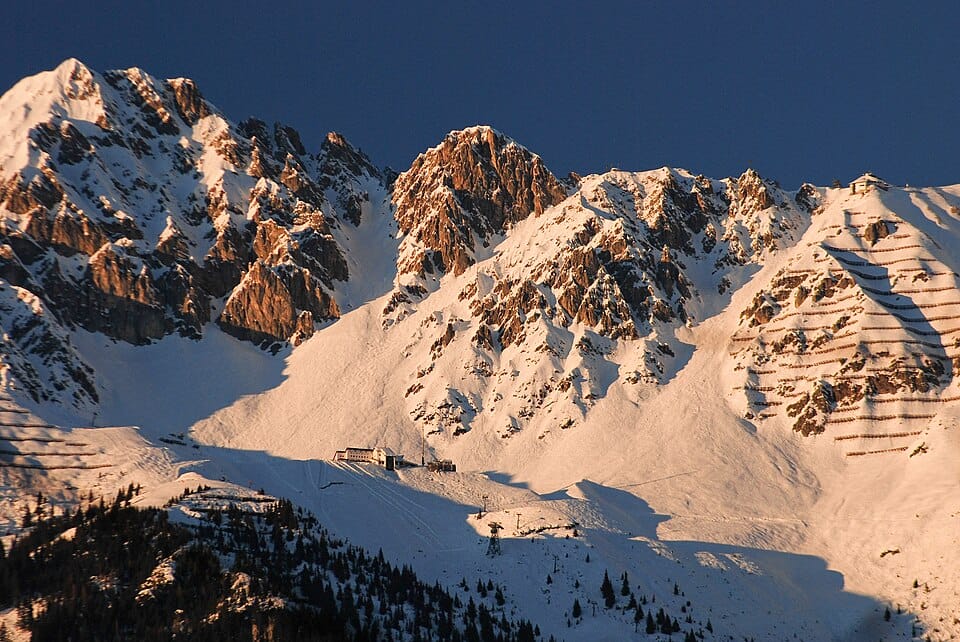
A funicular and cable car system that climbs from the city center to over 2,300 meters, with sweeping views over Innsbruck and the Alps.
Bergisel Ski Jump
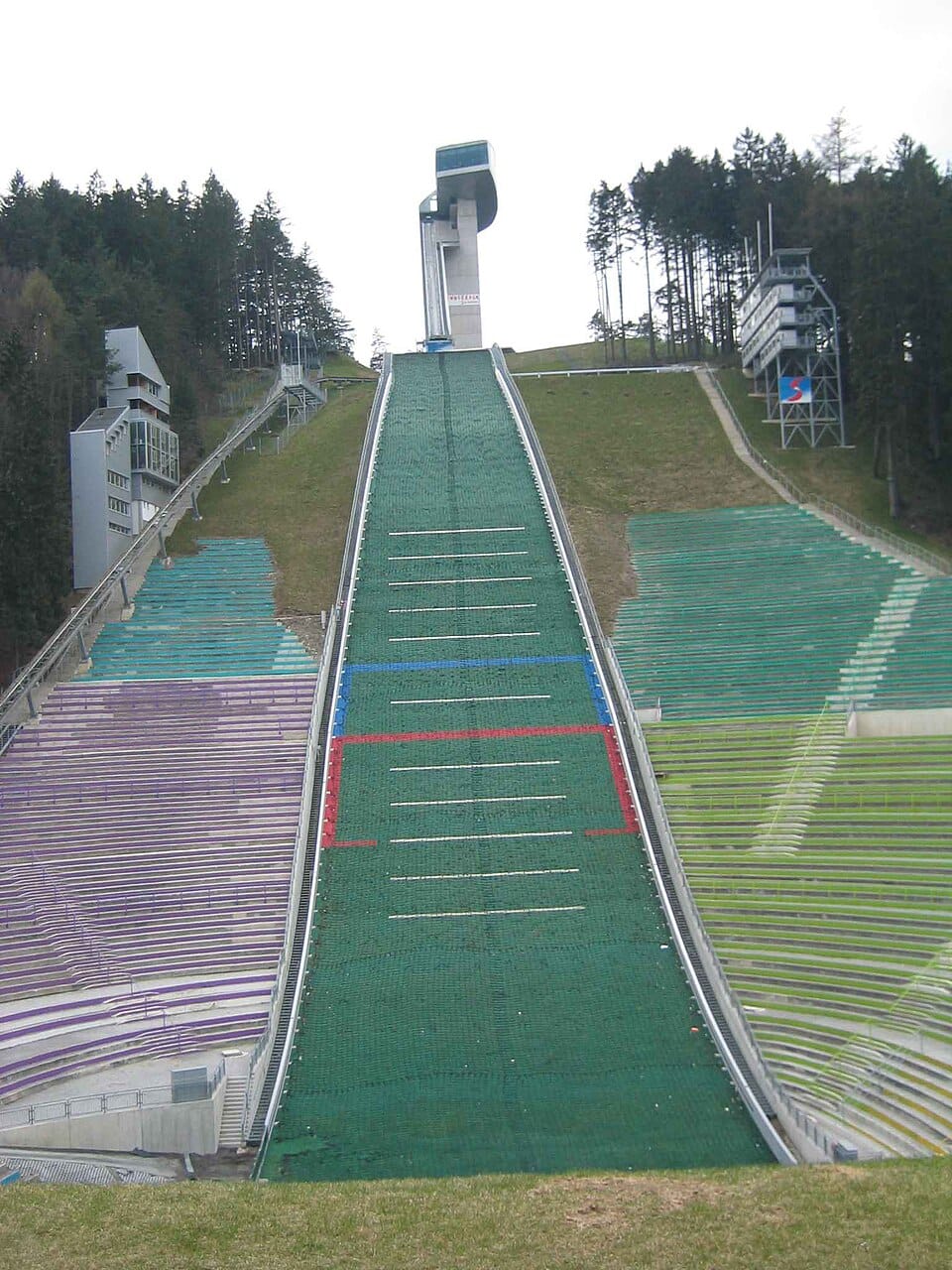
An Olympic ski-jump venue redesigned by architect Zaha Hadid, with a viewing tower and café overlooking the city and mountains.
Imperial Palace
A former Habsburg residence with richly decorated state rooms, including the Baroque Giants' Hall lined with imperial portraits.
Plan this route with EuroDrive Scout — tolls, vignettes, ZTL alerts, fuel & parking →