Lisbon to Porto: attractions & sights guide
A stop-by-stop guide to the best things to see along the Lisbon to Porto route — 5 destinations, their must-see sights and how to drive between them.
Plan this route with EuroDrive Scout — tolls, vignettes, ZTL alerts, fuel & parking →
Lisbon
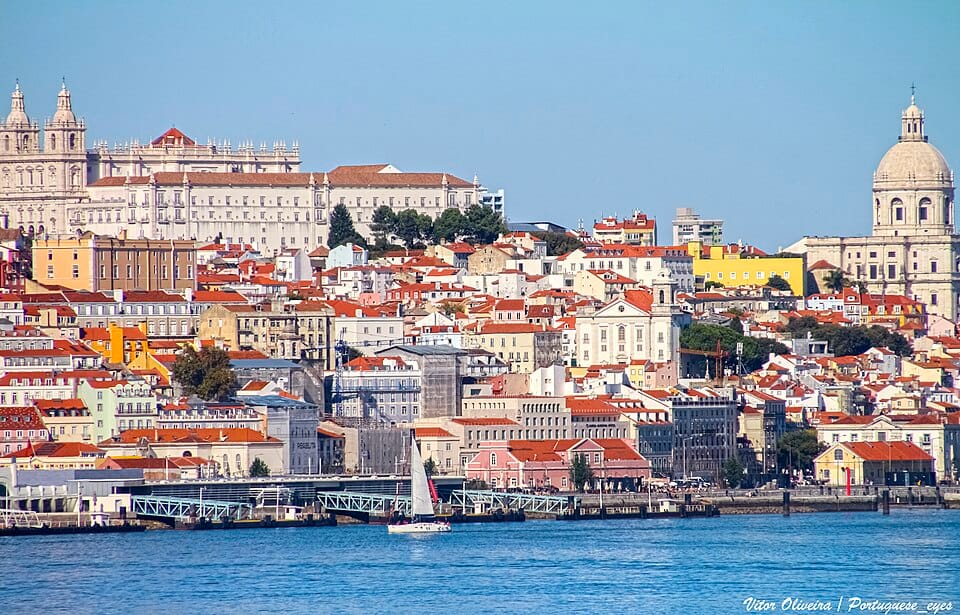
Lisbon is Portugal's capital, built across seven hills on the north bank of the Tagus estuary. Its pastel facades, black-and-white cobbled pavements, and yellow trams have made it one of Europe's most photographed cities, while its Age of Discoveries monuments recall the era when Portuguese ships set out to chart the globe.
Top attractions in Lisbon
Belém Tower
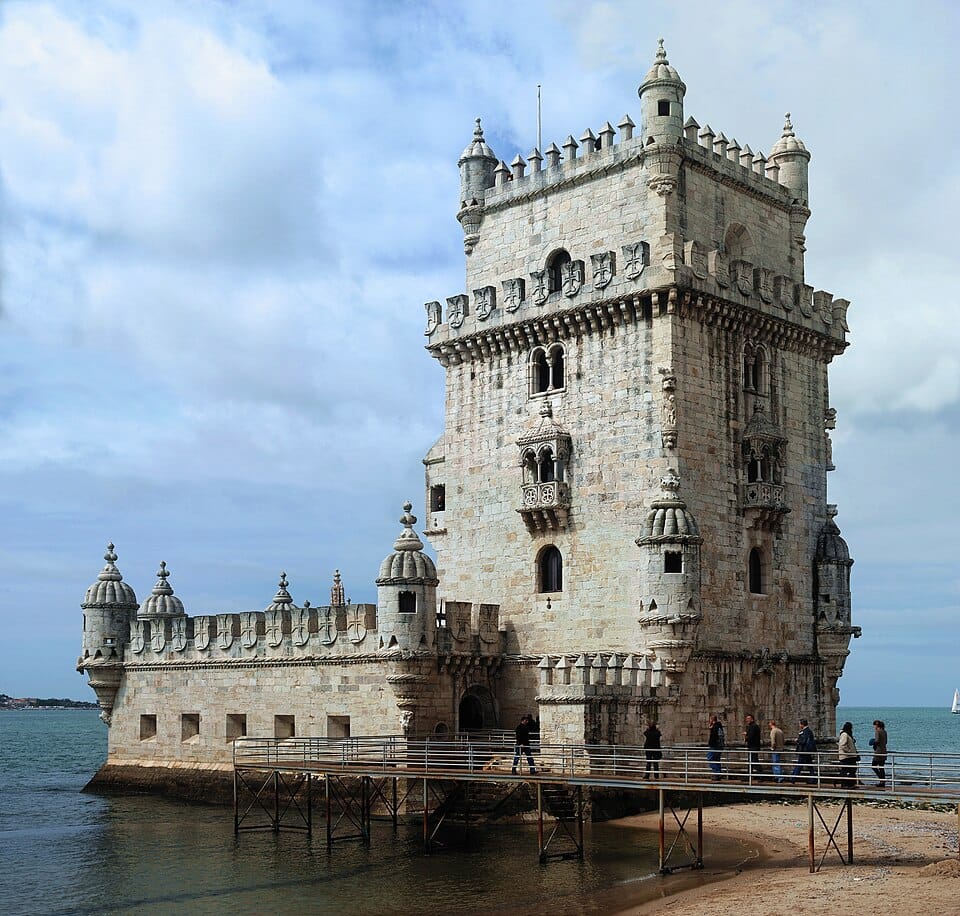
A 16th-century fortified tower on the Tagus riverbank, built to defend Lisbon's harbor and now a UNESCO World Heritage Site marking the start of Portugal's maritime expeditions.
Jerónimos Monastery
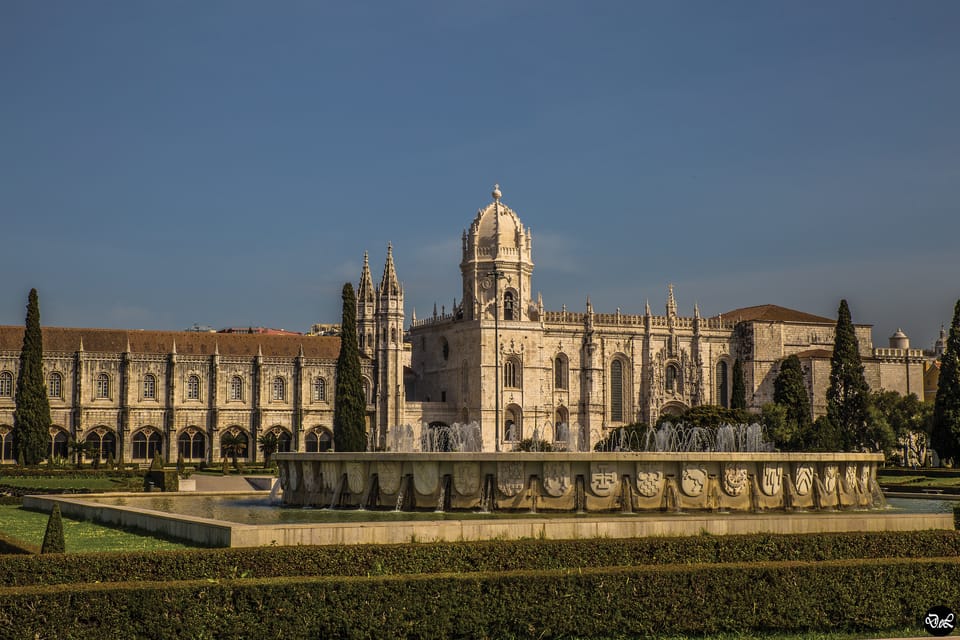
A vast limestone monastery in the Manueline style, funded by the wealth of the spice trade and housing the tomb of navigator Vasco da Gama.
Alfama district
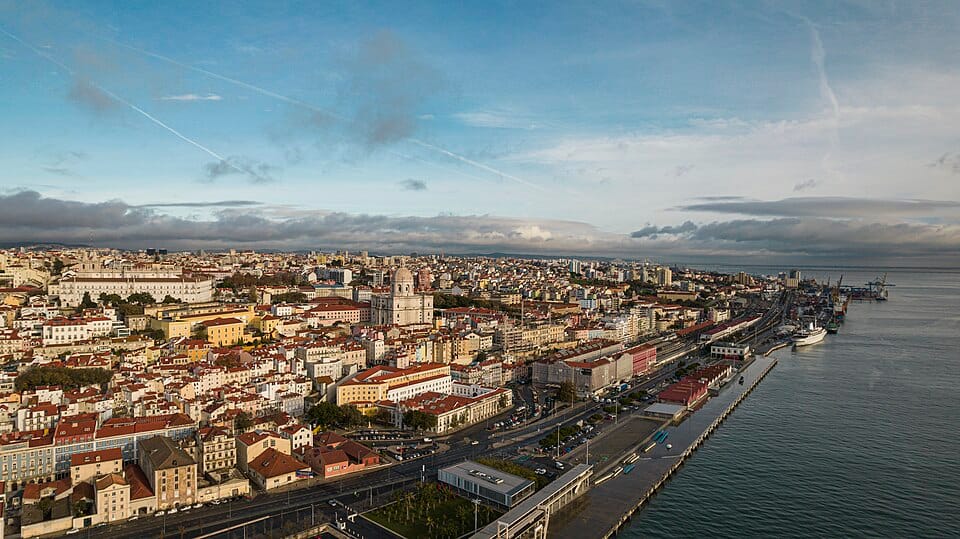
Lisbon's oldest neighborhood, a maze of narrow lanes below the São Jorge Castle where fado music still drifts from small taverns in the evening.
Praça do Comércio
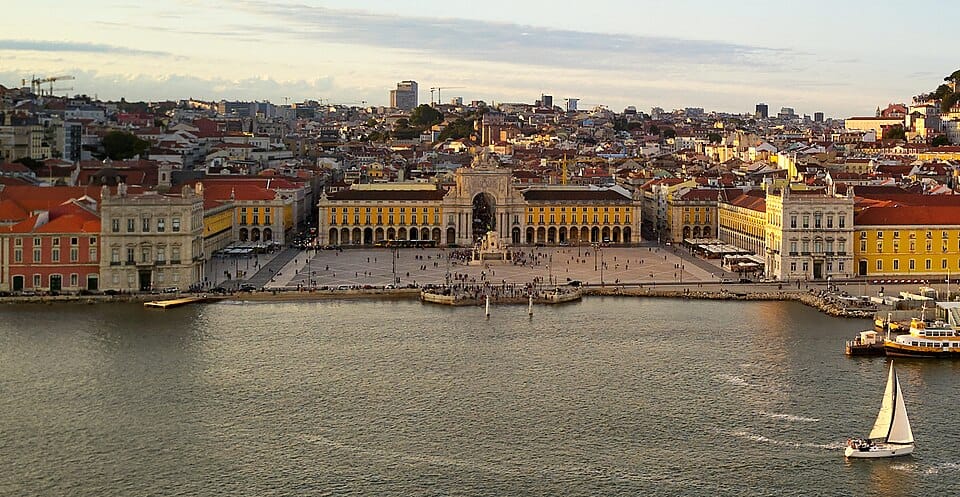
A grand riverfront square rebuilt after the 1755 earthquake, framed by yellow arcaded buildings and opening directly onto the Tagus.
Tram 28
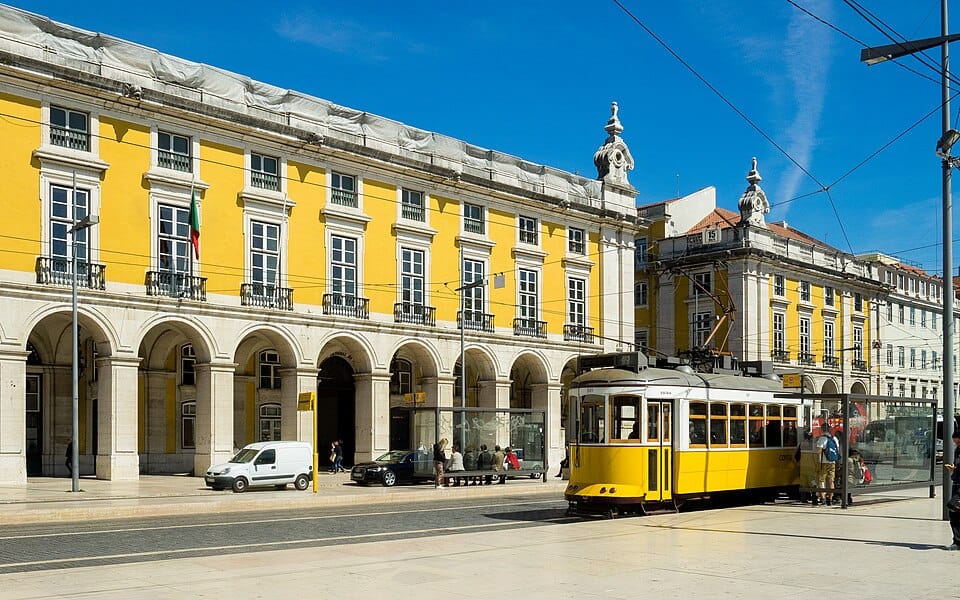
A vintage yellow tram route that climbs and winds through Lisbon's hilliest historic districts, from Graça to Estrela, past miradouros and tiled facades.
LX Factory
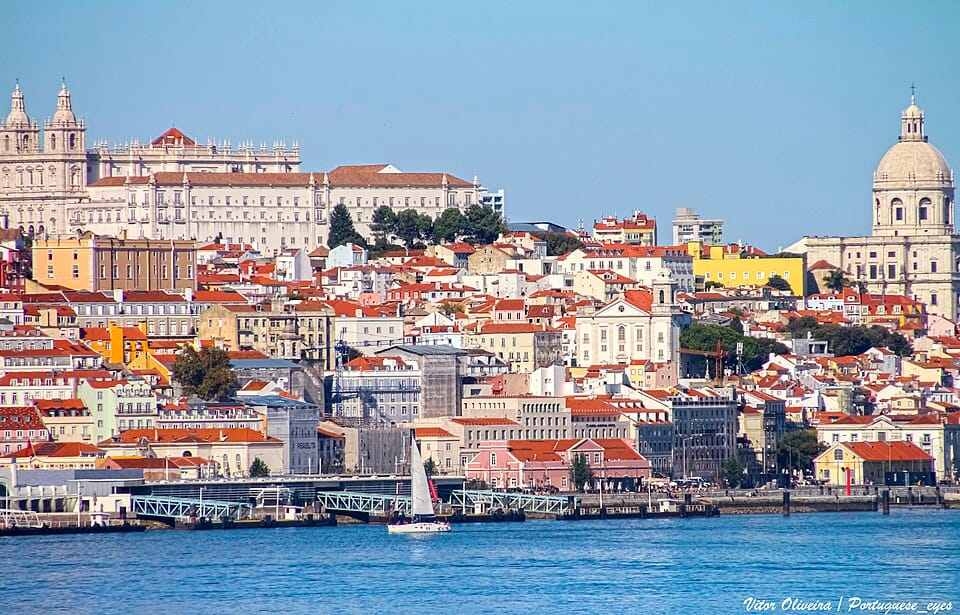
A former industrial complex under the 25 de Abril Bridge, now filled with independent shops, galleries, and cafés in converted textile factory buildings.
Sintra
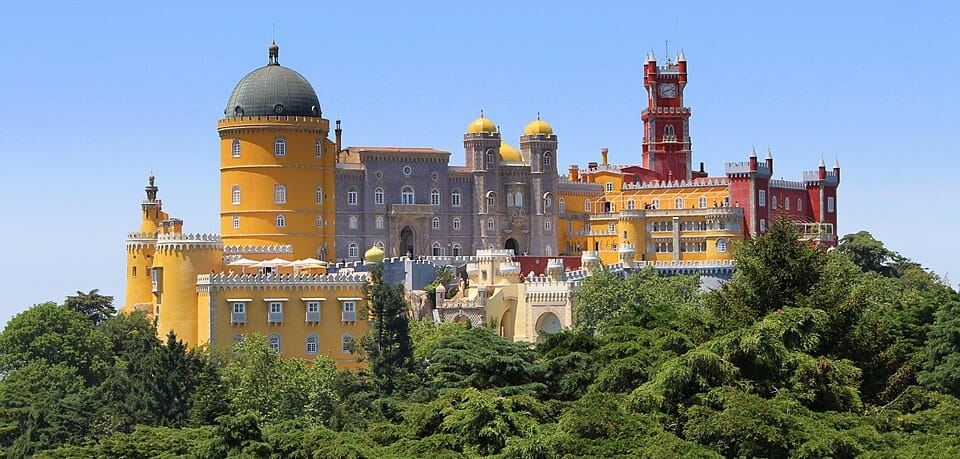
Sintra is a hill town in the Serra de Sintra mountains, wrapped in cool, mist-fed forests that made it a favored summer retreat for Portuguese royalty. Its wooded slopes hide a cluster of exuberant palaces and estates, from Moorish ruins to Romantic-era follies, earning the whole landscape UNESCO World Heritage status.
Top attractions in Sintra
Pena Palace
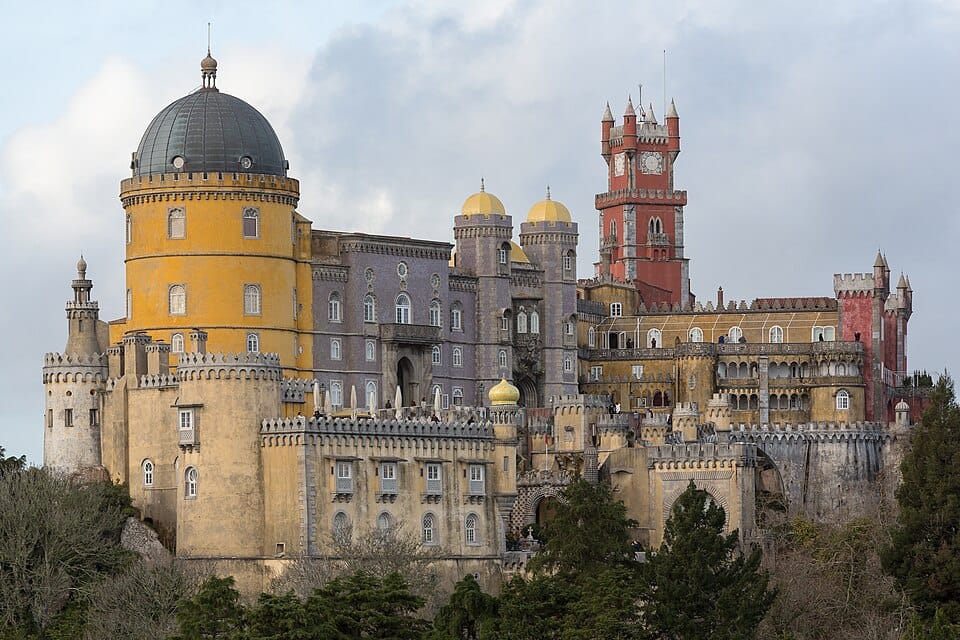
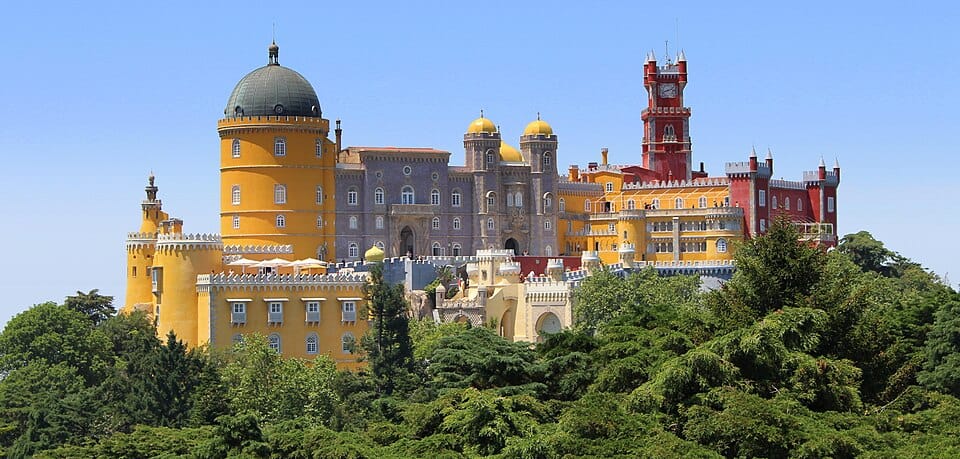
A vividly colored Romantic-era palace perched on a hilltop, mixing Gothic, Moorish, and Manueline styles in a fantastical silhouette visible from across the valley.
Quinta da Regaleira
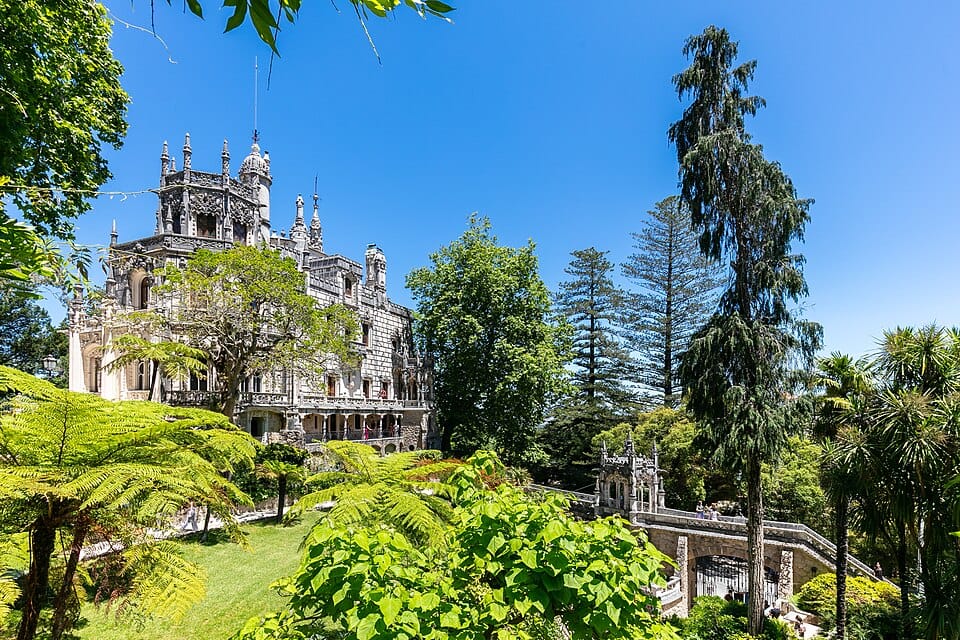
A Gothic Revival estate known for its symbol-laden gardens, grottoes, and the spiraling Initiation Well that descends underground.
Moorish Castle
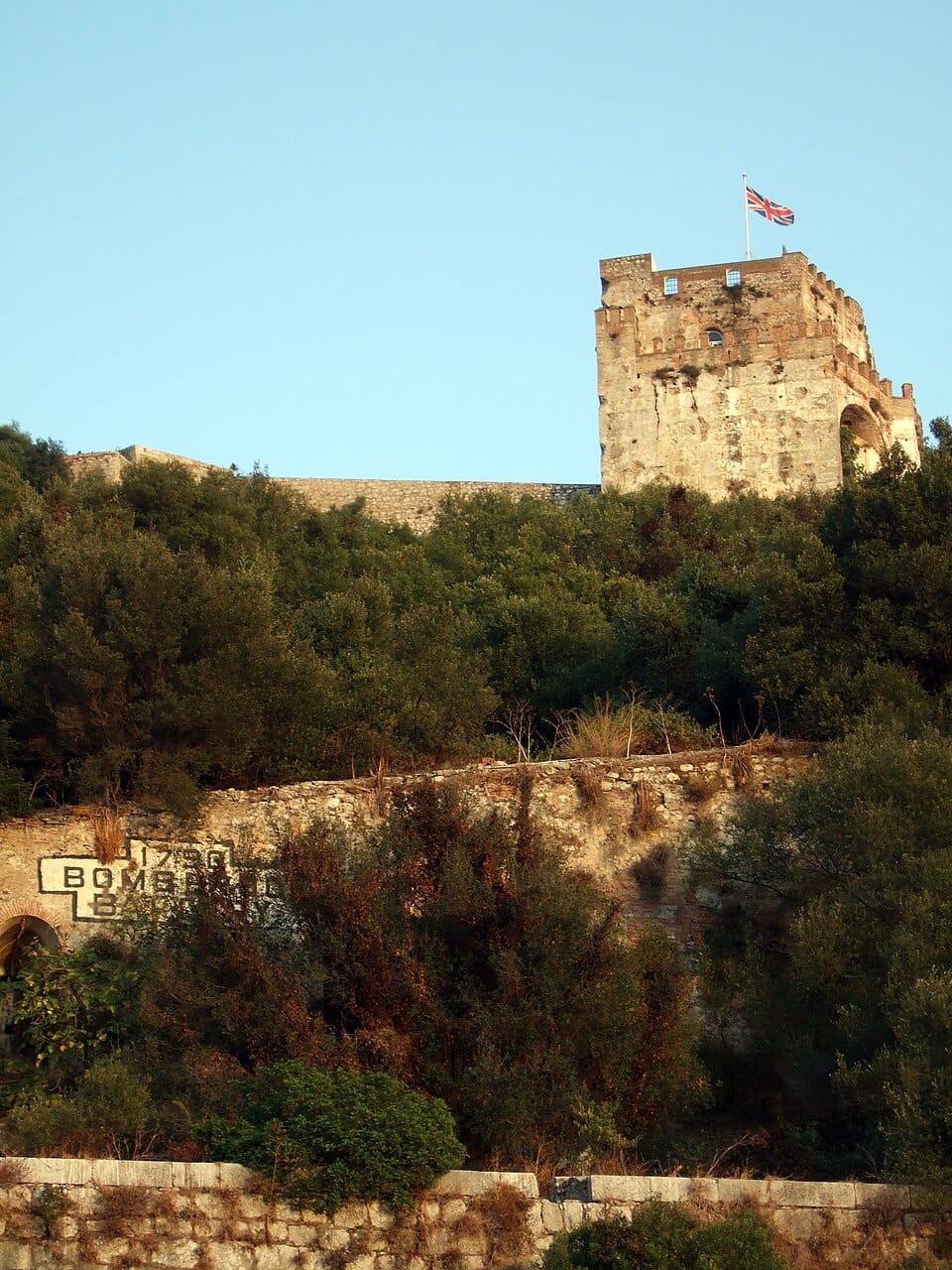
The ramparts of a 9th-century hilltop fortress built by the Moors, offering sweeping views over Sintra's forests and, on clear days, the Atlantic coast.
National Palace of Sintra
A whitewashed royal palace in the town center, recognizable by its two towering conical chimneys and rooms lined with historic azulejo tiles.
Cabo da Roca
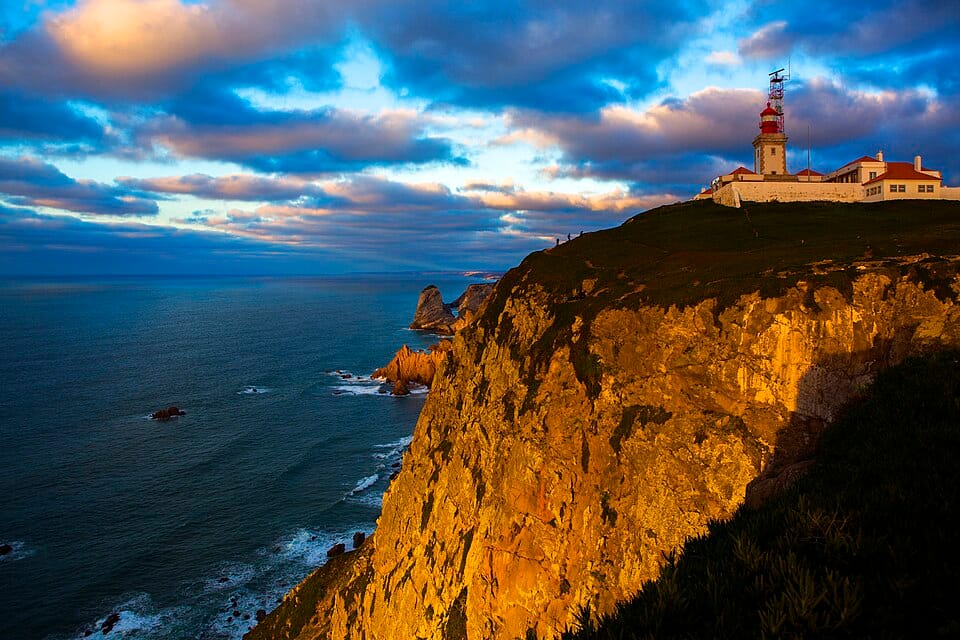
The westernmost point of mainland Europe, a windswept cliff with a lighthouse a short drive from Sintra, marked by a stone cross and Atlantic views.
Obidos
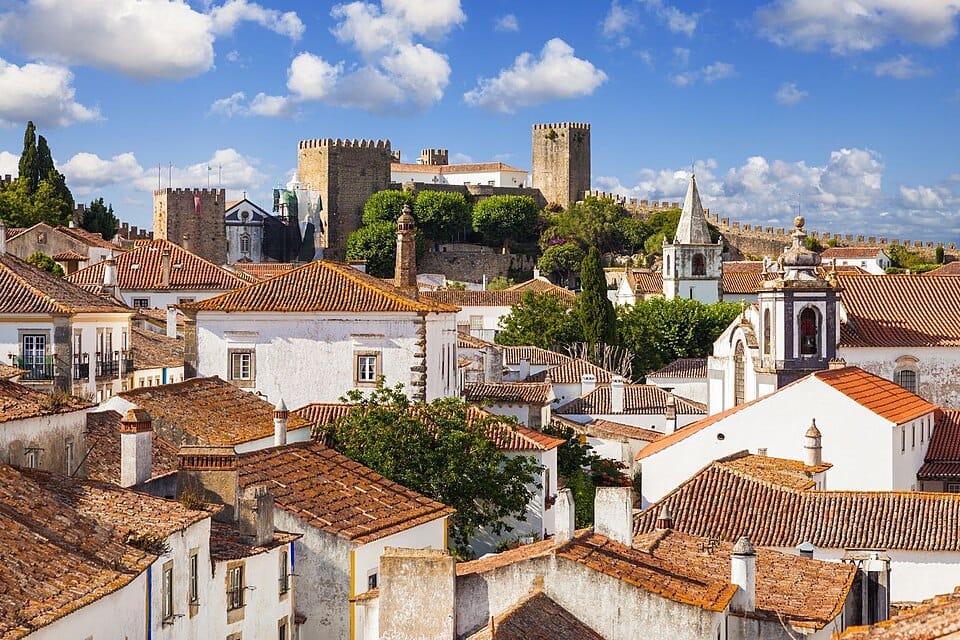
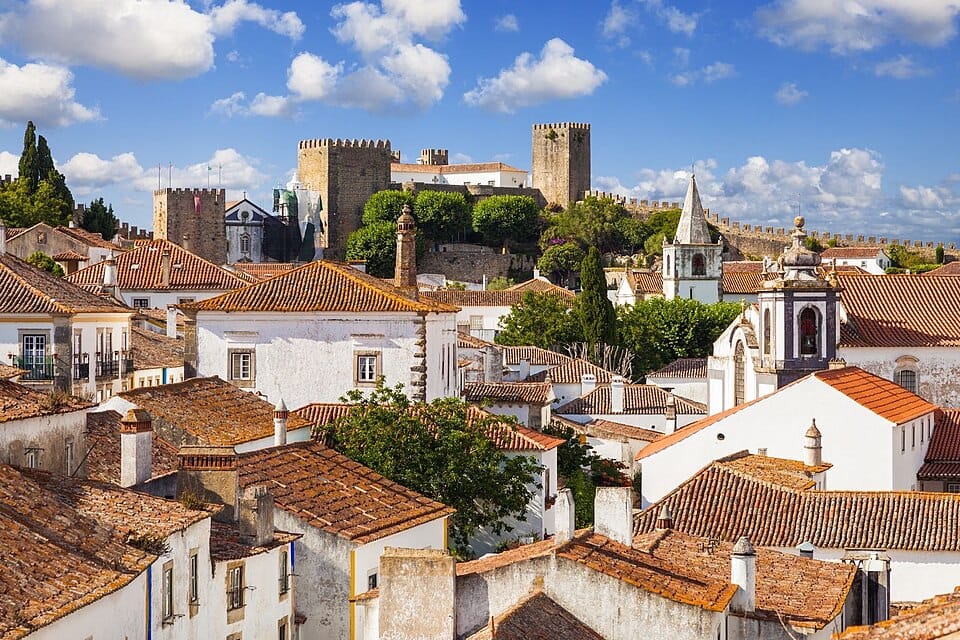
Óbidos is a small walled town in the Oeste region, its whitewashed houses trimmed in blue and yellow and its streets still enclosed by a complete medieval castle wall. Once a wedding gift from Portuguese kings to their queens, the town has kept its compact, fortified layout largely intact for centuries.
Top attractions in Obidos
Óbidos Castle
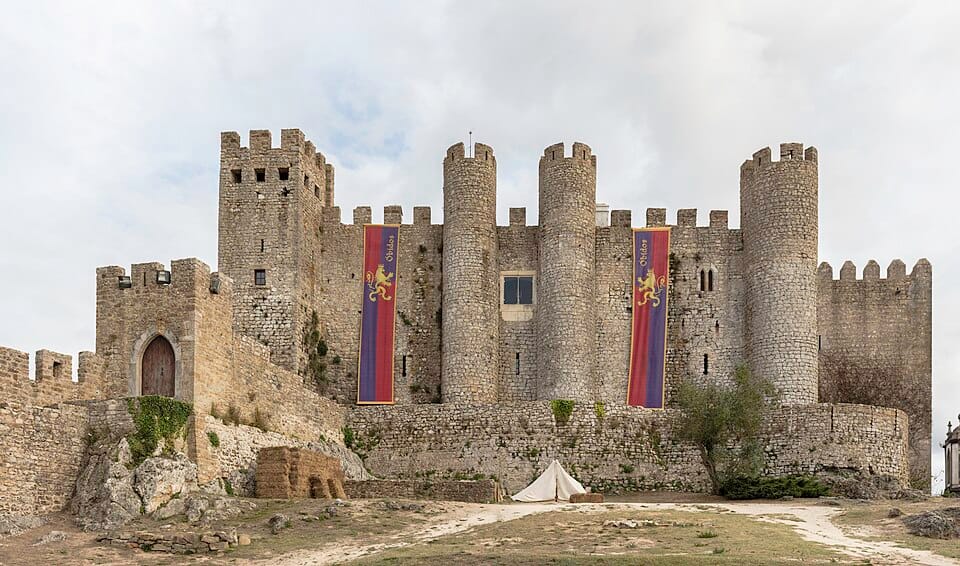
A restored medieval castle at the highest point of town, its towers and walls now converted into a state-run pousada while remaining open to view from outside.
Town walls
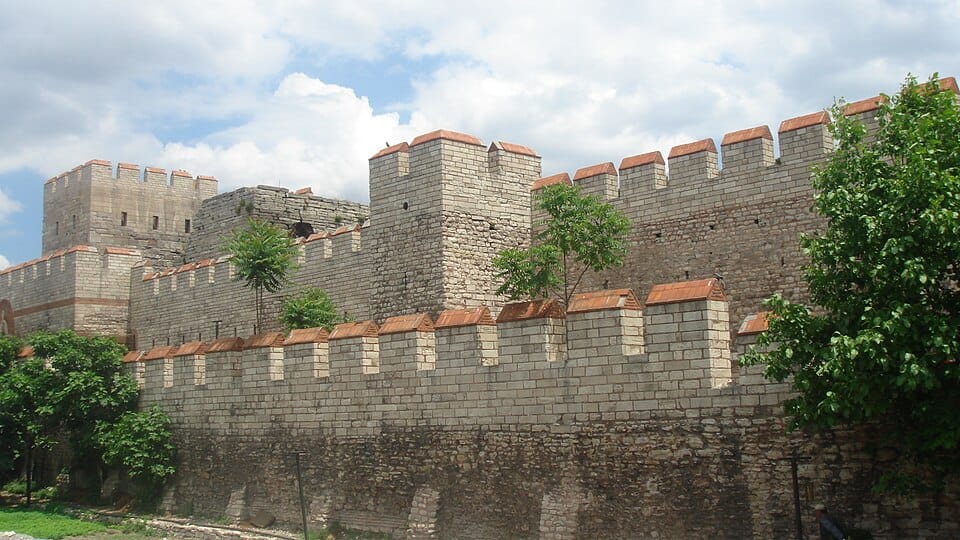
A continuous, walkable rampart encircling the entire old town, offering views down over the whitewashed rooftops and out to the surrounding countryside.
Rua Direita
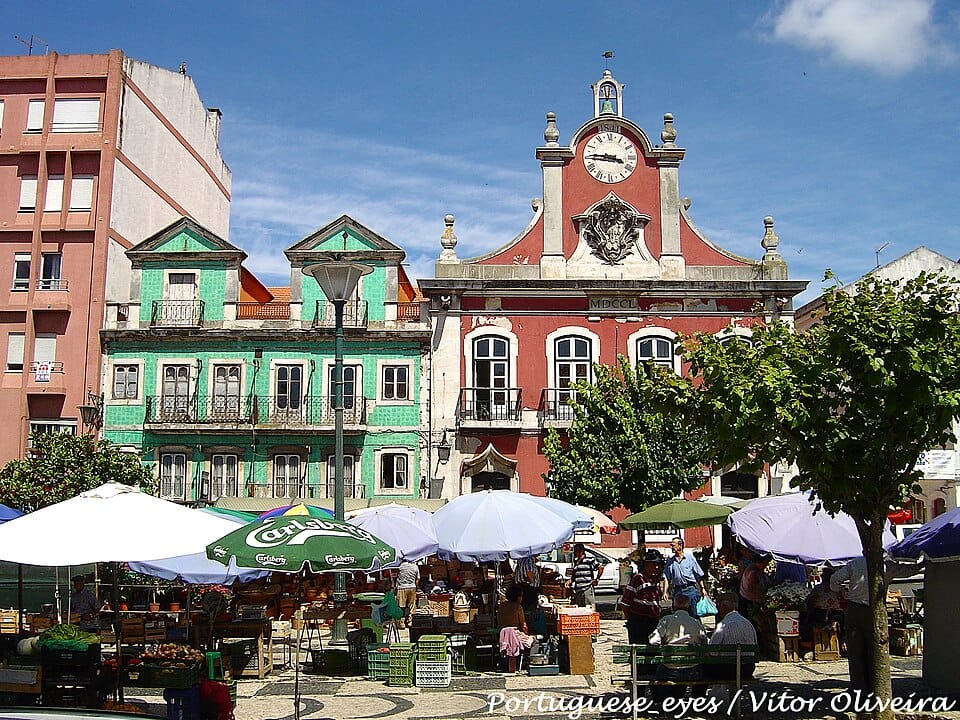
The main cobbled street running through town, lined with whitewashed shops, ceramics stalls, and stands selling ginjinha, a sour cherry liqueur served in chocolate cups.
Church of Santa Maria
A modest parish church on the main square where a young King Afonso V married his cousin Isabel in 1441, its interior covered floor to ceiling in blue-and-white azulejos.
Porta da Vila
The main gated entrance through the town walls, its inner archway decorated with 18th-century azulejo tiles depicting the Passion of Christ.
Coimbra
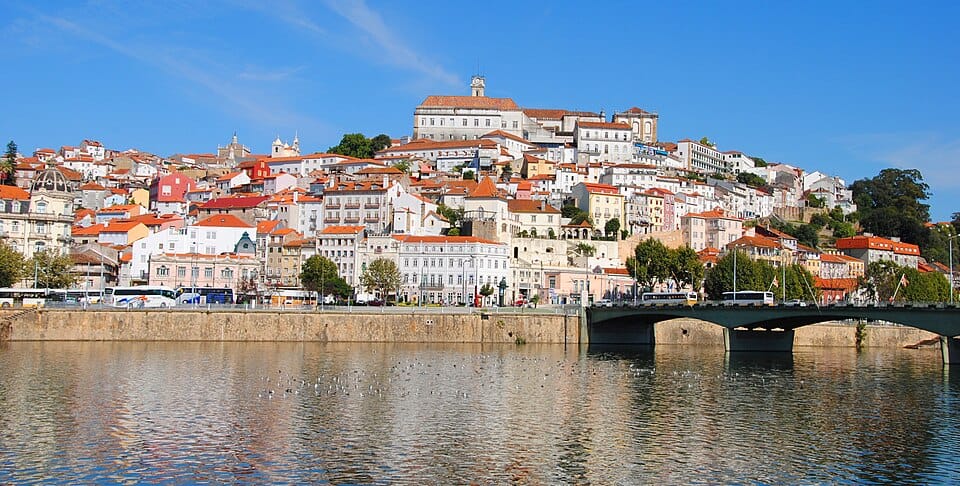
Coimbra rises in tiers above the Mondego River, its skyline dominated by one of Europe's oldest universities, founded in 1290. As Portugal's former capital and a longtime center of learning, the city blends Roman ruins, Romanesque cathedrals, and a lively student culture that still fills its steep lanes at night.
Top attractions in Coimbra
University of Coimbra

One of Europe's oldest universities, its historic core a UNESCO World Heritage Site crowned by a bell tower with sweeping views over the city and river.
Joanine Library
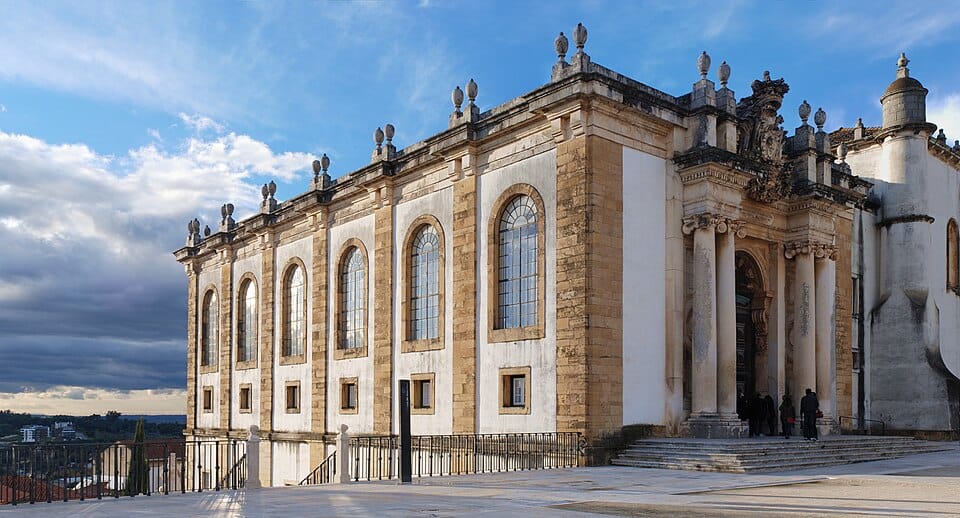
An 18th-century baroque library within the university, lined floor to ceiling with gilded, hand-carved bookshelves holding some 300,000 volumes.
Old Cathedral of Coimbra
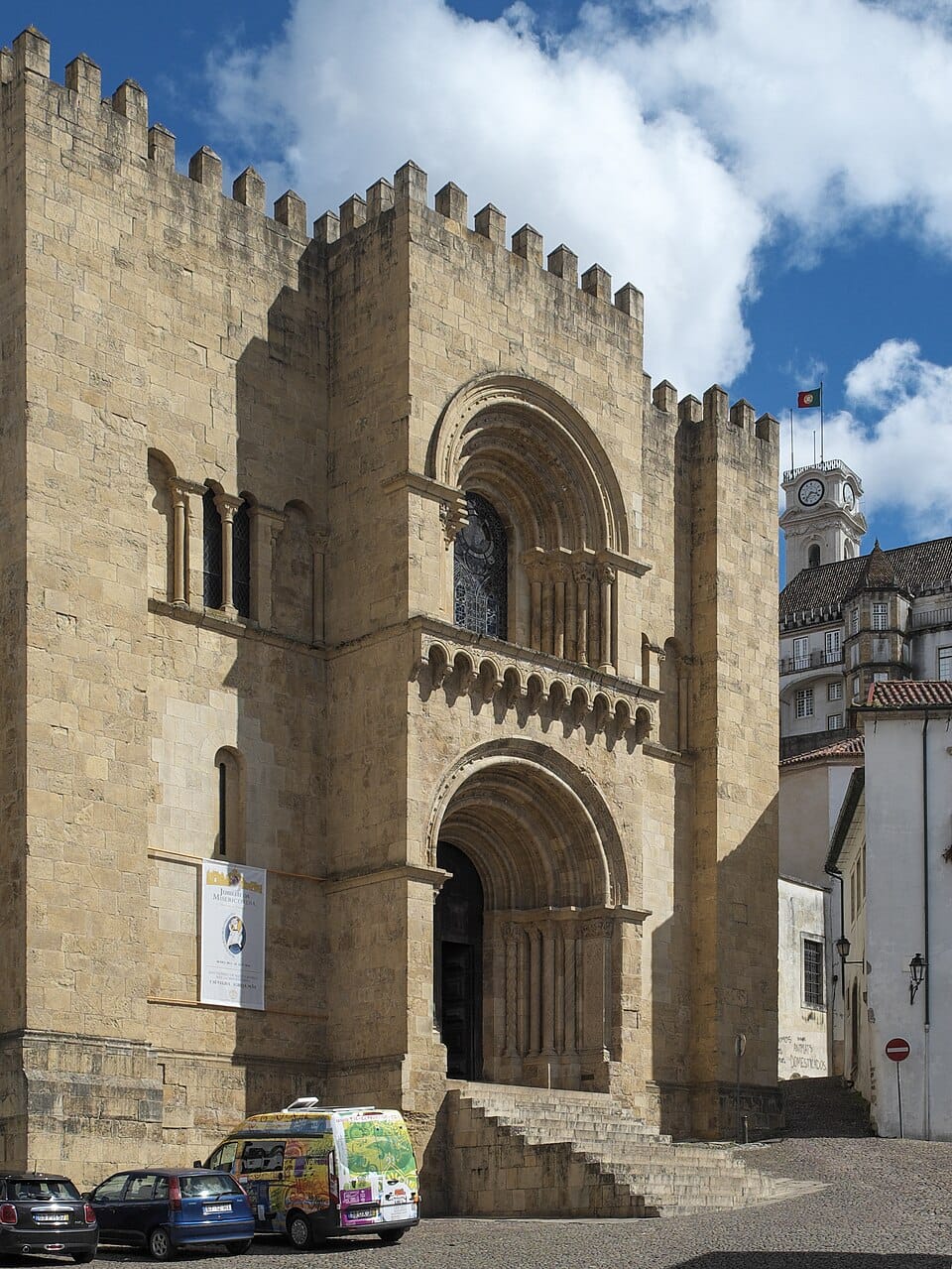
A fortress-like Romanesque cathedral from the 12th century, one of Portugal's best-preserved examples of the style, with a cloister added two centuries later.
Monastery of Santa Clara-a-Nova
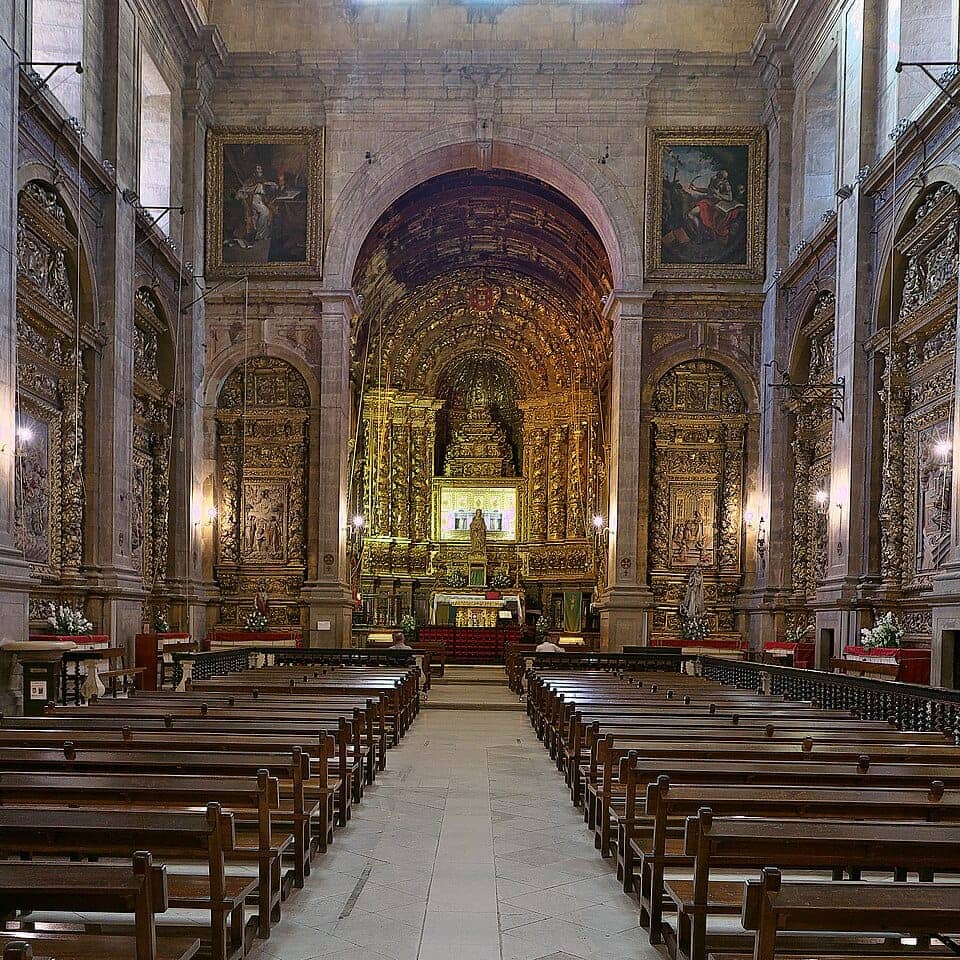
A 17th-century convent across the river from the old town, home to the silver tomb of Queen Isabel of Portugal, later canonized as a saint.
Se Nova de Coimbra
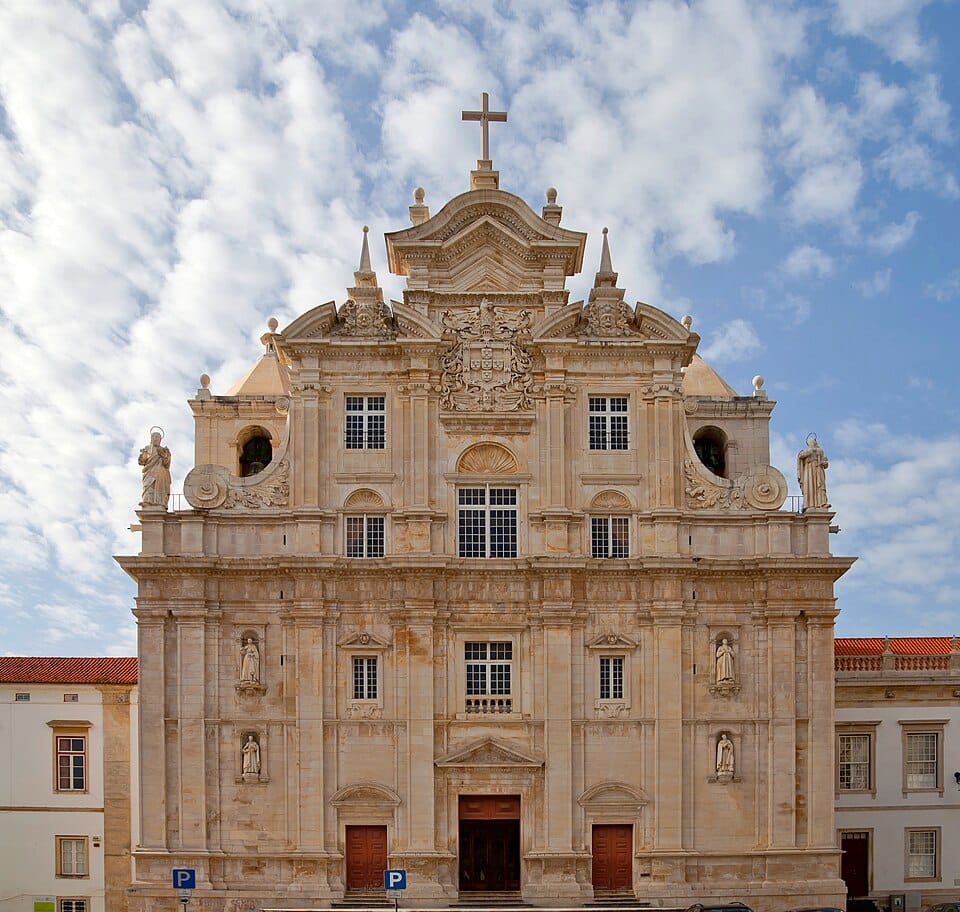
A Jesuit-built Mannerist church near the university, its ornate gilded interior contrasting with the plain granite facade typical of the order's architecture.
Porto
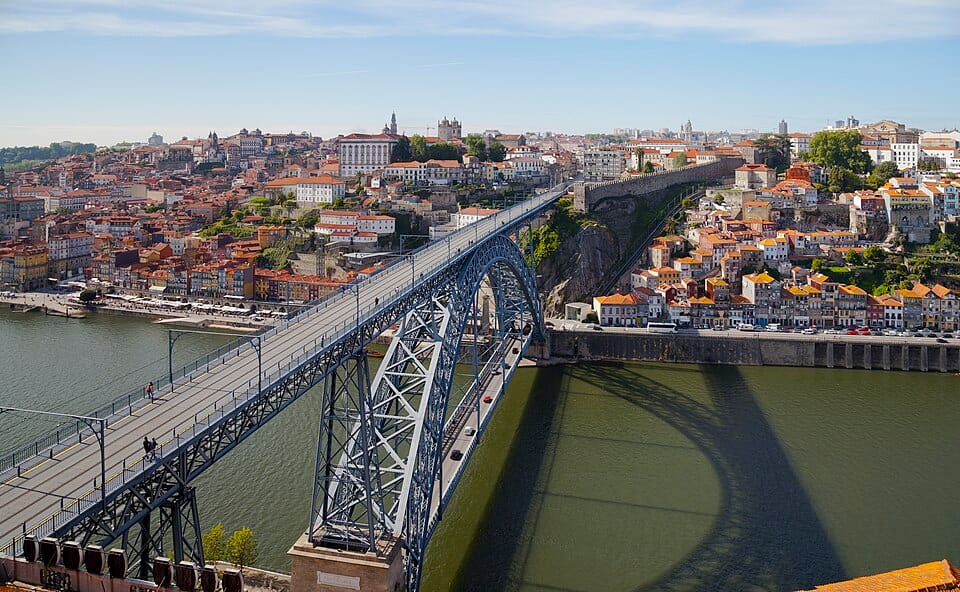
Porto is Portugal's second city, spread across steep granite slopes on the north bank of the Douro River, where it meets the Atlantic. Its historic center, a UNESCO World Heritage Site, is a dense stack of tiled townhouses tumbling down toward the riverfront Ribeira district, and its name gave the world port wine, still aged in warehouses across the water in Vila Nova de Gaia.
Top attractions in Porto
Ribeira district
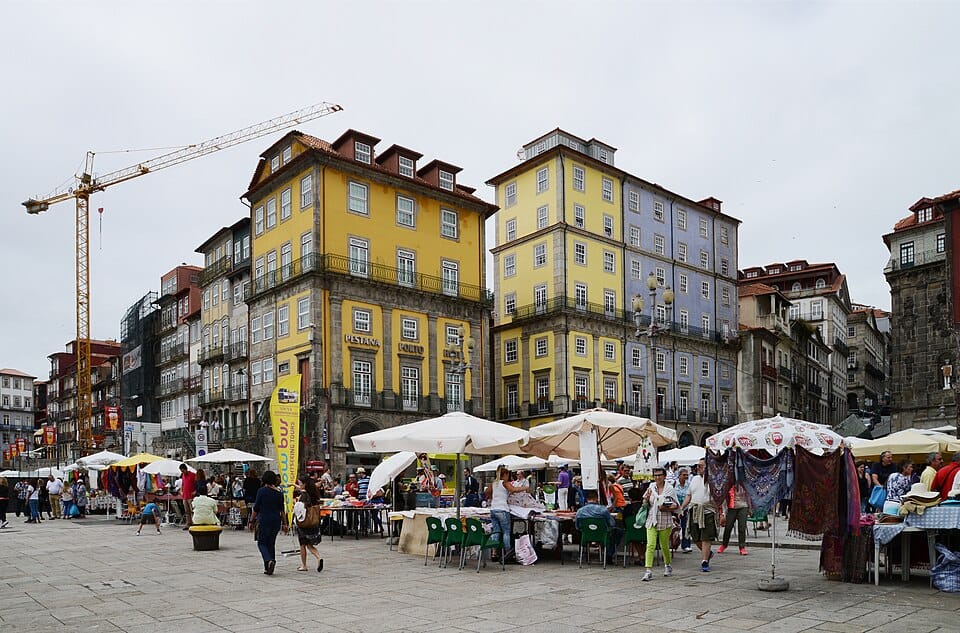
A UNESCO-listed riverfront quarter of narrow lanes and colorful, crumbling townhouses stacked above the Douro, lined with cafés facing the water.
Dom Luís I Bridge
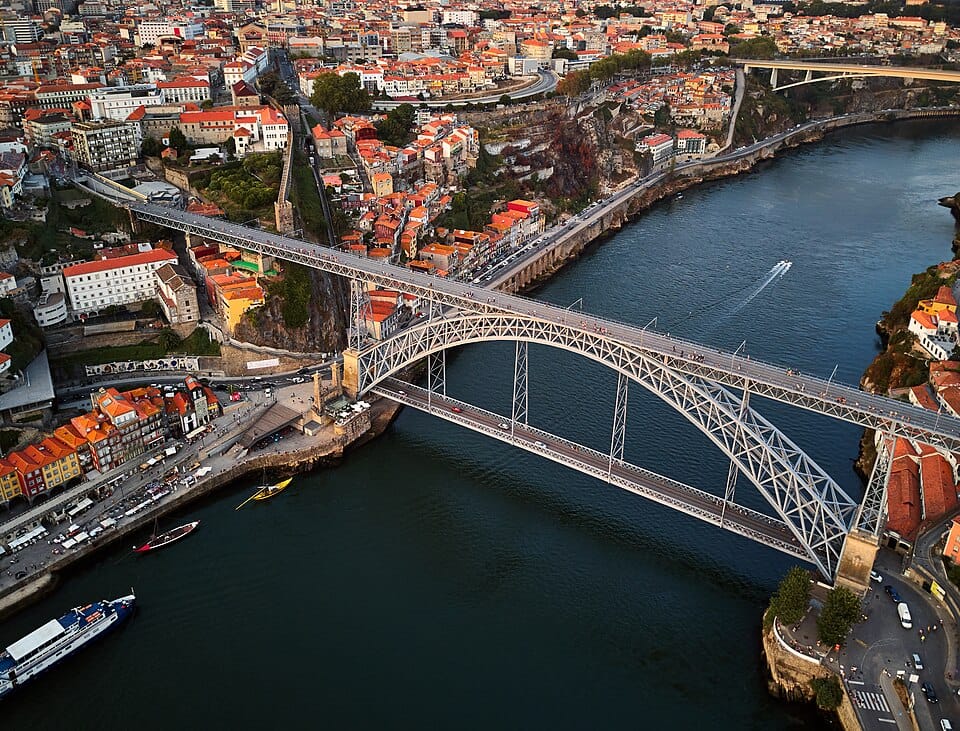
A double-deck iron bridge spanning the Douro, designed with input from a student of Gustave Eiffel, carrying a metro line above and pedestrians on both levels.
Livraria Lello
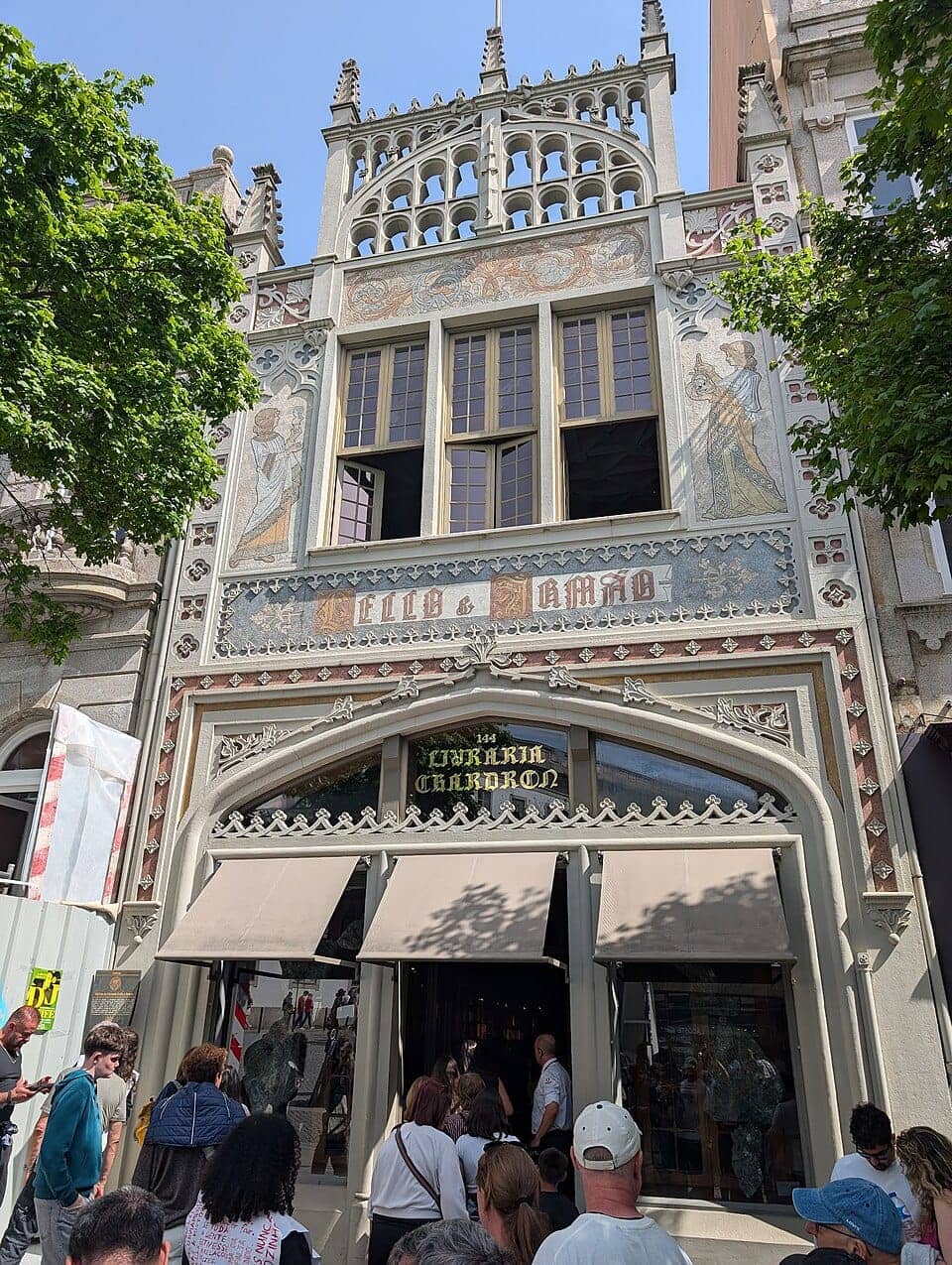
A neo-Gothic bookstore from 1906 known for its ornate carved wood interior and curved red staircase, one of the most visited bookshops in the world.
Porto Cathedral
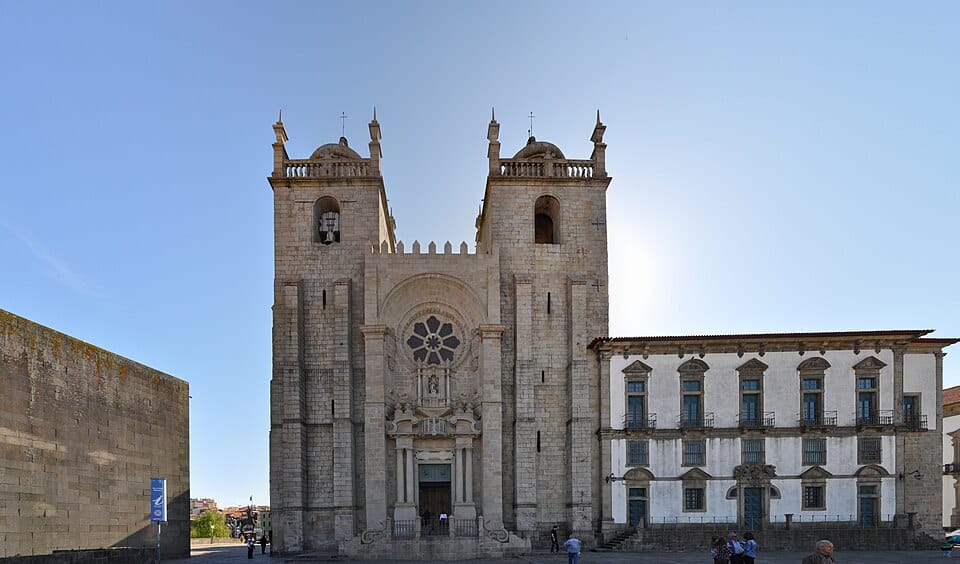
A fortress-like Romanesque cathedral overlooking the old town from a hilltop, with a Gothic cloister decorated in 18th-century azulejo panels.
Port wine cellars of Vila Nova de Gaia
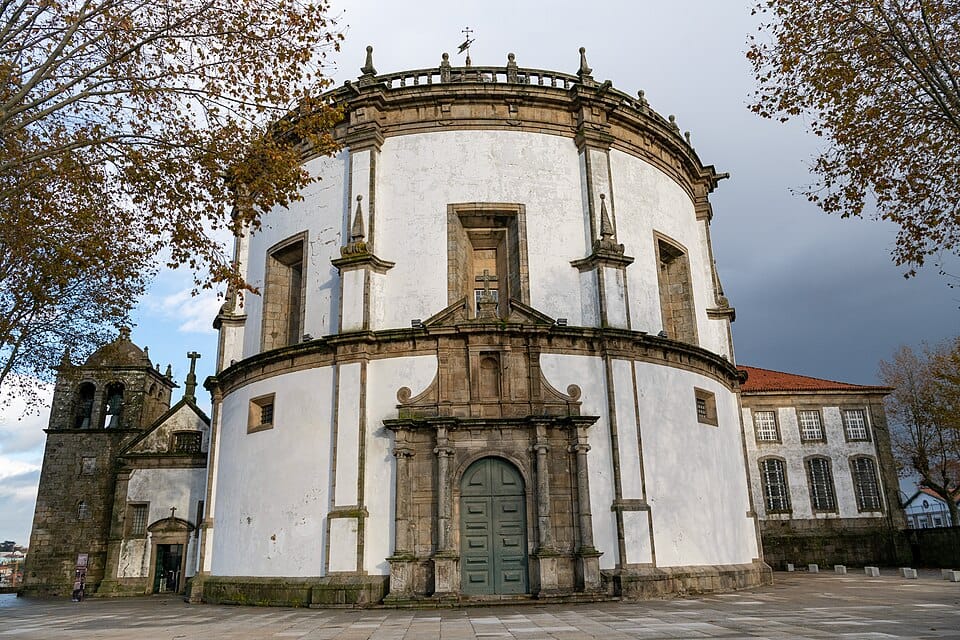
A row of historic wine lodges across the river from Porto's old town, where major port houses age their barrels and offer tastings with views back over the Douro.
Plan this route with EuroDrive Scout — tolls, vignettes, ZTL alerts, fuel & parking →